
washington | How did Barack Obama break through to Jewish voters who were at first unsettled by him? How did he grab elderly Jews in Florida who had resisted voting for the tall black man with the middle name “Hussein,” the son of a man from Kenya?
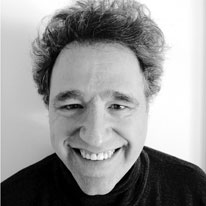
“It wasn’t only his policy on Israel and Iran, on health care,” explained longtime Walnut Creek resident Ari Wallach, whose Jewsvote.org led the “Great Schlep” — an effort to prod young adults to get their Jewish grandparents in Florida to vote for Obama.
“His biography feels so Jewish, it feels like an Ellis Island archetype,” Wallach added. “People felt more comfortable when I talked about where he came from, it resonated so deeply — surprisingly among older Jews.”
For months, polls showed Obama languishing at about 60 percent of the Jewish vote, a critical chunk short of the 75 percent or so Sen. John Kerry (D-Mass.) garnered in 2004. But election exit polls showed Obama slightly exceeding that total, garnering about 78 percent of the Jewish vote against 22 percent for Sen. John McCain (R-Ariz.).
Wallach credited a late-campaign blitz of Jewish communities, joined by groups like his own, for converting the candidate from stranger to standard bearer for a Jewish ethos.
“It resonated much more than I thought,” he said.
It was an uphill battle, starting with rumors that Obama was a hidden Muslim, that he wasn’t a genuine American.
The Republican Jewish Coalition ran ads coupling critiques on Obama’s dovish policies with guilt-by-association jabs at his former pastor who embraced Third World liberation theology, at Obama “associates” with radical pasts at the University of Chicago and during his early political career, at advisers who had once delivered sharp critiques of Israel and the pro-Israel community.
The negative campaign glossed over Obama’s deep ties in the Chicago Jewish community and how he has picked a pre-eminently pro-Israel foreign policy team.
Matt Brooks, the RJC’s executive director, said the ads raised legitimate questions about Obama’s judgment, and had an effect: Obama was outpolling Kerry among Jews by only about 2 percent, he said, whereas he was doing much better than Kerry had among other constituencies, including Catholics, blacks and Hispanics.
Brooks credited the economic crisis as helping precipitate Obama’s blowout win Nov. 4.
“It’s a testament to McCain that we [did] as strongly as we [did] to hold onto our support,” he said, noting that Obama’s Jewish results lagged slightly behind showings for Al Gore in 2000, and for Bill Clinton in 1992 and 1996.
Democrats said the overwhelming Jewish rejection of the McCain and RJC campaigns made them proud.
“I’m ecstatic by the outcome and the confidence the Jewish community showed Obama in the teeth of some of the nastiest campaigning I’ve ever seen,” said Ira Forman, the executive director of the National Jewish Dem-ocratic Council. “People got a chance in the last three months to see Barack Obama — and the idea that they should be afraid or frightened didn’t wash.”
Key to the effort were waves of Jewish surrogates — chief among them U.S. Rep. Robert Wexler (D-Fla.) — who blanketed Jewish communities in swing states in the campaign’s final weeks.
Wexler had been on board with the Obama campaign from the outset. A number of other surrogates who had been loyal to Sen. Hillary Clinton (D-N.Y.) added weight to the campaign once she conceded the primaries race over the summer.
“I’ve never seen a presidential campaign so well organized in the Jewish community,” Forman said.
“I really think it’s the triumph of hope over fear, of possibility over pessimism,” said Rabbi Dayle Friedman, a Philadelphia-area rabbi who served as a co-chair of the national Rabbis for Obama.
“My mother-in-law is a Holocaust survivor in her 80s and she said to me this morning, ‘He’s a good man, I believe in what he said.’ “
Friedman, whose rabbinic focus is serving Jewish senior citizens, spent much of her time reaching out to seniors, who were courted heavily, particularly in swing states, by both campaigns.
“Somehow, the integrity and the urgency of the possibility of this candidate spoke to people way more powerfully than all the nasty scare tactics that were thrown at him,” she said.
Echoing the view of many of Obama’s most ardent supporters, Friedman called the process of the campaign “just as transformative, if not more, than the results, [are] the millions of
volunteers that included so many Jews, old and young, who were so passionately engaged.”
It remains to be seen whether the concerns Brooks and the RJC pushed forward will materialize. In his acceptance speech, Obama once again coupled diplomatic outreach with a tough, take-all-comers posture.
“A new dawn of American leadership is at hand,” he said. “To those who would tear the world down, we will defeat you; to those who seek peace and security, we support you.”
J Street, the liberal pro-Israel lobby that led a campaign to get Jewish newspapers to reject the RJC ads, said it was vindicated.
“American Jews resoundingly rejected the two-year, multimillion dollar campaign of baseless smears and fear waged against him by the right wing of our community,” J Street’s director, Jeremy Ben-Ami, said in a Nov. 4 statement.
Some Democrats said McCain, once popular among Jews because of his willingness to reach across the aisle, hurt himself in the community by choosing the deeply conservative and relatively inexperienced Alaska Gov. Sarah Palin as his running mate.
An American Jewish Committee poll commissioned in September found that 54 percent of American Jews disapproved of the Palin pick, compared to just 15 percent who disapproved of Obama’s decision to tap Sen. Joe Biden (D-Del.).
But Obama’s appeal to Jews might have been most deeply rooted in shared values, said Mik Moore, Wallach’s partner in JewsVote.org.
“Folks just wanted to be with us, with the more progressive candidate,” Moore said. “It’s where their heart is.”