
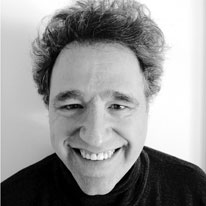
The defense team for Sholom Rubashkin is trying to keep the former meatpacking company executive out of prison by arguing that the judge in his financial fraud case misused federal sentencing guidelines.
Judge Linda Reade, who sits on the federal bench in Cedar Rapids, Iowa, sentenced Rubashkin this week to 27 years in prison by using a points system.
Rubashkin’s lawyers said the 27-year term — and there is no parole for federal prison sentences — amounted to a life sentence for the 51-year-old father of 10, and that they planned to appeal the sentence. They are also appealing the conviction.
Using a system that assigns points to crimes (such as 22 points for fraud in the $20 million to $50 million range,
or four points for being the boss of a criminal enterprise), Reade determined that Rubashkin’s final score was 41. That equals a sentence in the range of 27 years to 33 years, nine months.
Reade opted to hand down a sentence of 27 years, plus another five years probation. Rubashkin, former executive at the Agriprocessors kosher slaughterhouse in Postville, Iowa, also will be required to make restitution of nearly $27 million to several financial institutions.
“This is a stain on American justice,” defense attorney Nathan Lewin said.
Rubashkin was convicted of defrauding two banks that had extended lines of credit to Agriprocessors. He contended that he was desperate to keep the business afloat and would have repaid the advances if he had the opportunity. Reade assessed the fraud at close to $27 million.

Defense lawyers dismissed any notion that anti-Semitism underpinned the case. “Nobody responsible has made that allegation,” Lewin said.
Instead, the lawyers said, the “overzealousness” of the prosecution had more to do with the profoundly negative publicity in the lead-up to the May 2008 federal raid on the Agriprocessors plant.
In particular, Lewin cited media stories he said were “defamatory” that described alleged abuses of the immigrants who worked at the Agriprocessors plant; claims by People for the Ethical Treatment of Animals that the cattle suffered immensely; and opposition from local unions because the shop was not organized.
Lewin said Rubashkin’s team planned to appeal for support through rallies, such as the one he addressed June 21 in the heavily Orthodox Borough Park section of Brooklyn.
“This is a man who did a lot more good for the Jewish community than not,” Lewin said. “He made kosher meat available for Jews in far-flung places.”
Lewin said he planned to appeal the sentence based on what he described as Reade’s adherence to the mandatory sentencing guidelines that the Supreme Court ruled unconstitutional in 2005.
However, in her ruling, Reade suggested that she treated the guidelines as advisory, which the Supreme Court said was permissible.
“The court finds that a sentence within the computed advisory guidelines range is firmly rooted in credible evidence produced at trial and at sentencing,” she said.
Lewin said he would show on appeal that Reade did not apply an “individualized process” in determining the sentence. She did not address motive, he said, nor did she take into account family issues or sentences for similar crimes.
Reade acknowledged that the defense presented “substantial” evidence that Rubashkin was not motivated by greed but “out of a sense of duty to maintain his family business for religious purposes [supplying kosher meat].”
However, she wrote, “No matter defendant’s motive, he defrauded the victim banks out of millions of dollars. He unlawfully placed his family business’s interest above the victim banks’ interest.”
According to the lawyers, one factor likely to be critical to the appeal of the sentencing is also central to the appeal of the conviction: The judge allowed allegations of immigration law violations to be introduced both in the trial and sentencing stages, although she had earlier dismissed the immigration charges. Rubashkin was separately acquitted earlier this month of state charges of labor violations related to the alleged employment of immigrant children.
Bob Teig, a prosecution spokesman, said that the jurors considered the alleged immigration violations only as they pertained to the bank fraud charges. Teig said that Rubashkin had pledged to the banks to abide by the law, yet was in violation of immigration laws by knowingly accepting false identification documents.
“The jury finding was that he knew illegal aliens were being harbored at the plant and that he lied about that to the bank,” Teig said.