
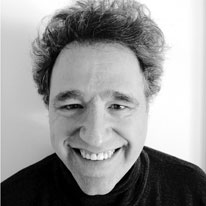
Jane Harman, a Jewish Democrat from Venice, Calif., who made her reputation in Congress as a tough-talking advocate for carrying a big stick, is transitioning to the world of speaking softly.
Harman, 65, a tireless advocate in Congress of both the U.S.-Israel relationship and strengthening the intelligence community’s capabilities, is quitting Congress to become the director of the Woodrow Wilson International Center for Scholars, established by Congress in 1968.
It’s a dramatic switch for a deft political infighter known equally for her fiercely close friendships and her hard-fought enmities.
In an anguished letter Feb. 7 explaining her sudden resignation to her Los Angeles constituents, Harman hinted at her frustration with an increasingly polarized Congress.
“I have always believed that the best solutions to tough problems require a bipartisan approach, and bipartisanship is the Center’s ‘brand,’ ” she wrote. “Serving at its helm provides unique opportunities to involve the House and Senate, top experts, and world leaders in ‘great debates’ about the most pressing foreign and domestic policy matters.”

The Associated Press reported that potential candidates to succeed her moved quickly in the Democratic-safe district. Los Angeles City Councilwoman Janice Hahn announced her candidacy, and California Secretary of State Debra Bowen said she was giving serious thought to running.
Bowen’s office said once Harman resigns, Gov. Jerry Brown would have 14 days to call a special election, which would likely be held in June. Harman said she would remain in Congress for several weeks to ensure an orderly transition.
Her decision to leave signals the precarious position of the Democratic Party’s center.
Harman, who is married to Newsweek owner and philanthropist Sidney Harman, is in the Blue Dog caucus, representing the party’s more conservative wing.
Harman’s more conservative tendencies have been apparent in fiscal and foreign policy. On social issues — abortion, gay rights and women’s rights — she has been an unabashed liberal, scoring high marks from the National Council of Jewish Women.
In 1998, Harman interrupted her congressional career, launched six years earlier, to run for California governor as the self-described “best Republican” among Democrats, pledging a balanced budget. She lost to Gray Davis and returned to Congress in 2000.
In that setting, her hard-line reputation was made in foreign policy. She supported the Iraq war, and as the ranking Democrat on the House Intelligence Committee, backed the expanded eavesdropping powers used by the Bush administration.
Harman is beloved by the pro-Israel lobby and is a sure-bet appearance at AIPAC’s annual policy conference. AIPAC director Howard Kohr credited Harman with helping to ensure that Israel received annual security assistance and funding for missile defense systems.
It was her close ties with AIPAC that involved Harman in a scandal-that-wasn’t in April 2009, when her support for eavesdropping came back to bite her.
Intelligence officials leaked to the media a taped 2005 conversation between Harman and what they described as an “Israeli agent.” The “agent” asked Harman to intervene in the case of two former AIPAC staffers who had been charged with handling classified information.
Harman agreed to “waddle” into the matter, “if you think it will make a difference,” according to the reports. The “agent” then said he would advocate on her behalf to keep Harman in her spot as the top Democrat on the Intelligence Committee.
Harman said, “This conversation doesn’t exist” and hung up.
Nothing in the conversation had showed Harman agreeing to such a quid pro quo, and her last sentence could be read either as a plea to keep the chat secret or an angry sign-off fueled by the recognition that the “agent” was trying to co-opt her. There was never any evidence that Harman had intervened in the process.
Justice Department officials emphasized that Harman was not under scrutiny. The government dropped the case for lack of evidence, and the “scandal” seemed like a desperate last-ditch bid to keep the case alive.
While Harman was beloved by the intelligence community for advocating for expanded eavesdropping powers and increased funding, she was not afraid to make waves.
She earned the enmity of Porter Goss, the former committee chairman who became CIA director, first by making clear her opposition to “enhanced” interrogation techniques, and then by linking Goss’ associates to a bribe-taking scandal. (Some analysts said Goss, seeking revenge, seemed to be behind the AIPAC leaks.)
Harman’s willingness to put friends in the hot seat was evident as well in her dealings with Israel.
The WikiLeaks trove of State Department cables leaked late last year showed Harman giving Prime Minister Benjamin Netanyahu a hard time in a 2009 meeting over his two signature issues: settlement expansion and accelerating confrontation with Iran. Harman also agreed to sponsor the first conference, in 2009, of J Street, the “pro-peace, pro-Israel” lobby that arose in part to counter AIPAC’s influence.
Harman’s pro-Israel posture, however, led to two primary challenges from Marcy Winograd, a Jewish activist who advocates a single Israeli-Palestinian state. Harman easily defeated Winograd in 2008 and 2010.