
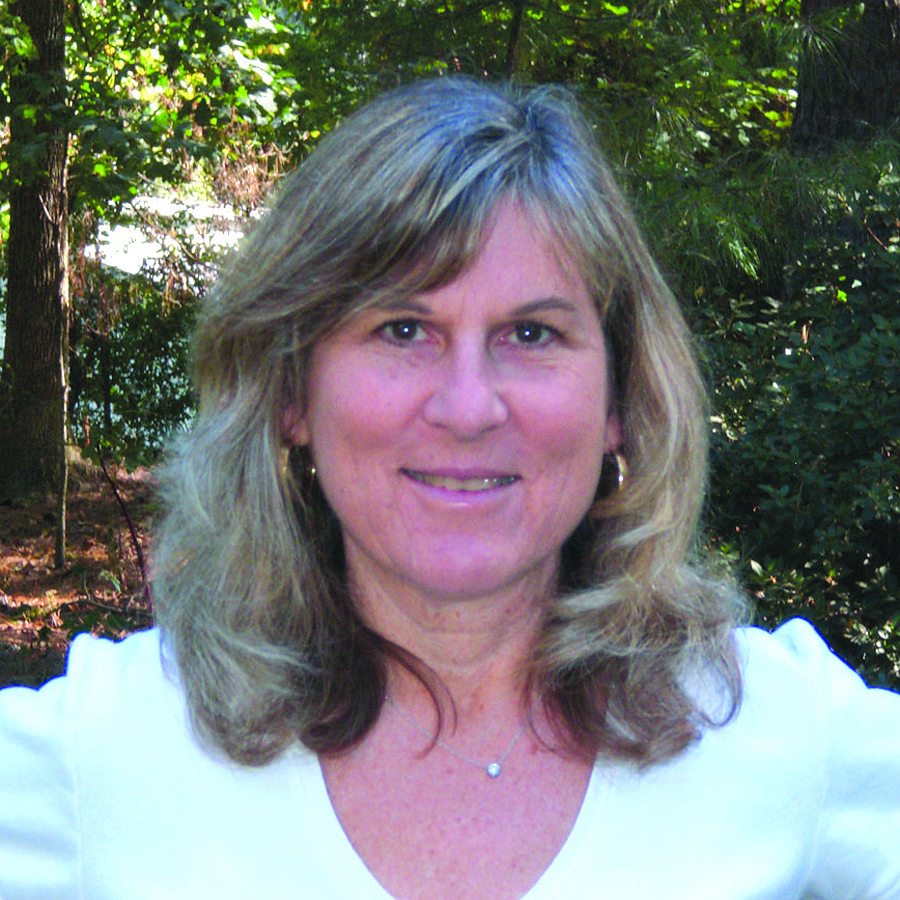
They stay in a modest home, travel by armored car, never walk in the beautiful countryside for fear of discharging a land mine. They are haunted by the vestiges of the “unimaginable horror” that “man is capable of” and are buoyed by the bravery of recovery.
When she learned that her husband, Richard, had been asked to go to Bosnia-Herzegovina as President Clinton’s special representative for civil reconstruction, Barbara stammered, “To where?”
But when she learned that spouses could not tag along in such hardship-war zones, she knew without a moment’s hesitation that she would not stay home. So the watercolor artist and former director of geriatric services at San Francisco’s Mount Zion Hospital applied for a job with the United States Information Agency.
Barbara Sklar, a San Franciscan who had assisted with USIA cultural exchange programs in the past, wangled an open-ended assignment at the remarkable remuneration of $1 a year.
“I had to go in and get busy and find my own way,” she said, and did, concentrating on helping the cultural community get back on its feet after years of devastation and destruction starting in 1991.
One of the first things Richard set out to do was to reopen the airport to civilians, which happened soon enough.
And that’s how these grandparents happened to leave the comforts of their Pacific Heights home last June for an unforgettable adventure in war-ravaged Sarajevo. They’ll stay through February.
Knowing full well that their visit would involve hardship and even danger, they nonetheless embarked enthusiastically.
“A part of that [decision] is being Jewish and thinking, `People should be there for these people who have suffered,'” Barbara said during the couple’s recent return home for the holidays.
“And part of that is being American. This would be like a culmination of things we have done all our lives.”
Her husband, an engineer who has managed mammoth construction projects including highways, railways and schools, is used to dealing with government agencies. He has completed several assignments for the Clinton administration, which he credits with helping stop the civil war in this former Eastern Bloc country and with keeping the peace through its military presence.
The couple have actively supported social services at home, including Family Service Agency, Meals on Wheels and Delancey Street. She has served on committees for the S.F.-based Jewish Community Federation, including the Menorah Park project. They are members of Congregation Emanu-El.
The two believe members of Sarajevo’s small but stalwart Jewish community “are the heroes of the siege” who set up soup kitchens and pharmacies during the war.
Sarajevan Jews helped smuggle non-Jews out of the country, and the Jewish La Benovolencija organization and American Jewish Joint Distribution Committee have worked throughout the war to help the needy. The synagogue even welcomed non-Jewish children at its Sunday school, Barbara said.
“The Jews have been there for hundreds of years. They have worked and gotten along fine with the Muslims.”
Further, “When Jewish children were coming to Sunday school during the war, they brought friends and they had this Jewish Sunday school with a mixture of Jews and Muslims.”
Of the three or four synagogues in Sarajevo, only one remains open. Barbara was one of approximately 35 to 45 adults attending High Holy Day services at the small, Byzantine-style structure.
“It was very moving to me,” she said.
The synagogue’s 25-year-old Bosnian rabbi studies in Israel but returns home for the holidays. His exodus is typical, she said.
“I met with the head of the Jewish community and he said the kids want to come back…but that he couldn’t in good conscience tell them to come back” yet.
There is “tremendous brain drain.”
Recovery here is slow, but encouraging. There is electric power and water, the railroads are running, bridges and streets are being repaired.
And when the couple first arrived, he noted, “there were 24 restaurants and one chef who made the rounds.”
Now, Barbara added, “cafes are opening. The streets are becoming active. Stores are opening.”
But the many years of communist rule, coupled with the war and “this fierce religious hatred” have taken a heavy toll, Richard said. “It certainly rivals anything that’s going on in Israel, except it’s three-way.”
Especially disturbing to the Sklars was the random, rampant killing of women and children that occurred during the fighting.
“Everybody suffered in the war,” Richard said. “Everybody looks 10 years older than they are. One million have left the country — there are 350,000 Bosnian refugees in Germany alone — and none are coming back because of the lack of opportunity and hope.”
Unemployment runs at about 70 percent.
Before he returns to America, Richard said he wants to “get the new structure institutionalized, and get the Bosnian government to let people start new businesses without any trouble.”
His wife would like to see a thriving arts community in which the music, art and performing arts academies have “ongoing contact with sources in the United States and the rest of the world.”
After all, she said, “you have to set small goals.”
And what’s next for the Sklars? Maybe another assignment, Richard allowed. But it’ll be hard to top Sarajevo, where the Sklars have faced some formidable challenges and “hairy” escapades: like when they were traveling by helicopter “and the engine went out on us,” he said, or when the cargo plane they were in “was involved in a near-miss.”
Despite it all, Richard said, “walking the streets of Sarajevo, we feel safer than walking in the streets of New York or Washington.”