
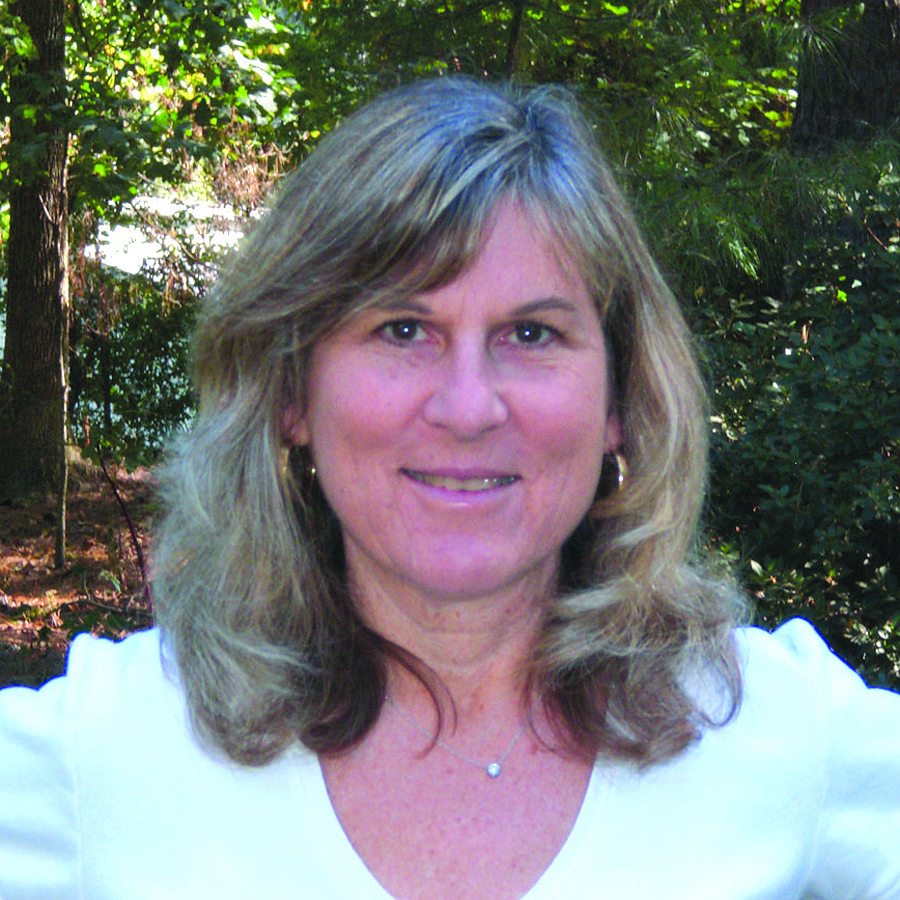
In December it will be two years since Corrine Rummelsberg bade farewell to her Pacific Heights home for her tidy new apartment in San Francisco’s Rhoda Goldman Plaza.
That ranks her among the first to move into the seven-story, $37 million complex at 2150 Post St., which will celebrate its second anniversary with a party Saturday, Oct. 19 for its 147 residents, as well as family, friends and staff.
The development, which also houses Jewish Family and Children’s Services and is a joint project of JFCS and the Mount Zion Health Fund, opened with great fanfare because it forged new territory on several fronts:
It’s the only Jewish assisted-living facility in San Francisco, and was named after the late philanthropist and member of the Levi Strauss family. It teams the nonprofit JFCS with people who may use its social services or volunteer for its programs, providing assistance to others. It also provides medical care, including 24-hour nursing and an entire floor for those with dementia and Alzheimer’s. Yet, “we’re a social model, not a medical model,” explains Kate Hoepke, director of resident services.
In other words, it’s a community. Though all the residents qualify as older adults, the span ranges from a smattering in their 60s to a few in their late 90s. Some are quite active — taking advantage of the exercise classes, group excursions, Shabbat services, guest lectures and other activities, while others are more restricted by physical limitations. For the latter, socializing at community meals or in the well-appointed sitting areas may be the highlight of the day.
Either way, life at Rhoda Goldman offers comfort — from housekeeping to laundry service, security and lots of engaging options. The intergenerational programs “are very popular, whatever we do with teens,” notes Hoepke.
“The staff describe it as being on a cruise without going anyplace,” Anita Friedman, JFCS executive director, says with a smile. The facility “is everything that we’d hoped for.”
But the building is more than just beautiful and well-staffed, according to Friedman. “There’s just great synergy” between the residents and JFCS, “so that everyone who needs help in the community can get it.”
At 92 (though she hardly looks it), Rummelsberg pretty much carries on without assistance. An artist who still studies with her mentor, U.C. Extension instructor Fred Reichman (who discovered and helped nurture her talent when she was in her 50s), Rummelsberg is excited about a planned upcoming exhibit of her paintings at the California Pacific Medical Center on Webster Street.
“I walked in and they had these somber paintings” on display, she noticed, so she suggested to someone on staff that her paintings might be more uplifting for visiting patients. The staffer visited Rummelsberg’s apartment, which is filled with charcoal and acrylic paintings, and agreed.
Rummelsberg attends some of the art classes offered in her building, likes attending lectures and “has some good friends here. We play bridge practically every night.”
She also is fortunate to have friends throughout the city, but she doesn’t need a car because the plaza “has a bus that will take you anywhere.” She frequently sees her daughter, a Mill Valley resident.
A vibrant woman who doesn’t hold back, Rummelsberg admits that life at Rhoda Goldman Plaza is “quite a contrast” from her recent past. But remaining in her home was not an option — “I couldn’t do it physically anymore,” she says.
Anyway, “if you have to be someplace, this is a very nice place to be.”
Norman Leonard, 88, moved to Rhoda Goldman Plaza in July with his wife, Marjorie. Both attorneys met in law school at Columbia University, and have lived in San Francisco ever since.
Norman Leonard retired 15 years ago from a successful practice as a San Francisco labor lawyer. A longtime general counsel for the International Longshore and Warehouse Union, Leonard defended union leader Harry Bridges when his detractors sought to deport him, branding him a Communist. Leonard won the case after 20 years of litigation that ended in the ’50s, going to the U.S. Supreme Court.
He is avidly interested in the ongoing dockworkers’ dispute, of course, commenting that when talks broke off last week after the opposing side brought in armed bodyguards, “it was deliberate provocation on the part of management.”
Marjorie Leonard practiced law on and off while raising two sons, who have since moved from the area. Her husband of 65 years remains an ardent admirer: “She was one of the great workers compensation lawyers,” he says.
The Leonards enjoy exercise classes and listening to guest speakers. He takes tai chi several times a week — “It’s very gentle,” says Norman Leonard, who surprised himself by taking some of the art classes. “I’ve never done any artwork in my life before, but now I find that I’m drawing, painting, doing watercolors.
“It was something to do, part of the program,” which, it turns out, suited him well.
All in all, life is easy: lots to do, no cleaning, no cooking. “We have a couple of bottles of wine in the refrigerator,” says Norman Leonard, and that’s about it.
When Inge Yael Porges’ family fled Germany after Kristallnacht, she chose a different path. The 16-year-old headed for pre-state Israel with her comrades in the underground Zionist youth group. There, she met her future husband, Stefan Porges, a Czech refugee who was refused safe harbor elsewhere and joined the Jewish Brigade of the British army.
They moved from Israel to New York City in 1958, where she became a designer of children’s clothing.
Her stylish flair is still very much in evidence.
On this particular day, she is going out to lunch with her daughter, Shelly Porges of Greenbrae. The elder Porges is wearing a maroon velvet cap over her short-cropped hair, a silver sweater with a red blazer, and black slacks.
The 80-year-old Porges is an artist, and a humble one at that. (“I don’t consider myself” a fine artist, she says, “but everyone else says so.”) Her intricate needlepoint works attest to her skills. One large, framed needlepoint in her room is a colorful collage of San Francisco’s most noteworthy landmarks: the bridges, the “crookedest” street, the ferry building, even a tiny Gap store that she threw in for her granddaughter. Using photo images from postcards, Porges drew the design, then filled it in with thread.
“I would like to do a new art project, but I haven’t yet come up with the idea,” she says.
Porges lives on “The Terrace” at Rhoda Goldman Plaza. The floor is highly supervised, for those with Alzheimer’s. Porges took up residence on the terrace about two months after relocating from Rossmoor, where she lived for nine years.
“She needed help,” says Shelly Porges, whose brother and sister live in Manhattan. “Originally, she wasn’t that keen on the concept. But the day she got here, she was in heaven.”
That day, Porges met a woman who, like herself, was from Berlin and is an opera buff. “My mom sat with her the entire afternoon while we moved her in,” says her daughter.
Socializing is big — even the art classes, says Inge Porges, are “more socializing than art.”
She recently had a grand time ballroom dancing — “I never danced so much.” She favors live performances of any kind, and “the best part is they do whatever you want,” she says, referring to the staffs’ open-minded response to resident suggestions. On a recent summery day, for example, “we went outside on a bus” for a glorious though simple excursion.
Last spring, Shelly Porges visited seven assisted-living facilities in the Bay Area before choosing Rhoda Goldman Plaza. “The day I walked in, I took the tour, met a lot of people, and I wrote the check” on the spot.
The facility is “well designed, the staff is fantastic,” she says, and “the fact that it’s a Jewish environment” gives it added appeal.
“I’m very happy here,” says Inge Porges.
Though Rhoda Goldman Plaza is fully occupied, there is constant “movement in and out,” according to Friedman, making for move-in opportunities. Monthly fees range from $3,000 to $4,000, and there is a financial aid program for those who qualify.
People come to Rhoda Goldman Plaza for all different reasons, of course, but when they arrive, “they get the peace of mind of knowing that there’s help available if they need it…”
Also, “it’s a wonderful place if you’re looking for community.”