
They met on a blind date.
It was 1959. She was 19, fresh out of high school and still living with her parents. He was 24, recently graduated from college and in Philadelphia for his new job.
But it could have been yesterday.
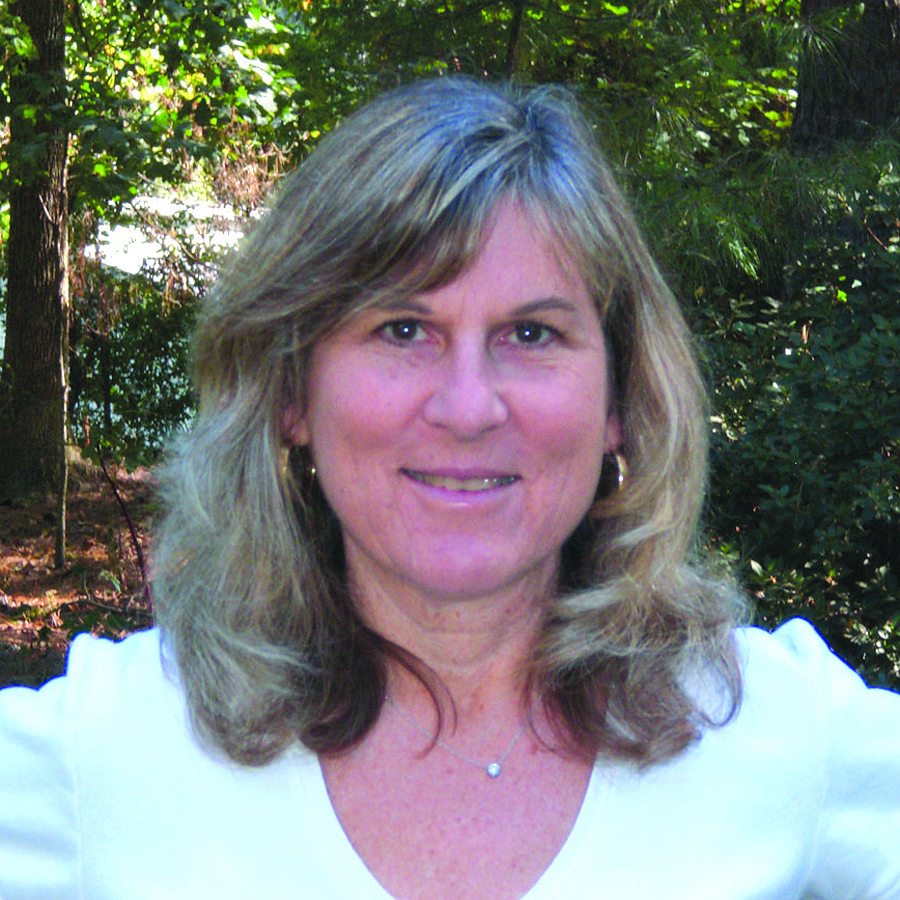
“I came down the stairs and I stood on the landing,” says Miriam Goldberg, whose dark hair, youthful face and slim figure belie her 65 years. Her eyes are fixed straight ahead as she speaks, but she is obviously gazing deep into the past. “He looked up and we both went — ha!” She inhales sharply, mimicking their mutual expression of pleasured amazement.
“That was the beginning, right there. I still remember what I was wearing.”
The two began dating. “I was just nuts about the guy, I really was,” she says.
For his part, Peter Jay Gerber was swept off his feet by this bright, dazzling beauty. He’d take her out or just come by the house to visit, where he’d sing at the piano with her mother and tutor her brother in math.
They were each other’s first true love.
The romance broke off a few years later, after he decided to go to Harvard for his MBA and she remained in Philadelphia, working as a medical secretary. Though she’d been accepted to study X-ray technology at college, Goldberg declined to go: She liked her job and the independence brought by earning a paycheck.
“He wanted somebody who had a college degree,” she says, turning toward her husband, “you effete, intellectual snob.”
This month marks the 10th anniversary of the date Miriam Soifer Goldberg and Peter Jay Gerber re-established contact, after the passage of more than three decades. Seven months later, the San Rafael couple was married, on Oct. 27, 1996 at Lake Tahoe, in what he calls “a spur-of-the-moment thing.”
Their reunification, however, was hardly serendipitous. Some might even say it was a case of Divine intervention.
After getting his MBA, the ambitious Gerber practically glided up the career ladder. He held plum jobs on the West Coast and in Europe, where, newly divorced after eight years of marriage, he “flew gliders over the Alps,” palled around with an old biz-school buddy and dated lots of women.
“I was living the life,” he says, seated on a couch in the high-beamed living room of his hillside wood-frame home. Sunlight streams in from the window at his back, while a large canvas of original art graces the wall to his left and, to his right, bookcases reach from floor to ceiling.
When he returned to California, settling in Marin, “I was listed as one of the most eligible men in San Francisco Magazine.”
Gerber piloted his own plane — “I would think nothing of popping down to Monterey for lunch” — and owned three cars: two Porsches and a BMW.
“Toys,” Goldberg interjects.
Gerber smiles.
But after retiring in 1990 at 55, “I started to get nostalgic,” he says. He thought “about my misspent youth,” and began volunteering with various nonprofit organizations. And he thought about Miriam. “I just wanted to find out what happened to her, because she was my first real girlfriend.”
He became “almost obsessed” with his desire to find her, and confesses that even during his jet-setting working days, whenever he’d go to a new city he’d pull out the local phone book to search for a Miriam Soifer.
This time, he searched the Internet, where he found 17 Soifers. He intended to contact each and every one. But he couldn’t move forward. “I thought, ah, you can’t go home again, I’d rather have the good nostalgia.”
Meanwhile, he continued to lead a busy life filled with fun and friends. While in Germany, he decided on a whim to take a side trip to Israel, where he’d never been before.
It was during the High Holy Days, and Gerber, who was raised Orthodox, took in the holy sites around Jerusalem. He went to the Kotel “to say Kaddish for my father.” He rented a plane, flying over the Dead Sea, Masada and other far-flung spots before renting a car for land-bound explorations.
He was walking down the street in Safed when he was drawn by voices coming from an old building. There he found a group of Canadians who’d made aliyah and were studying at yeshiva. The rabbi beckoned him in, and Gerber stayed for discussions.
After sunset, the rabbi invited him for a stroll. “We were walking, talking, and he said, ‘Would you like to meet your beshert?'” Gerber recalled.
“I said, ‘Who wouldn’t?'”
The rabbi then directed him to the Amuka shrine and instructed Gerber to circle the tomb of the rabbinical scholar Yonatan Ben Uziel seven times, leave a note “and within a year you’ll meet your beshert.”
Gerber followed the instructions. Afterward, he was walking toward his car when an old man, seated and brewing tea, stopped him, informing the tourist that he had circled in the wrong direction. Hovering between bemusement and skepticism, Gerber nonetheless retraced his steps, in reverse.
“Almost a year to the day later,” he says, “Miriam called.”
Turns out she’d been thinking about him, too.
For some 25 years, Goldberg lived the good, Jewish suburban life in North Miami Beach. Married with two daughters, she was active in her synagogue, held leadership roles in the National Council of Jewish Women, did community volunteer work, taught aerobics and even started a successful business baking large challahs for celebrations.
She’d also focused on self-improvement, training with a gourmet chef in Italy in the late ’70s, and getting her undergraduate and master’s degrees as a multi-tasking mom. It was no big feat, she shrugs. “I was doing my thing.”
But when she found herself single again in the ’90s, with no real reason to stay in Miami, she moved to Denver to be closer to family. And when she got there, one of the first things she told her daughter was, “I’m going to find him.”
Her fondness for Gerber was no secret, she explains. “I had told my children, all my friends, about him. I knew that I always loved him.”
She contacted his former employer and schools he’d attended, but none could help much. So she hired a private detective.
On March 24, 1996 she dialed the phone.
“Is this Peter Jay Gerber?” she asked.
“Is this Mirsie?” he responded, calling Goldberg by her nickname. Then, “How did you know I’ve been looking for you?”
She beams. “It was the first time we had spoken in 37 years.”
She invited him to her Passover seder the following week in Denver, and he accepted, staying for two weeks. And when he learned her daughter was moving to Texas, he extended an invitation for Goldberg to come to California; he’d help her find a job and a place to live.
She did find a job, one she loved, as an administrative coordinator for graduate students at California Pacific Medical Center in San Francisco. And she found a place to stay all right, never leaving Gerber’s home.
She joined Congregation Rodef Sholom in San Rafael, taking an active role in leadership positions with the synagogue and its Sisterhood. And last year, knowing she was going to retire from work, she began studying for the bat mitzvah she hadn’t had at 13. “I was confirmed a thousand years ago, but I was bat mitzvahed at 65,” she quips of the Jan. 21, 2006 event.
It’s not all been rosy, however. Shortly after they “got back together,” as they put it, Gerber became seriously ill. “I was on dialysis for five years, eight hours a day, at home.” He had a kidney transplant two years ago, but has yet to feel 100 percent.
He looks over at his wife: “I would be dead if not for her.”
She, too, developed health problems soon after their reunification. Yet this doesn’t dim her glow. She leans toward her husband and rubs his shoulder, saying, “I am a very happy and lucky” person.
Slightly embarrassed, he stammers, “Takes one to know one.”