
They came from Chicago, San Francisco, Vancouver, from places far beyond and in between. Ninety-five of them — the youngest around 4, the oldest 93 — gathered in Los Angeles for a weekend of parties and picnicking, but mostly shmoozing.
For Julius Blackman, former cantor of Congregation Ner Tamid and former executive director of Hebrew Free Loan Association in San Francisco, the late August celebration was especially sweet. It not only honored his wife of 67 years, Phyllis, and his sister Mirry, but it strengthened a family tradition — the “Cousins Club” — that had begun to wane.
The genesis is a simple concept: Cousins Beth Blackman and Barry Tavlin wanted to celebrate the 90th birthdays last year of their respective mothers, Phyllis Blackman (Aug. 24) and Mirry Tavlin (Aug. 22).
But as that idea gathered momentum, it became clear that a birthday party alone would not do. So the planning duo morphed into a reunion committee of eight cousins who, in turn, recruited others for specific projects.
All their efforts culminated in the “First International B-Z Reunion” of the Blackman and Zverow families, Aug. 24 to 26. In addition to the social events, organizers put together a family “Memories” book and family tree, and interviewed participants for a DVD.
Unfortunately, Phyllis Blackman took a bad fall on her way to the festivities and spent the weekend in a Southern California hospital. “That was how she celebrated her birthday,” her husband says with sadness.
Beth Blackman agrees the turn of events was a bitter blow, though “I think I was more heartbroken than she was.” Still, everyone sang a hearty “Happy Birthday” to her mother and “she heard enough that she just beamed.”
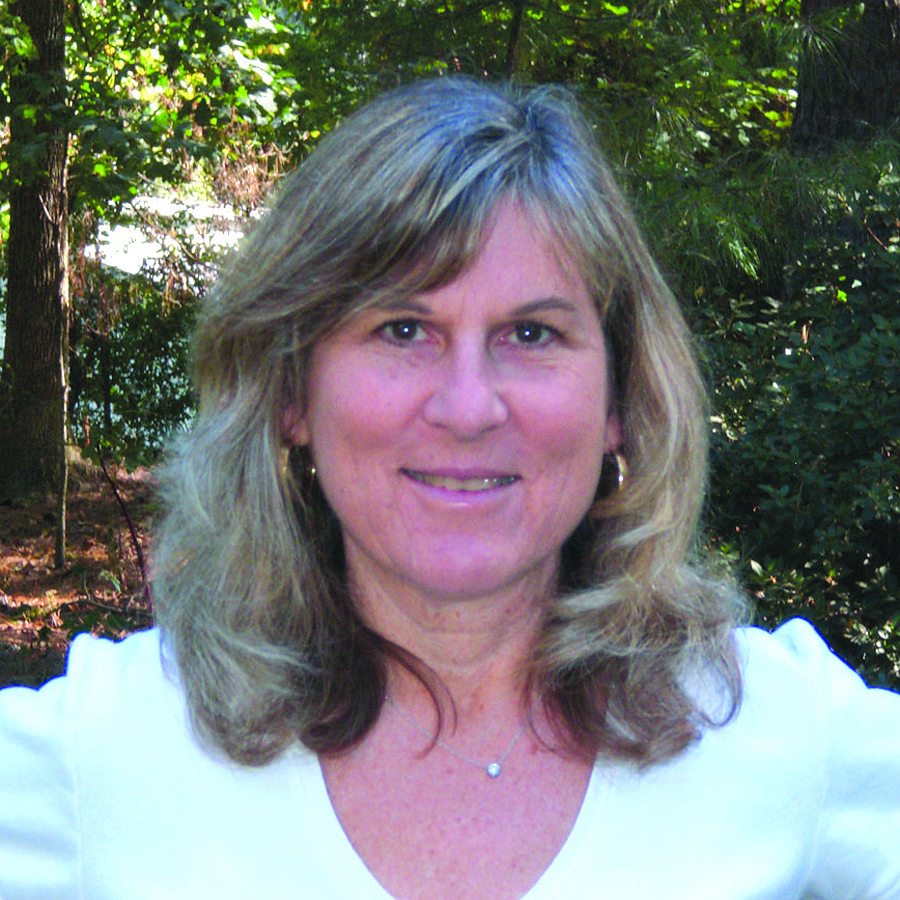
The director of operations at S.F.’s Hebrew Free Loan Association, Beth Blackman spent most of the weekend in the hospital alongside her mother, who worked for years as head librarian for the Bureau of Jewish Education in San Francisco.
“But I did go to the brunch on Sunday,” Beth says, “and it was fabulous.”
Throughout the weekend, according to her dad, “People mixed and mingled, we were interviewed and videotaped.
“I, it turns out, am the patriarch of the family. I’m the oldest.”
While some of the younger people were meeting each other for the first time, for older folk such as Cantor “Julie” Blackman, it was a homecoming. The “Cousins Club,” he explains, goes way back.
His family was one of nine, all related, that lived close to one another in Chicago in the early 20th century. The original members “came from the shtetl in Russia,” he says. His father arrived in 1910.
Jacob Blachman — as their surname was originally spelled — had been drafted into the Russian army two days after his wedding.
“In those days, a Jew in the Russian army could [serve] 25 years,” says his son. So Jacob and Ethel Blachman plotted his escape around the religious leave he would get at the start of Sukkot. “They called the roll and they called his name and he said, ‘Here!’ and he thought, ‘That’s the last time I’ll say “here,”‘”says Julius Blackman.
The young couple made their way by horse and wagon to Poland, continued on to Hamburg, Germany, and ultimately boarded a boat to New York. From there, they traveled by train to Chicago, where his sister resided.
Other family members gravitated to Chicago as well, and pretty soon the “family club” — five Blackmans, one Zverow, the two Schlosberg cousins, and a Cohen — plus respective spouses,all lived within a 1-mile radius.
Then came the children.
In the 1920s, they’d have picnics and overnights at least once a month, recalls Blackman. “We ate sandwiches, played games, sang a lot. We’re a singing family, we come from a Chassidic background.”
Some lived in apartments directly across the street from one another; others were just blocks a way. The cousins, says Blackman, “were very close. We’d play cards, pinochle, and [the younger ones] would make trouble.”
Blackman was “probably the first” of his peer group to leave Chicago, after World War II. He and Phyllis had visited Hollywood and become smitten: “We fell in love with California,” he recalls.
Though a number of the other “family club” members also spread their wings, “there’s still a good number of mispachah in Chicago,” he says.
A cluster of families — he reels off their names — live in the L.A. area, where “they get together every couple of months, go to a restaurant for a good meal, then adjourn to someone’s house for coffee, dessert, shmoozing,” he adds.
Blackman marvels at the effort and initiative his children’s generation put into the reunion. Besides planning a weekend of activities, they conducted interviews and research, tracing the family tree back to the 1700s.
And he is touched by the intangibles. “Getting together this gathering, there has been such a closeness in the family,” he says. “All of them getting involved, and the emails that traveled back and forth from Chicago to L.A. to San Francisco brought these cousins together like nothing else.”
That’s not to say there weren’t snags. “They argued about the T-shirts, the family tree, the mementos,” he says, smiling, “but at the same time, they were planning everything.”
“We were emailing a lot,” says Beth Blackman, “sometimes there were 100 a day. We didn’t always agree, but somehow we reached consensus. We ourselves became much closer.”
And, she noted, they each had their specialties. Her cousin Barry Tavlin, for instance, took responsibility for interviewing family for a DVD, while her cousin Patti Catran-Whitney organized children’s games.
In the fall, some of the cousins got together for Sukkot — a scenario that likely would not have occurred were it not for the reunion, Julius Blackman suggests.
Beth Blackman agrees that the “B-Z Reunion” has become a touchstone of sorts. “Everyone had a really great time. The younger generation, they went out nightclubbing Saturday night, and I believe they’re still in touch on their own.”
In her age group, “we’re trying to get some of the cousins together in Chicago next year.”
And though she’s completed her job on the reunion committee, her work is not done. “I would say I am now the facilitator of communications,” she says. “I keep people in touch and write family updates.”