
Treyf, in the strict sense of the word, means nonkosher. As in shrimp, cheeseburgers and pork.
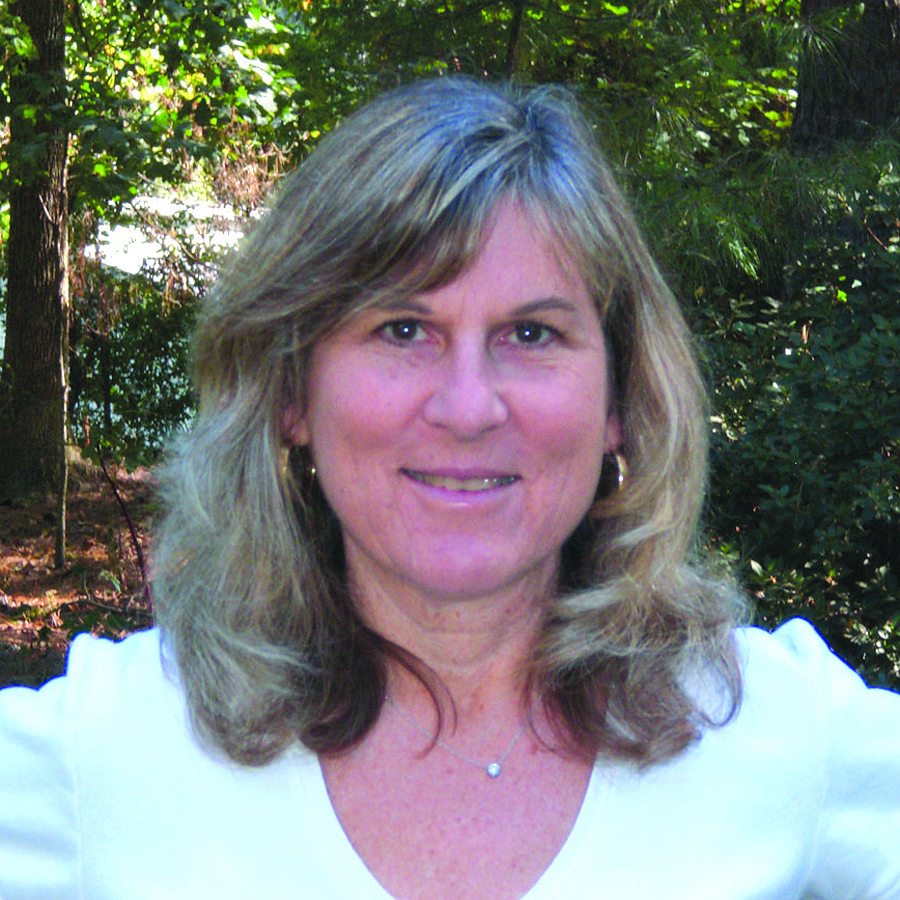
But food blogger and author Elissa Altman takes the meaning a step further in her new memoir, “Treyf: My Life as an Unorthodox Outlaw.”
While “Treyf” is rife with references to the greasy slabs of bacon and cooked Spam her father serves up for breakfast, and the mounds of shrimp in lobster sauce the family eats at the neighborhood Chinese restaurant, Altman’s book has another running theme: “treyf” meaning the improper one, the outlier.

That’s how Altman views herself, and over time and with maturity, her mother and father. Her dysfunctional family of three does not conform to the rules or roles imposed on them by their elders and extended family.
Altman’s third and latest book is a direct result of “Poor Man’s Feast,” she says by phone during a break in her book tour, alluding to her 2013 memoir and her James Beard Award-winning blog. Though the book “Poor Man’s Feast” touched on her childhood in Queens, New York, it focused more on Altman’s gastronomical and spiritual evolution.
“Treyf” takes a deeper look at Altman’s childhood and coming of age.
Altman, 53, who lives in Newtown, Connecticut with her wife, Susan Turner, will be San Francisco and Santa Cruz next week to discuss her book.
Though “Treyf” has its warm and humorous moments, the big picture isn’t pretty.
Take Altman’s mother. Glamorous and rail thin, she eats little (in contrast to her food-loving husband and daughter), dresses her daughter in clownishly “stylish” outfits and holds her husband’s parents in disdain — eventually refusing to visit them.
Altman’s father, a Madison Avenue ad man, flouts his parents’ strict religious lifestyle, but never sheds the crushing mantle of being their disappointing little boy. Grandpa Henry, who fled the shtetl alone at age 12 and arrived penniless in the United States in 1905, becomes a talmudic scholar who spends all his free time in shul. Grandma Bertha dutifully serves the family’s needs, welcoming her son and granddaughter to the table with cold borscht and cooked brains that repulses them.
 In contrast, Altman’s maternal grandmother, Gaga, loves to cook and please, making moist roast chicken on Friday nights, matzah brei egg scramble with caramelized onions, sweet and savory kugels and other comfort foods. And Gaga is more modern: Christmas, for example, is one of her favorite times of the year.
Altman becomes especially close to Gaga after her parents divorce. “She is my safety net and my world,” Altman writes.
“Food was nurturing,” she says, “and I needed to be nurtured, and I needed to be safe and secure.”
A broad cast of characters populates “Treyf,” and Altman describes them, including herself, warts and all.
Though a car accident claimed her father’s life in 2002, Altman’s mother, 81, has read the book. Her reaction? “Mothers are often surprised to learn that their offspring don’t reflect back on childhood with particular glee,” Altman says. Mothers “often look through a kaleidoscope.”
Her cousins have read the book, too, with one calling it “a difficult read,” she said.
In writing “Treyf,” Altman relied on her journals as well as “boxes and boxes” of old family photos. “I’m an inveterate journal keeper,” she says. “They travel with me wherever I go.”
She also reflected on her time at Jewish summer camp — eight years as a camper and more as a counselor — as extremely important, not only for the long-lasting friendships she established, but for the connection she made to Judaism. “It did everything to ground me,” she says. “I do have a natural spiritual yearning that is still very much there. … I remember those [Friday night] services well, and it still grounds me to this day.”
Even though “Treyf” is very much a Jewish story, it is one a wide swath of readers can relate to, Altman believes. “It strikes a chord of universality. I’ve had Muslims come up to me and say, ‘This is my story.’ This is the story of immigration and assimilation.”
And who can’t relate to food? The cuisine in “Treyf” is not always appetizing; some of Altman’s descriptions are stomach-turning. “There were heavy bowls of salty, MSG-infused wonton soup laden with flaccid, dark green bok choy that floated on the surface like sea kelp,” she writes, “mucusy shrimp in lobster sauce that my father loved and shoveled onto great piles of burnished fried rice speckled with tiny cubes of red meat the color of blood.”
“Not all food is nurturing,” she says. “As life is not all delicious and yummy, neither is food. I find that people don’t want to talk about that.”
But she cooks, like her Gaga. “I am a feeder,” Altman says, “for myself and others.”
As for that broader definition of treyf, Altman has come to terms with her familial place.
“I found peace with the fact that I will never know who I am,” she says.
“Treyf” by Elissa Altman (287 pages, New American Library)
Elissa Altman appears at 6 p.m. Tuesday, Nov. 29 at Book Passage, 1 Ferry Building, S.F., and 7 p.m. Wednesday, Nov. 30 at Bookshop Santa Cruz, 1520 Pacific Ave., Santa Cruz. Free.