
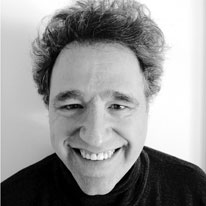
Steven Mnuchin, the billionaire financier who served as national finance chairman for Donald Trump’s campaign, said this week that he had been selected as the president-elect’s pick for Treasury secretary. If confirmed by the Senate, he would be the first Jewish member of Trump’s Cabinet.

Mnuchin (pronounced mi-nu-chin), 53, who has ties to Wall Street and Hollywood, spent 17 years at Goldman Sachs and has invested in a number of blockbuster films. After leaving Wall Street in 2002, he went on to launch the hedge fund Dune Capital Management, and in 2009 he bought the discounted assets of failed mortgage lender IndyBank during the financial crisis. Later rebranded as OneWest Bank, the institution came under fire for its foreclosure and lending practices. It was sold last year for $3.4 billion, according to Haaretz.
Mnuchin was one of the establishment Republican donors who backed Trump early in the campaign. He is the son of Robert Mnuchin, a former Goldman Sachs partner who became an art dealer and gallery owner, and is “known among Manhattan’s elite as part of one of the city’s most influential families,” according to the New York Times.
Haaretz reports that Mnuchin’s unusual last name is a Slavic version of the biblical name “Menachem,” meaning “one who comforts,” and is a common Hebrew first and last name.
During the campaign, two of Mnuchin’s former associates appeared in a campaign ad where they were villified as being part of a “global” financial conspiracy. Mnuchin reported to Lloyd Blankfein in the 1990s when Blankfein helmed Goldman Sachs’ fixed income division. (Blankfein told the Washington Post that Mnuchin was a “very smart guy” when they worked together, but they haven’t stayed in touch over the years.) After leaving Goldman Sachs, Mnuchin spent a brief period working for leading hedge fund manager George Soros. A prominent donor to progressive causes, Soros helped Mnuchin set up Duke Capital.
All of this raises three intriguing questions:
What did Mnuchin think of the ad?
Lots of Trump defenders on social media are pointing to the naming of Mnuchin to refute claims Trump is an anti-Semite. But others are dismissive of that defense, noting that Trump and his campaign trafficked in language and conspiracy theories that would immediately be understood by anti-Semites as signaling Jewish villainy — and galvanize them to back the campaign.
In the closing ad, believed to be the work of incoming chief strategist Stephen Bannon, photos of Soros and Janet Yellen, head of the Federal Reserve, accompanied Trump’s denunciation of “those who control the levers of power in Washington” and “the global special interests.” Blankfein’s face was used to illustrate the “global power structure that is responsible for the economic decisions that have robbed our working class, stripped our country of its wealth and put that money into the pockets of a handful of large corporations and political entities.”
As campaign finance chairman, Mnuchin might well have signed off on the ad. What did he think, not just of the framing of relatively obscure Jewish banking figures as villains, but of the inclusion of two people who mentored him?
What will Trump’s voters think of the choice?
Mnuchin is not just a graduate of the moneyed class Trump claimed to repudiate during his campaign, or of the very firm that Trump said had “total control” over Hillary Clinton: He is known for running a bank, OneWest, that profited from as many as 36,000 foreclosures, according to a housing advocacy group.
NPR tracked down a couple, Rose and Rex Schaffer, who lost their home of nearly 50 years after failing to persuade a phalanx of bureaucrats to back down. They voted for Trump. Asked about Mnuchin’s new prospective job, Rose sounded puzzled: “If he can’t run his own little bank, how can he handle a large thing for the United States?”
What happens to Yellen?
Janet Yellen is the only villain in the Trump ad who does not seem to have once had a nurturing relationship with Mnuchin, so she’s yesterday’s news, right?
Not so much. Trump obviously doesn’t like her, saying during the campaign that the Fed kept interest rates artificially low to prop up Obama, but there’s not much he can do until 2018, when her term ends and he gets to name her replacement.
Mnuchin in his interviews seems more focused on a tax overhaul then he does on the Fed; on Nov. 30, he told CNBC that Yellen was doing a “good job.”
J. staff contributed to this report.