
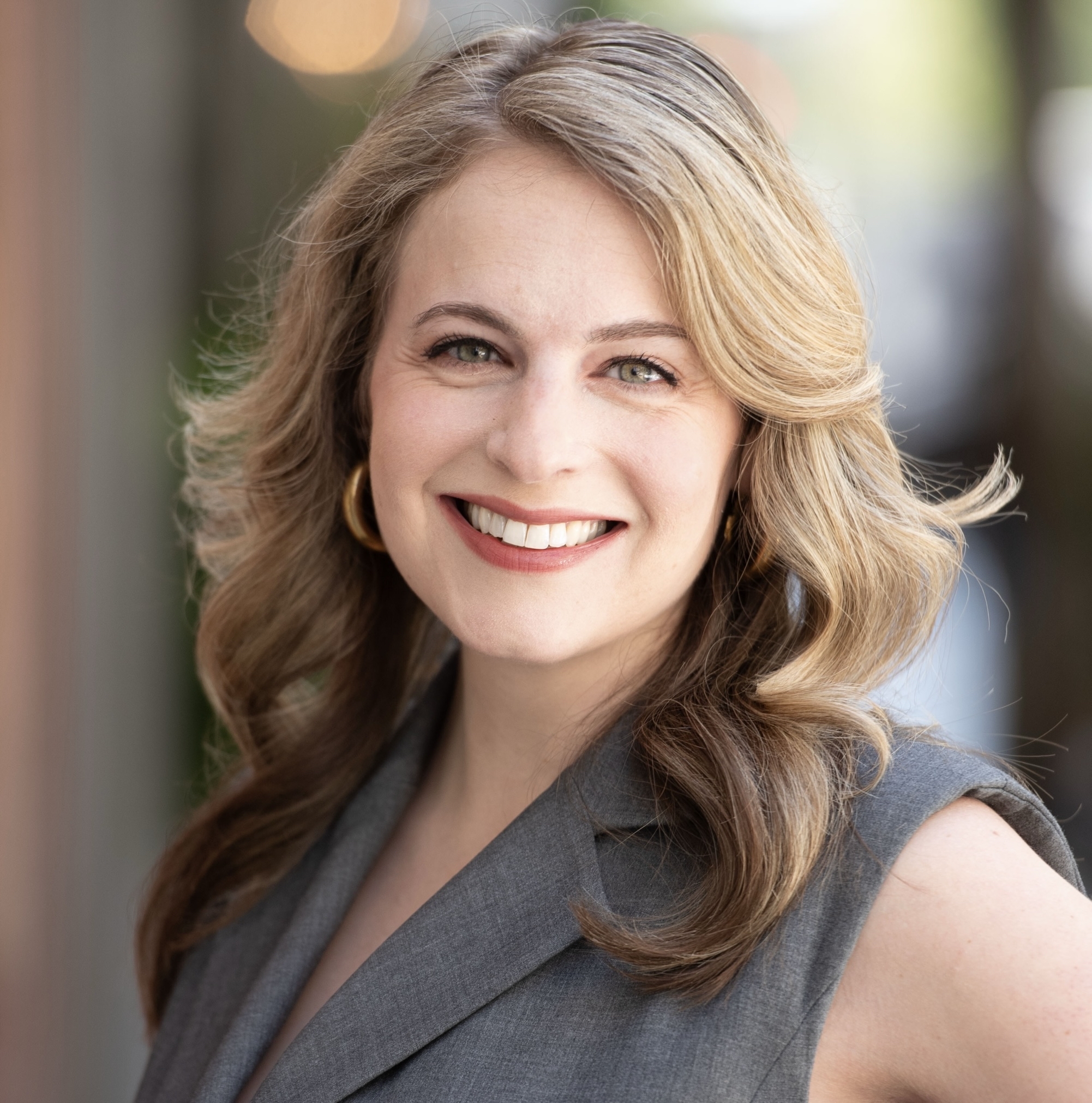
Pella Schafer Weisman can still recall the warm night in 1995 when a group of young Jewish progressives drafted the mission statement for a fledgling nonprofit.
Amid spread-out sleeping bags and the smell of microwave popcorn, Schafer Weisman, who was in her 20s, helped 10 or so Jewish teenagers create the foundational document for the social justice group Jewish Youth Community Action or “JYCA” (commonly pronounced “jike-uh”).

“I don’t think we had any idea the longevity of what we were building,” Schafer Weisman, 53, told J. recently. “It just felt exciting.”
But over the summer, citing “chronic” staff turnover, financial woes and other struggles, JYCA announced it would be closing a year shy of its 30th anniversary.
Now past leaders and teens, including Schafer Weisman, are planning one final event on Nov. 17 that will look back on JYCA’s history and highlights.
Financial troubles
“The organization struggled with instability for a long time, including fundraising challenges, administrative burdens and chronic staff turnover,” said Andrew Gordon-Kirsch, 37, a former board member who also served as interim executive director for eight months in 2021 and 2022.
A participant as a teen in the early 2000s, Gordon-Kirsch said JYCA’s budget was sustained through three channels: approximately 40% from individual donations, 40% from grants or major gifts, and 20% from tuition and other revenue.
But in recent years, the nonprofit’s grants have been shrinking.
For example, the Walter & Elise Haas Fund, a key revenue source since 1996, donated a combined $165,000 from 2018 to 2021, according to the fund’s website. For the next three years, the fund reported that it gave $15,000, $5,000 and, finally, one last large grant of $50,000 for this year.
In November 2023, the fund announced it had “paused” its Jewish Life grantmaking program entirely. JYCA was one of several local Jewish organizations affected.
“They’ve been very good to us,” Gordon-Kirsch said of the Walter & Elise Hass Fund, noting that JYCA was aware the fund was aiming to “wean” the organization off its largesse.
JYCA also was a beneficiary of the S.F.-based Jewish Community Federation’s five-year grant for Jewish teen education and engagement, which ended in 2023, Gordon-Kirsch added.
On top of all that, he said, a major donor dropped out.
“We were looking at essentially a third of our budget being cut for next year and realized, OK, is this something that we can realistically make up?” Gordon-Kirsch said. “Or is this actually time to throw in the towel?”
JYCA considered merging with any of 12 other organizations that could lend administrative and fundraising support, he said. “And all 12 conversations ended up leading to a decision: Either they weren’t ready because of the timeline or their capacity, or it just didn’t seem like it was a values fit.”
“There was always a lot of pressure on us to raise money and keep raising money — and to figure out how to make things kind of happen organizationally,” Schafer Weisman added.

Now a psychotherapist and educator at the California Institute of Integral Studies, Schafer Weisman founded JYCA at age 24 and served as its executive director for the first five years, with no prior professional experience in financial management. “I was so young. That was never my strength.”
With a staff of just two people for most of its history, the funding challenges persisted.
“I think the program was always very strong,” Schafer Weisman added. “But there have been several different times throughout our history when we were almost about to close, and then made it through at the last minute.”
‘Life-changing’ experience
Satya Zamudio, now a sophomore at Occidental College in Los Angeles, told J. that her nearly four years with JYCA as a teen were “life-changing.”
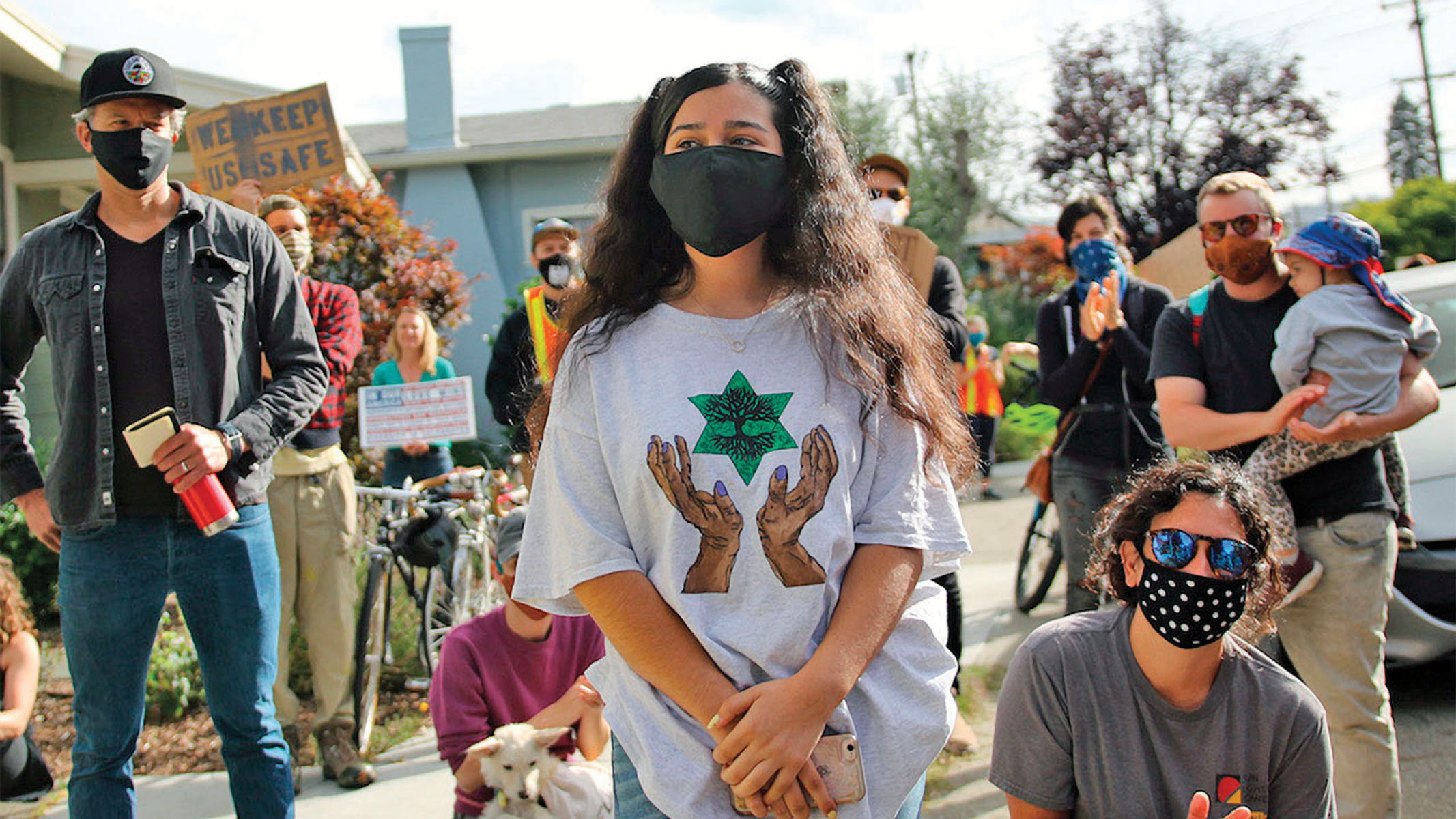
Specifically, she recalled, “We were all able to talk about that shared experience of being in mainly white-dominated Jewish spaces. But also we were able to explore our identities, as what it means to be a Jew of color,” said Zamudio, who is Jewish and Mexican.
She helped start JYCA’s “Jews Against Marginalization” (JAM) program in 2019, designed for Jewish teens of color like her.
Zamudio credits JYCA and its model of youth empowerment — letting teens manage the ins and outs of small nonprofit management, for example — with awakening her inner activist.
As a high school student in the summer of 2020, she participated in an East Bay Jewish youth-led meeting that urged the Oakland Unified School District to eliminate its police department. Dubbed the “George Floyd Resolution,” the measure passed.
Now in college, she’s studying critical theory, social justice, Latino studies and education.
Saying goodbye
In the process of gaining its nonprofit status, JYCA needed a fiscal sponsor. In 1995, Berkeley’s Jewish Renewal community Aquarian Minyan took on that role. After a few years, Jewish Family & Community Services East Bay stepped up. Then in 2004, and for the next 17 years, Kehilla Community Synagogue in Piedmont was not only JYCA’s fiscal sponsor, it was JYCA’s “home,” Gordon-Kirsch said.
Talia Cooper, 39, was a JYCA teen in the early 2000s and later its executive director for a time. Cooper, who is married to Gordon-Kirsch and the daughter of Kehilla Rabbi Emeritus David Cooper, said alumni and supporters have “been on a real journey this last year — kind of grieving it, and going through the different stages of grief.”

On Nov. 17, everyone connected to JYCA (and others) will have the opportunity to gather one last time at a “Celebration of Life for JYCA” at the David Brower Center in Berkeley.
Cooper estimated that 300 to 500 teens participated in JYCA over the decades, and she’s hoping a significant number attend either in person or via livestream. It will feel like “a little taste of JYCA,” she said.
Included will be some of JYCA’s well-loved traditions, such as “check-ins” for participants to share how they’re doing. There will also be food, art, archival photos and memorabilia, and at least one speech in appreciation of Schafer Weisman.
The organizing committee is also packaging JYCA’s curriculum — for workshops and training teens — into files they’ll post for public use. Workshops along the way included lessons on active listening, understanding the concept of “cool” in relation to capitalism and helping youth discover their own power.
Plans are also underway to create a JYCA photo tribute wall that will later be displayed permanently at Kehilla synagogue.
“I think one of the magic ingredients was the quality of community and the way that people were encouraged to treat each other,” Schafer Weisman said when asked what sustained JYCA over the years.
“It was kind of miraculous that it all happened, and I do feel proud of that work,” she added.
“Looking back, I feel like JYCA was always a boat with a lot of holes in it, but it was a boat that we really, really loved,” Cooper added. “And so the whole community, we kept shoveling the water out. It’s amazing, we shoveled it out for almost 30 years.”