

Alissa Bernstein grew up attending Congregation Kol Emeth in Palo Alto and Camp Ramah in Ojai. Now 25, she has embraced Israel and the Jewish community by taking a job right out of college with the American Jewish Committee’s regional office in Los Angeles, where she is now assistant director.
But “embracing” doesn’t mean the Palo Alto native agrees with everything she was taught growing up. For example, she told J., her Ashkenazi-centric education included the “disconcerting pattern of always starting Jewish history with the Holocaust, which paints Jewish history as one of victimhood, and that’s dangerous.”
Reading more as a young adult about the Jewish experiences in Spain, Iraq, and other places far from Eastern Europe strengthened her sense of peoplehood, she said, as well as her commitment to the ongoing building of a state for Jews in their historic homeland.
“Now I can say, yes, we are indigenous to this land as are other people,” she said in a recent interview. “I come from a historic, tribal people.”
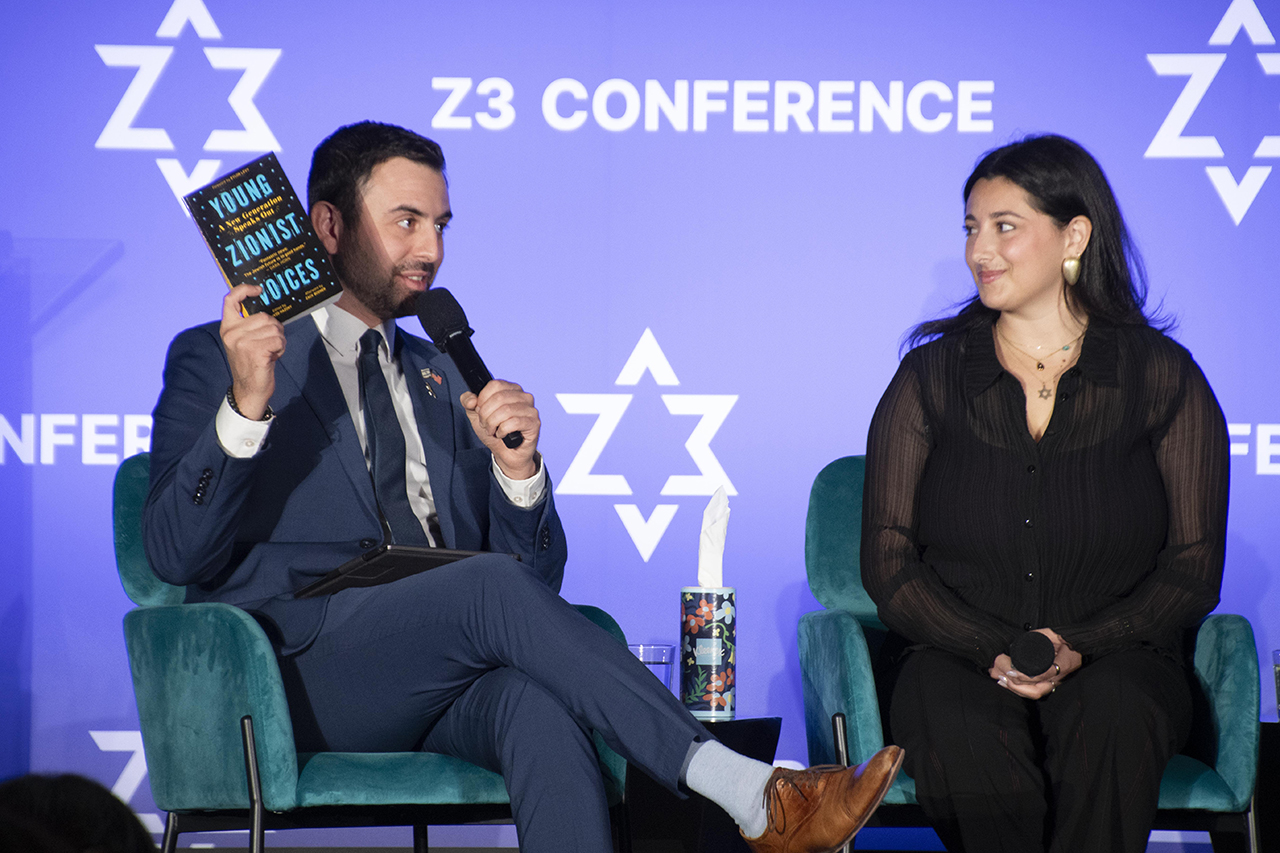
Bernstein is one of 31 Jews from the English-speaking diaspora and from Israel, all under 30, who contributed essays to “Young Zionist Voices: A New Generation Speaks Out,” published in November by Wicked Son in cooperation with the Palo Alto-based Z3 Project.
This marks the first time so many Gen Z Jews with self-professed Zionist leanings have aired their views in one book. That alone makes the book worth reading. But these essays reveal much more. Filled with optimism, passion and empathy, both for fellow Jews and non-Jews, they unveil a portrait of a generation that is more public in its Judaism, less deferential toward Israel and deeply committed to an ahavat Yisrael, or love of the Jewish people, that respects the wide diversity of Jewish ethnicities and religious observances.
Some contributors are in school, while others work in the Jewish community. And they are chomping at the bit to take the communal reins.
In his essay “It’s Time for the Grown-Ups to Step Aside,” British Jewish activist Noah Katz writes, “Let us change your tired systems for the better. We’re not a threat. We have the same deep-rooted love for our people as you do. … Let us not just shake your stale systems up, but… flip them on their heads.”
David Hazony, editor of the book and director of the Z3 Institute for Jewish Priorities, selected the essay writers. With some exceptions, they do not know one another, but they are united by having come of age during the crises of the Covid-19 pandemic, violence and war between Hamas and Israel and a surge in antisemitism worldwide, all of which have led to feelings of isolation.

“They have gone through an awful lot that we never went through in our generation growing up, and their thoughts about Israel and Zionism and fighting back have developed and gone to places where we didn’t,” said Hazony, who is part of Gen X.
Reading these essays, it’s clear that the writers have different conceptions of Zionism. They present an expansive notion of it, one that envisions a strong diaspora next to a strong Israel, each taking inspiration and support from the other.
“It’s not about putting Israel at the center. It’s about using Israel as an engine of spirit and identity and pride,” Hazony said.
For them, moving Israel out of a privileged position in the Jewish worldview is not about disparaging the Jewish state. It’s part of their vision of the Jewish world as completely interdependent.
“The central problem in today’s Zionist discourse is its insistence on the Ben-Gurionite approach: focusing exclusively on the Jews’ right to a sovereign state in the Land of Israel,” writes Oz Bin Nun, a student at Hebrew University and a soldier in the current war in Gaza.
After the Oct. 7, 2023, Hamas massacre, he writes, both sides of the Israel-diaspora relationship slipped back into the “comfortable clarity of early Zionism, and the implicit division of labor between the Israeli protagonist and the faithful supporting role of the American Jew.”
That fallback position is “not merely one-sided and unsustainable. It misses the key to the survival and prosperity of Jewish communities,” he continues. “One cannot act as though the only important story is happening in Israel.”
Jewish pride is another common thread in the essays. Wear your Magen David and kippah in public, several essayists urge. Don’t be an “inconspicuous Jew,” writes 20-year-old Charlie Covit, a sophomore at Harvard College.
“Jews are, at least in my view, the world’s most awesome extended family,” Covit writes. “And when it’s your family that’s in danger, you don’t keep your head down. … We have to look after each other.”
An aversion to victimhood is another shared theme, as is taking a public stand rather than blending in, as earlier generations tried to do. Public displays of antisemitism might trigger anxiety among older Jews, but they just make these Gen Z Jews angry. And they fight back — as did Adela Cojab, who in 2019 filed a federal complaint against New York University over its failure to protect Jewish students, including herself, from discrimination and harassment. Her efforts led to one of the first settlements over antisemitism as a form of discrimination under Title VI of the Civil Rights Act.
In her essay, Cojab relates how her mentor at NYU advised her not to file the complaint because “drawing attention to antisemitism would only make it worse.”
“This perspective, ingrained in the mentality of Jews of past generations, grounded in fear and caution” is not one she or her peers share. Similar Title VI lawsuits have since been brought against Harvard, Columbia, UPenn and many other schools, she writes, demonstrating that the Jewish diaspora is “vibrant, resilient and strong.”
The kind of pride these essayists favor is not bombastic or jingoistic but comes from a commitment to a “collective project,” as one writer put it. “Something bigger than ourselves that gets us out of bed in the morning.”
“We are different,” writes Australian Josh Feldman, suggesting that the answer to a lackluster diaspora identity “lies not in doubling down on funding Israel programs, nor ramping up Israel advocacy [but] being honest with ourselves about who we are.”
He continues: “If we want future Jewish generations to thrive, we need to hammer this message home. We’re different, and that’s okay. It doesn’t make us any better or worse than anyone else. In fact, it’s great: it’s what makes being Jewish so wonderful.”