
More than a decade before Israel’s birth, musicians in British Mandate Palestine created what would become the national orchestra.
Many of the same forces that shaped Israel’s birth were instrumental in the 1936 formation of what is now known as the Israel Philharmonic Orchestra, as hundreds of Jewish musicians purged from European orchestras in the 1930s found refuge in the British-controlled territory.
On the cusp of its 90th birthday, the celebrated company is embarking on a seven-city U.S. tour that includes a stop at Davies Symphony Hall in San Francisco on March 23. It will be the orchestra’s first Bay Area performance since 2022.
The program planned for Davies is “almost like a portrait of the orchestra,” violist Yoni Gertner, who also serves in a top position in the orchestra’s musician-led management, told J. in early February.
Each piece represents a particular thread running through its history, starting with Tzvi Jacob Avni’s “Prayer.”
Avni, now 97, was born Hermann Jakob Steinke in Saarbrücken, a city now in Germany. He is a living link to the historical European milieu out of which the orchestra coalesced. His relationship with it runs deep.
“He’s not just still active. He came to watch a concert last month,” Gertner said. “He’s one of the second-generation composers in Israel, and some of his teachers were first generation, who established the genre of Israeli classical composition. He connects them to future generations, as many of us took classes with him at university.”
The Davies program will also feature Max Bruch’s powerful 1880 composition for cello and orchestra of “Kol Nidrei,” named for the Yom Kippur prayer. Bruch’s piece has long been part of the orchestra’s repertoire. Also included will be Leonard Bernstein’s “Halil,” which was written for the Israeli orchestra in 1981 in honor of Yadin Tanenbaum, a young Israeli flutist killed at the Suez Canal during the 1973 Yom Kippur War.
“Bernstein was very connected to the Israel Philharmonic,” Gertner said. “He was an honorary guest conductor, and he composed this really beautiful piece dedicated to a soldier.”
The program will close with Tchaikovsky’s Symphony No. 6. The orchestra has a deep connection with the Russian composer’s music “that’s hard to explain,” Gertner said. “It’s just very comfortable and natural when we play his symphonies. The Sixth is one of the most beautiful, but you can’t pick one as a favorite.”

The orchestra returns to San Francisco at a fraught moment for classical music in the city. The San Francisco Symphony is still trying to right itself after Esa-Pekka Salonen decided not to renew his contract as music director last year.
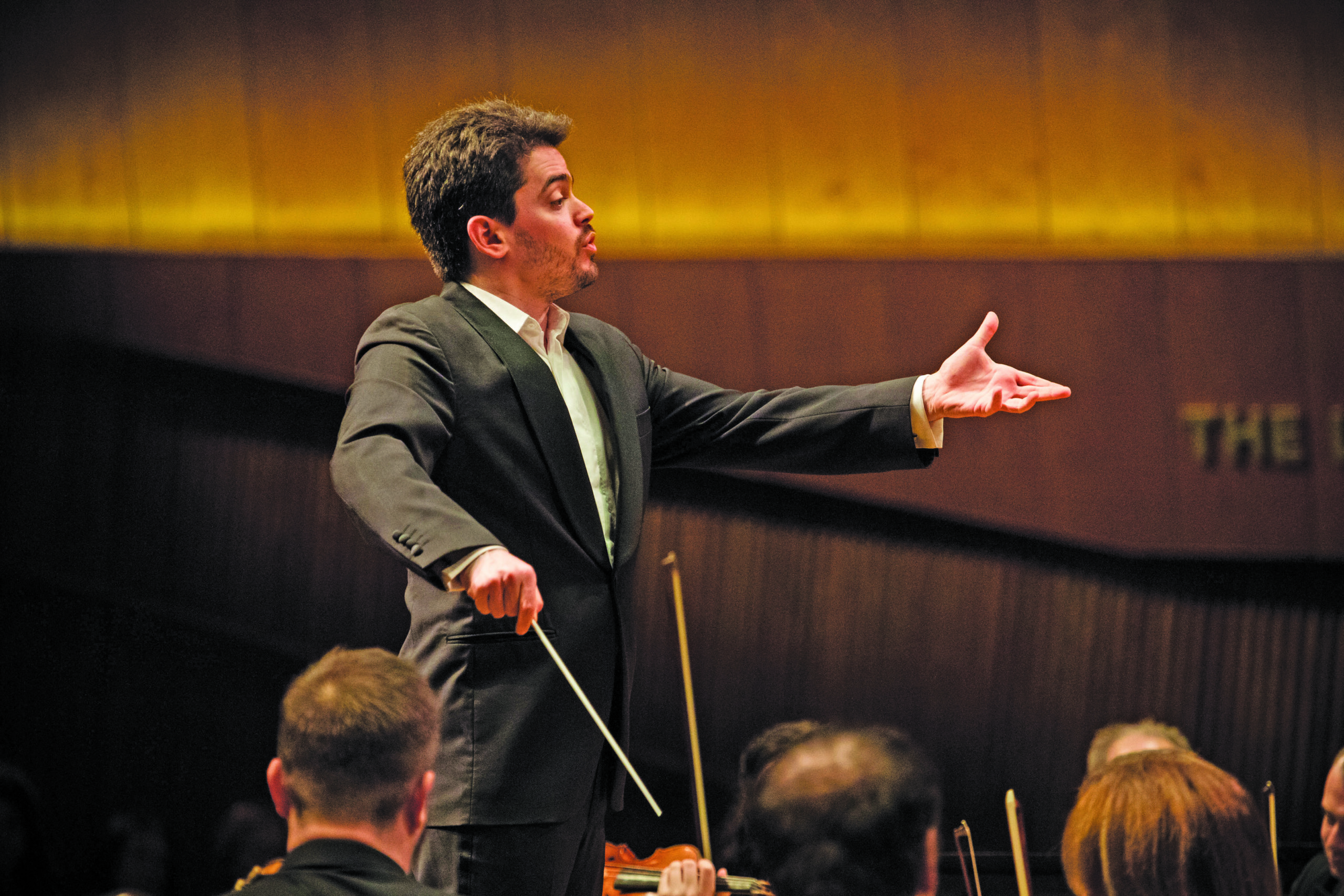
In contrast, the Israel Philharmonic announced in January that music director Lahav Shani’s contract was extended through 2032.
The orchestra has long been led by the musicians themselves, following the model of European organizations such as the London Symphony Orchestra, Vienna Philharmonic and Berlin Philharmonic. In the U.S., this model is far less common.
“The players form all kinds of committees dealing with transportation, the schedule, all kinds of things that have to do with the conditions of the players,” Gertner said. “And we’re taking part in big financial and artistic decisions: whether we go on tour, pursue big projects, salaries, whether we want to invite a certain soloist. It’s self-run, almost as if it’s owned by the players.”
One piece of the tour that the musicians cannot control is the political environment.
When the orchestra performed in San Francisco in 2022, about two dozen anti-Israel protesters showed up outside Davies hall.
Likewise, dozens of anti-Israel protesters showed up Feb. 22 and 23 outside of UC Berkeley’s Zellerbach Hall when Israel’s premier Batsheva Dance Company performed to sold-out audiences. Those same protesters hope to disrupt the orchestra’s upcoming tour, accusing the musicians of “artwashing” Israel’s treatment of Palestinians.
The current tour is the orchestra’s third since the Oct. 7, 2023, Hamas massacre that started the war in Gaza. Gertner said the orchestra has only faced one small protest in Switzerland so far.
“We respect people’s rights to protest as long as it’s peaceful and allows the concert to go on,” he said, while noting that the musicians are generally too engrossed in their work to take much notice.
That said, the fate of Israeli soldiers and hostages weighs heavily on the musicians.
“Everyone is affected by the bigger picture,” he said. “We always have the hostages on our mind.”