

Two documentaries coming to the Bay Area this month probe the trauma at the heart of what happened on, and after, the Hamas invasion of Israel on Oct. 7, 2023. Neither film is easy to watch, but both have something crucial to say about life in Israel and the U.S. since that day.
“There Is Another Way” is about Combatants for Peace, an Israeli-Palestinian group focused on coexistence and founded on a bedrock of nonviolence.
Members of the group have visited the Bay Area multiple times in recent years, including Sulaiman Khatib, who grew up in the West Bank. After serving time in prison for stabbing two Israeli soldiers, he came out determined to abandon violence.
Oct. 7 and its aftermath have been a challenge for the group, member Iris Gur, who appears in the film, told J. in an email interview.
“For most of us — including myself — the first reaction was anger, hatred, fear and even a desire for revenge,” Gur said. Open dialogue among group members has helped, she said. But they have faced outside hostility for continuing their efforts.
“Honestly, I feel that the circle of people I can speak freely with is shrinking.” Iris Gur, Combatants for Peace
“Honestly, I feel that the circle of people I can speak freely with is shrinking,” she said. “The atmosphere in Israeli society is increasingly right-wing, religious and fascist. People who share my views are afraid to speak out.”
The film includes hard-to-watch footage of brutal violence on both sides of the conflict.
“It is always a challenge to make a film that holds the suffering of both people, but it also feels essential,” director Stephen Apkon told J. in an email.
The film, which will screen March 13 in San Rafael and March 14 in San Francisco, started as a short epilogue to Apkon’s 2016 film “Disturbing the Peace.” But Oct. 7 changed the landscape, he said.
“Not only were the Combatants for Peace being challenged by the events of Oct. 7 and the Israeli response, there were new people joining from both sides,” he said. “People who had suffered unimaginable loss.”
The documentary’s executive producer is Oscar-winning filmmaker James Cameron, “who saw an early version of the film and was incredibly generous in reaching out and saying that he was committed to helping get this message out,” Apkon said.
“Torn: The Israel-Palestine Poster War on NYC Streets,” a documentary released on the one-year anniversary of the Oct. 7 massacre, will screen in Palo Alto on March 11 and in Aptos on April 26.
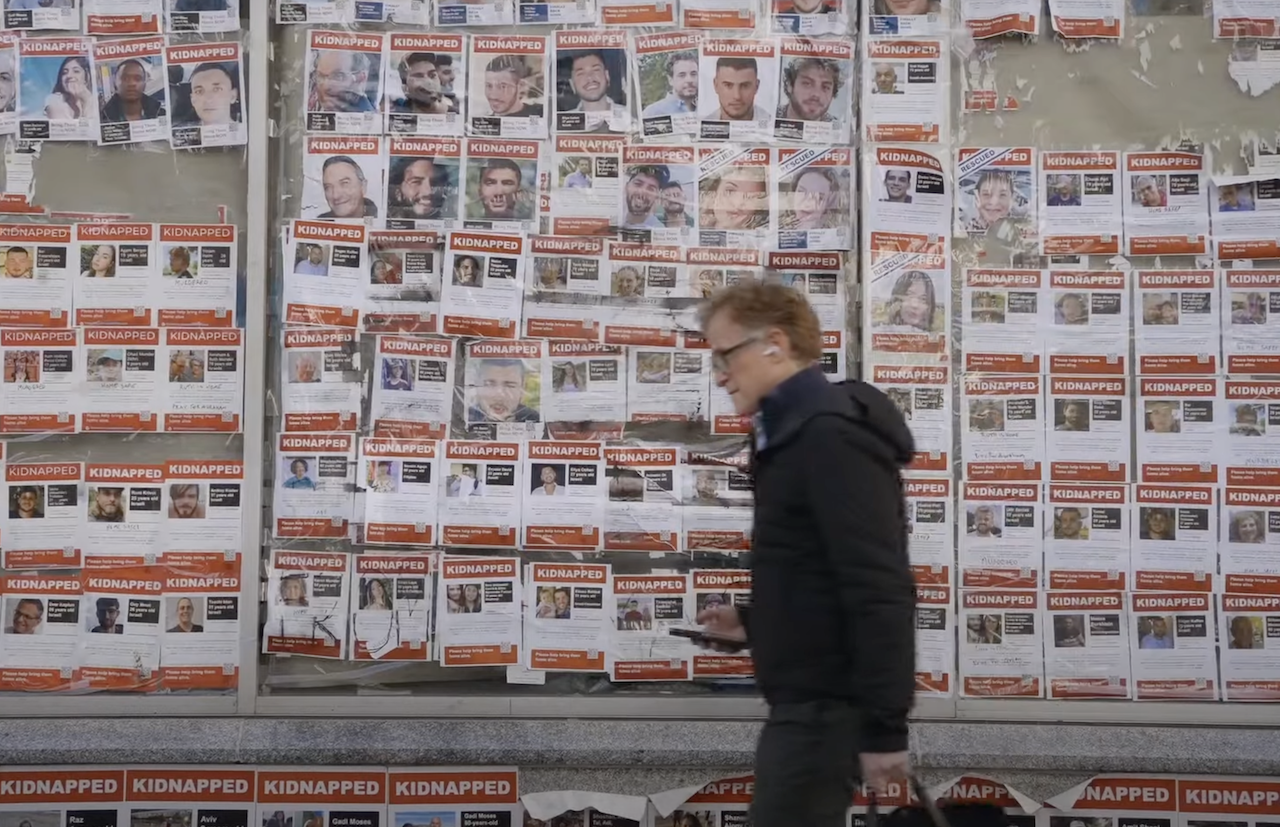
The film examines how hostage posters in New York became a flash point in the divide over how Americans view the Hamas attack. That division created a “cultural ‘paper war,’” director Nim Shapira told J.
After Oct. 7, New York was plastered with red-and-white “Bring Them Home” posters with the faces of the 251 people abducted by Hamas.
“Amid the horror, this felt like a small silver lining — my city of 11 years was standing up, calling attention to the urgent need to bring them home,” Shapira said in an email interview.
The iconic posters not only sought to raise awareness of the hostages but also reflected Jewish grief. As a result, many were shocked when it became apparent that people were ripping down the posters, even those of kidnapped children.
“These posters became more than images; they became symbols — subjective, with each side projecting their own beliefs onto them,” Shapira said.
Using footage shared on social media and interviews with artists, free-speech experts and relatives of hostages, Shapira examines the emotions behind outward displays of anger and frustration on both sides as New Yorkers struggled with questions of justice and humanity.
“My goal was to capture the personal stories, the raw emotions and the deep ideological divides that emerged in the wake of the poster campaign,” he said.
Both films expose deep wells of anger and pain, but both also make pleas for empathy and connection. Shapira said he wants people to step outside their echo chambers and try to understand the motivations and humanity of others.
“Silencing people through doxxing, cancel culture and public shaming doesn’t change minds. It just drives beliefs underground,” he said. “Instead of fostering dialogue, it pushes people to hide their views, deepening divisions rather than bridging them.”
For Gur of Combatants for Peace, connecting with those who in other circumstances might be called enemies is the only way forward out of despair and hatred.
“We are living through a terrible chapter of history, but history changes,” Gur said. “One day, things will be better.”
“Torn”
7:30 p.m. March 11 at Oshman Family JCC, 3921 Fabian Way, Palo Alto. Screening and Q&A with director Nim Shapira. $29. tinyurl.com/torn-pajcc
7 p.m. April 26 at Temple Beth El/JCC, 3055 Porter Gulch Road, Aptos. Free. tinyurl.com/torn-aptos