

Sponsored by URJ Camp Newman and produced by J.’s branded content studio.
From the hilltop at URJ Camp Newman, the Sonoma hills roll out in bands of oak, bay laurel, and redwoods. A new hotel-like lodge with open-air balconies stands at the center of campus, its clean lines set against the verdant landscape. Just below, near the main courtyard, a charred redwood stands as a poignant reminder of the 2017 Tubbs fires that ravaged the property. At the base, fresh green shoots now press out from the blackened bark.
This fall, long tables will fill the main plaza, set with a globally diverse array of Jewish food and local wines, for the second annual Jewish Food & Wine Retreat, celebrating not only Jewish life but also an ethos of renewal and resilience.
A Weekend of Nourishment and Connection
Last year’s retreat leaned heavily into Jewish deli culture as a nod to New York traditions. This year, the lens is wider. Workshops will spotlight Roman Jewish artichokes, Persian rice scented with saffron and rosewater, Ethiopian stews, Ladino sweets, and global interpretations of challah.
“This is not just matzo ball soup and challah,” said Jordanna Flores, Newman’s director of year-round programs. “We’re celebrating the diversity and complexity of Jewish food and wine culture globally by lifting up local culinary artists and wine makers.”

Workshop options might explore how Jewish kitchens adapt across continents by balancing flavors from Sephardic, Ashkenazi, Mizrahi, and contemporary diasporas while also asking ask big questions: How do we honor tradition while caring for the planet? How do we choose what sustains us?
Returning this year, chef and dietitian Micah Siva will lead sessions that balance traditional recipes adapted to cultural evolution, as well as how to incorporate Jewish food into everyday life. Micah is thinking of teaching about global variations of challah, including recipes from Yemenite, Moroccan, and Indian Jewish communities. Or diving into meat-free dishes inspired by Jewish traditions of stewardship and sustainability. “Jewish food will persist and survive with adaptation and evolution, just like us,” Siva said. “We’re asking participants to think about nourishment not just for themselves, but for the world.”
The weekend will explore Jewish agricultural traditions and their contemporary relevance to sustainability and food justice. Activities will include baking challah recipes from around the world, and Jewish fusion cooking from soul food to Asian cuisine. A “Scent and Spice” class will help participants explore the symbolic and sensory roles of spices in Jewish ritual.
Other workshops will invite guests to cook together, preparing and plating dishes that will be served at communal meals later that day. And participants won’t just taste these dishes. They’ll hear the stories behind each dish: how Roman Jews turned artichokes into a local delicacy, how Persian Jews adapted spices from ancient trade routes into Shabbat meals, and how Ethiopian Jewish traditions found their way into modern kitchens.
Wine as Celebration and Spiritual Connection
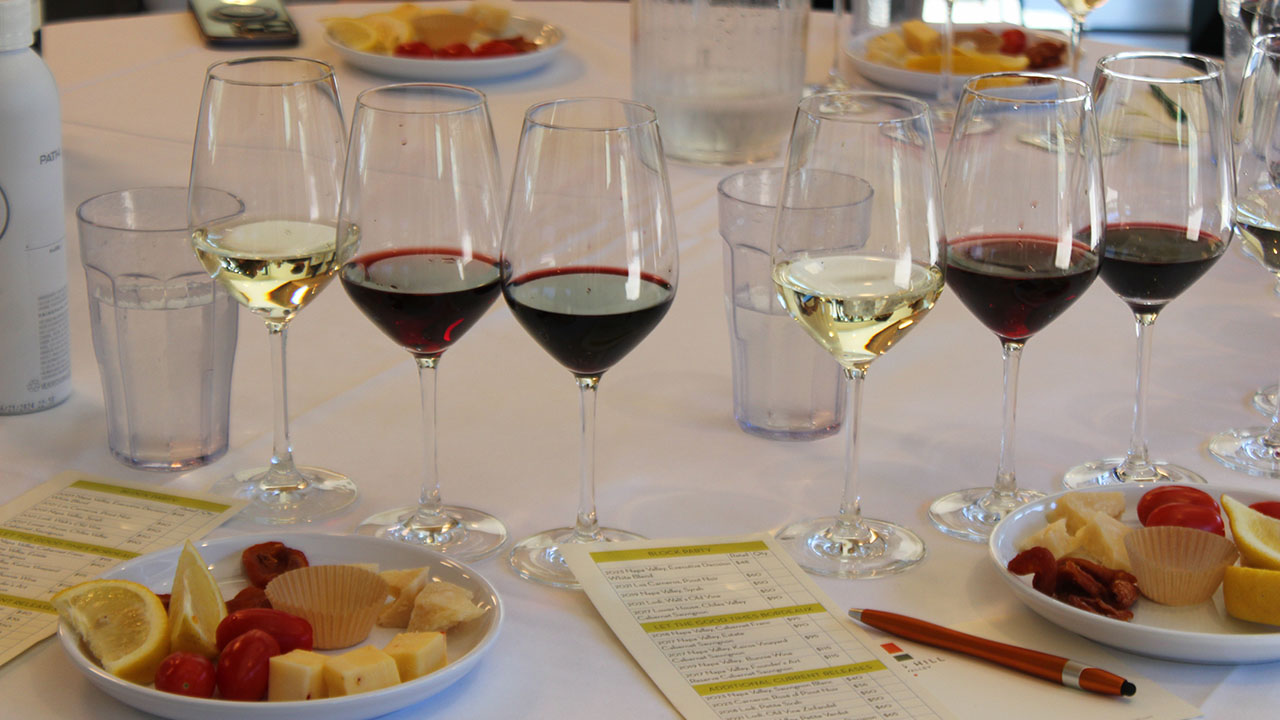
Beyond food, the weekend will feature a lineup of local vintners who will pair wine with the prepared dishes and lead discussions to spark conversation about the role of wine in Jewish rituals and celebrations, from Shabbat tables to weddings to everyday moments of joy. “There are numerous occasions where wine is central to Jewish ritual,” Flores said. “The idea of celebrating and toasting to life when we say, ‘l’chaim,’” is deeply woven into who we are.”

Julie Rothberg, a wine educator and president of a local winery, helped curate the local vintners. “Wine is not profane in Judaism. It’s holy,” Rothberg said. “We’re taking something from one state to another, transforming it, and blessing it.”
Most of the wines poured won’t be kosher, but the vintners bring a Jewish lens to their craft. “Wine, by its nature, is a lubricant for emotional connections—whether with family, friends, or community,” Rothberg added.
She’ll also lead a “Wine 101” workshop, guiding participants through the fundamentals of wine tasting: acidity, body, tannin, and finish. “If you’ve been drinking wine for years, there will still be something new to learn,” she said.
A Living Celebration
When the Tubbs Fire tore through Camp Newman, it wasn’t just buildings that were lost. It was a gathering place for generations of Jewish families in Northern California.
“Newman was rebuilt thoughtfully in this special, gorgeous location so we would be able to come together as a joyful Jewish community for a camp experience that is elevated and refined,” Flores said.
Retreat participants will also have the option to engage in spiritual practices tied to food, supporting a sense of renewal during the retreat. Morning blessings over fruit and grains will be woven into breakfast rituals. A havdalah ceremony on Saturday night will feature wine and spices crafted earlier that day in scent and tasting workshops.

“This isn’t a weekend only for consumption,” Flores said. “It’s about learning, and about coming away with a deeper sense of how we connect to food, to the earth, and each other.”
Evenings will end with songs under the stars and shared meals outside in the courtyard, set against the backdrop of fall foliage and the new growth around the redwood tree. For Siva, the retreat holds personal meaning. “Last year, I met a long-lost cousin from Canada at the retreat,” she said. “It’s that kind of place. You come for the food and wine, but you leave with something else—a connection you didn’t know you were missing.”
At Camp Newman, resilience isn’t just an idea. It’s the ground underfoot and the unwavering community of meals shared between strangers who become family and rituals that stitch new meaning into old traditions. Resilience will be celebrated in the way it always has been here—through community, through memory, and through having the space to unleash unbridled joy—one meal, one story, and one glass of wine at a time.
“We want people to leave feeling deeply nourished—not just by the food and wine, but by the sense of belonging,” said Flores. “This is what joyful Jewish living looks like.”