

Food coverage is supported by a generous donation from Susan and Moses Libitzky.
When Bex Michelson was growing up in San Francisco’s Richmond District, she and her family would frequent many of the Russian grocery stores, bakeries and delis that lined Geary Boulevard. Many are now gone, but not all.
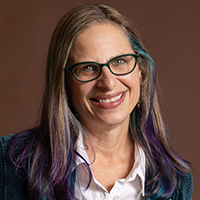
Enter the “Post-Soviet Food Tour.” Michelson and her friend Rivkah Khanin, both 34 and both first-generation Americans born to immigrants from the former Soviet Union, led a group on a walking tour in mid-May to visit the places that have managed to keep their doors open, even though the community is shrinking.
“It’s been a dream of mine for a long time to share the cuisine and history of this neighborhood,” Michelson told participants as we sat in a circle on the grass of a local playground.
Neither Michelson nor Khanin had ever led such a tour. Michelson is a technology researcher and teaches classes in the artistry of stained glass, while Khanin is an arborist and chef.
Most of the people who showed up were friends of the guides, but others who joined, like me, had seen the tour advertised online. One person grew up nearby but knew little about the Russian community or its food traditions, while others were curious food lovers interested in learning about a cuisine they knew little about.
Khanin gave a brief geographic primer about the former Soviet Union, which spans 11 time zones, with just as many religions and ethnic groups. There’s a vast difference between what is eaten — and what can grow — in the different regions, she said.
The tour group visited four establishments, all on Geary Boulevard between 18th and 21st avenues in an area often called “Little Russia.”

First up was Royal Market Food & Bakery. In the dairy section, Khanin had us name all of the different ethnic groups and languages we saw. She also talked about the various ways of preserving dairy products; for example, we learned that yogurt can be baked.
“Dairy is a really important food group in Soviet countries,” she said.
In the freezer case, we gazed at rows upon rows of dumplings, such as pelmeni, Russian round meat dumplings; varenyky, Ukrainian dumplings filled with anything from meat to dairy to fruit; and manti, ground meat dumplings that are originally Turkish but are consumed in Central Asian countries like Uzbekistan. Also in the freezer case were many items not found in American grocery stores, from frozen wild mushrooms to wild rosehips to dogwood fruit (a prickly red fruit with an edible interior) and sea buckthorn, a type of tart berry that can be eaten or used medicinally.
“Foraging was a huge part of the culture and remains so, even to this day,” Khanin said.
For Jews, she said, it was “a real lifeline to be able to identify different wild foods and recognize them in different lands, and know how to preserve them.”
Colloquially, chanterelle mushrooms are known as “Jews’ mushrooms,” Khanin said, because they have no crevices where small insects can hide (bugs make vegetables unkosher).
In the “Russian charcuterie board section,” as Michelson called it, we learned that ivriskaya kielbasa is a cured meat product made of beef, with no pork in it (“ivriskaya” mean “Jewish” in Russian), and that chrein, the Russian word for horseradish, is also a curse word.

In the jam aisle, Khanin noted that sour cherries “have a really nostalgic place in the Soviet heart” and said young pine cones are edible and either sold in syrup or made into jam.
From Royal Food & Bakery’s prepared food case, we sampled a stuffed cabbage roll with meat (in a more savory tomato sauce than I’m used to in Jewish stuffed cabbage) and a popular dish from Georgia, nigvziani badrijani, which consists of thin eggplant slices rolled around a filling of ground walnuts and spices.
The variety of shelf-stable jarred eggplant spreads was one of the most impressive displays at that store.
At Europa Plus Grocery, we saw a wide array of gift boxes and candy — it’s frowned upon to show up to a Russian house empty-handed — and at Moscow & Tbilisi Bakery, we picked up long logs of piroshki (fried dough with various fillings like cabbage or mushroom), a poppyseed cake and a Napoleon, a classic cake often eaten on holidays or birthdays, with layers of cream between puff pastry.
At our last stop, New World Market, Michelson shared that Georgia is known not only for its food but also as one of the world’s great wine regions. Rather than being aged in oak barrels, wine is aged in large ceramic vessels, giving it a unique taste. We also sampled several types of cured meats.
After the four stops, we went back to the playground for a picnic and tried a number of the foods we had just learned about. Among the most interesting tastes were kvass, a sour rye drink, and the pine cones in sweet syrup.
Lera Mikhailova, also of Soviet immigrant parents, wistfully told me that she often thinks about how the culture she grew up with isn’t a regular part of her daughter’s life in Sebastopol. At the picnic when we tried a dish she loves called kholodetz, or chicken and boiled egg suspended in meat aspic, she said the lack of interest saddened her.
“I don’t have seven hours to make some of these dishes,” Mikhailova said. “They are so complicated, and therefore my kid won’t be able to passively absorb this culture, like I could.” She had a shopping bag stuffed with liver pate, several types of dumplings, hot smoked mackerel and more that she was bringing back home with her.
The cost of the tour was on a sliding scale, and the pair donated whatever proceeds were left after buying food to support Razom for Ukraine, providing relief to those impacted by the war. Michelson and Khanin plan to do more in July and early August. To contact them, email [email protected].