

The Torah column is supported by a generous donation from Eve Gordon-Ramek in memory of Kenneth Gordon.
Re’eh
Deuteronomy 11:26-16:17
I remember the first time my wife Dena and I visited Yosemite. As we rolled down our windows approaching the park, we were greeted by the scent of pine and cedar while taking in the views. While I had never been there before, everything felt oddly familiar.
Embarrassed, I began to realize why. Yosemite reminded me of Disneyland, its piped-in scents and Hollywood sets so closely modeled on the real thing that the Frontierland version of the West almost seemed more authentic. Disney’s vision is so compelling that millions visit each year, choosing the security and ease of artificial reality over the natural beauty that inspired them. Disney’s intentional use of nostalgia reflects a human truth: We often create carefully sanitized versions of history, reshaping both the past and our own memories.
Our tradition, too, preserves moments when memory was reshaped to meet the needs of the present. In 2 Kings, we read about the remarkable rediscovery of the Book of Deuteronomy. While taking an account of the temple treasury, one of King Josiah’s priests found this long-forgotten book. Remarkably, the recovered text aligned closely with Josiah’s own political agenda as leader of the Kingdom of Judah.
By his time, the Northern Kingdom of Israel had fallen to Assyria, whose power was now waning on the eve of Babylonia’s ascent.
Seeking control of trade routes, Egypt looked north to the Kingdom of Judah as a strategic foothold on the way to Mesopotamia. Josiah saw the moment as a rare opportunity to consolidate his power. He centralized worship in Jerusalem, closed outlying shrines, purged foreign cults and extended his reach into former Israelite territory.
In this week’s reading, Parashat Re’eh, we read the same call for centralization and covenant loyalty that shaped Josiah’s vision of a united people.
Of particular note are the laws of what the rabbis called ma’aser sheni, the secondary tithe. The Torah mentions distinct tithes: Numbers commands an annual portion for the Levites, for example, while Deuteronomy prescribes an offering for the poor as a secondary tithe. This portion was not given away. Instead, the produce was stored and eaten only within “the place God will choose,” ultimately Jerusalem, or redeemed for silver and gold to be spent there.
The rabbis situated these tithes within Israel’s seven-year agricultural cycle. While a tithe went to the priests annually, the other offerings rotated. In years one, two, four and five the secondary tithe was set aside to be used in Jerusalem; in years three and six, it went to the poor; and in the seventh year, the Sabbatical, no tithe was required.
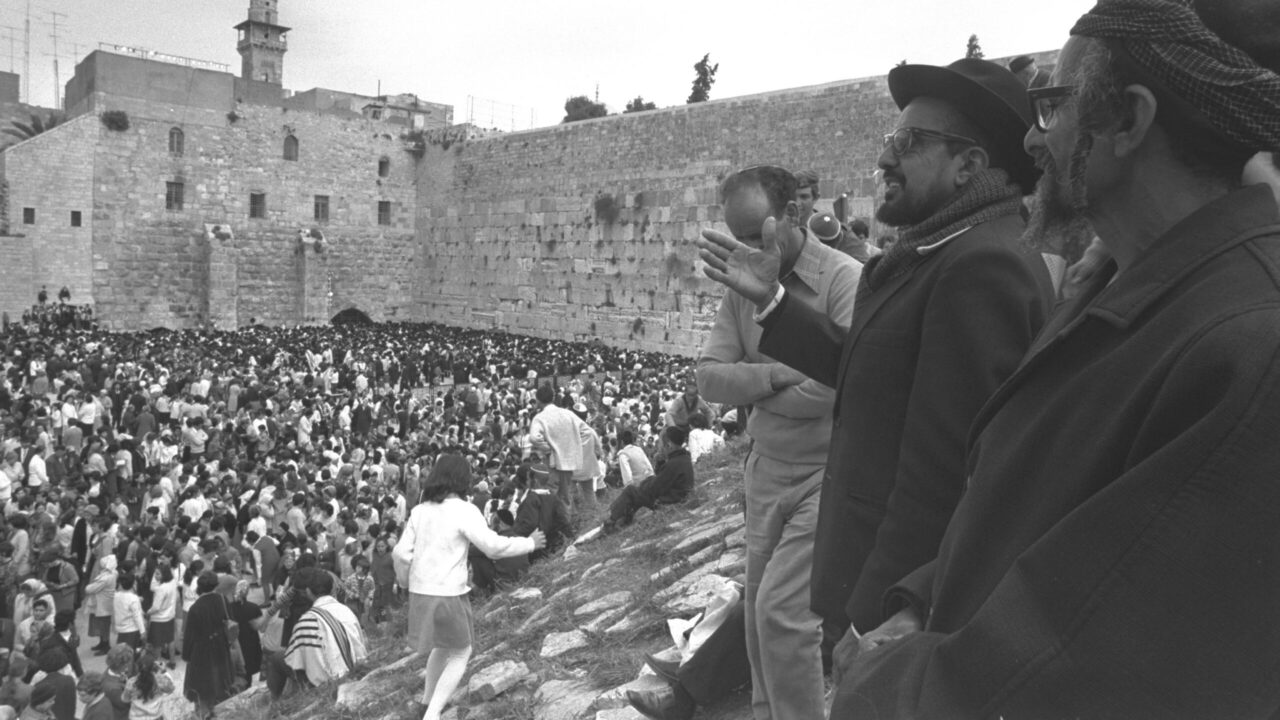
Through its system of tithes and its demand to worship God at a single shrine, Deuteronomy established pilgrimage as a central feature of Israelite faith. Such journeys would have been especially effective in supporting Josiah’s vision of the Kingdom of Judah unified around Jerusalem. Bound by shared purpose, pilgrims set aside their usual status, endured hardships together and formed bonds across social and economic divides.
Deuteronomy envisions just such a community. The pilgrimage festivals described in Re’eh were meant to be a time when all who dwelt in Judah celebrated as one: “You shall rejoice before your God,” the text declares, “with your son and daughter, your male and female slave, the [family of the] Levite in your communities, and the stranger, the orphan, and the widow in your midst, at the place where your God will choose to establish the divine name.” (Deuteronomy 16:11)
While effective in creating a covenantal sense of solidarity, the national unity prescribed in Deuteronomy and carried out by Josiah also had a shadow side. Josiah enacted his reforms through violence. He destroyed regional shrines, defiled altars and executed priests who did not worship the God of Israel. His policies diminished long‑accepted regional variations in religious practice. While his reforms strengthened Jerusalem, they did so at the expense of outlying communities.
Josiah’s campaign illustrates both the promise and the threat of populist nationalism. On one hand, it reflects a genuine longing for unity and a desire to rally the nation around shared purpose. On the other, it reveals the destructive potential latent in such movements to silence dissent and harm those on the margins. While such national movements may galvanize national spirit for a moment, as often as not, they often herald times of despotism and national decline. This was the case for Josiah, whose monarchy decayed and collapsed after his death.
The prophet Jeremiah understood these dangers. He criticized Josiah and his descendants for privileging physical and financial welfare of Jerusalem and its temple over the moral values they were to represent. Jeremiah cries: “Don’t put your trust in illusions and say, ‘The Temple of God, the Temple of God, the Temple of God are these [buildings]. No, if you really mend God ways and your actions; if you execute justice between one party and another; if you do not oppress the stranger, the orphan, and the widow; if you do not shed the blood of the innocent in this place; if you do not follow other gods, to your own hurt — then only will I let you dwell in this place, in the land that I gave to your ancestors for all time.” (Jeremiah 7:4-7)
Jeremiah’s warning rings true today. National unity only has value if it is bound to justice, compassion and humility. He cautions us not to confuse loyalty to a place with commitment to ethics. For Jeremiah, the value of sacred symbols and holy cities is a measure of the ethical commitments they embody. One cannot truly dwell safely in the earthly Jerusalem unless it is a true reflection of the spiritual one.
In the two years since the Oct. 7 terrorist attacks, I have sensed an urgent pull in our community to close ranks and to forge a vision of national unity anchored in security — and with good cause. The violence we witnessed, the enduring outrage of long-held civilian hostages and the ensuing wave of anti-Jewish animus have left us reeling. In our search for comfort we have found strength as a community. Yet I fear it has come at a price. For some, it has bred intolerance, a willingness to suppress dissent and a hardening against the suffering of others.
Jeremiah’s voice teaches that the choice between security and compassion is a false dichotomy. We need both. Every human deserves the right to live free from fear, but safety born of injustice is never secure. As Josiah’s descendants learned, a convincing facade of unity may create a fleeting sense of safety, but it cannot endure. Only justice, Jeremiah teaches, can lay the foundation for a truly secure future.