

The Torah column is supported by a generous donation from Eve Gordon-Ramek in memory of Kenneth Gordon.
Tzav
Leviticus 6:1−8:36
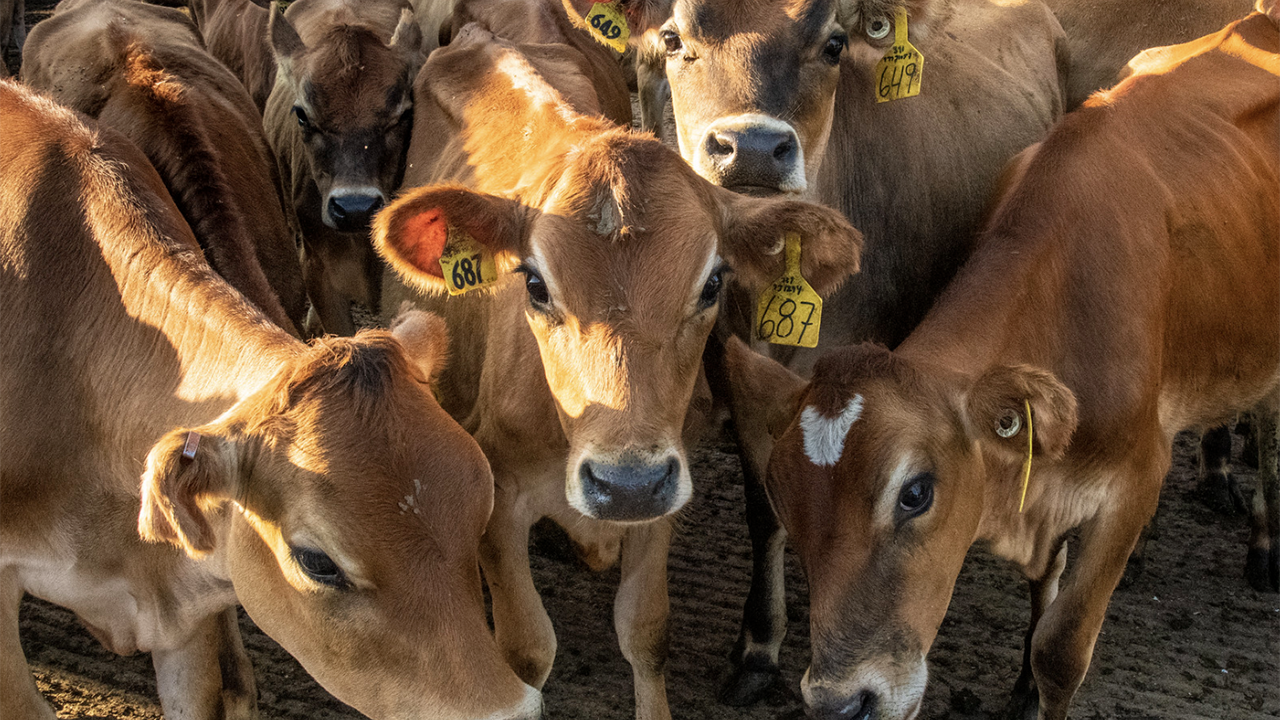
I was 13 years old when I witnessed the birth of the milk cow Annabelle. I looked on with rapt attention as I leaned on a corral fence at a summer camp.
The counselors told us to be quiet as Annabelle’s mother labored. Even though we were generally rambunctious kids, it was easy for us to stay silent. We all understood that there is something sacred about birth.
When Annabelle finally emerged from her mother, she fell to the ground, coated in the placenta.
She didn’t move. I had never seen a birth of any kind before, and my first thought was that Annabelle hadn’t survived, that something tragic had happened.
But eventually she started moving.
I returned to summer camp for six more summers. One year, Annabelle was a creature about my size. The next, she was a massive animal that we were allowed to brush. She then became a cow that would happily munch on hay as children milked her.
I think of Annabelle this week as our Torah portion Tzav outlines the routine use of animals in the sacrifices to God made in the ancient Temple in Jerusalem. Of the five types of sacrifices we read about, four of them use animals. In Tzav, we read detailed instructions for sacrificing pigeons, turtledoves, sheep, goats — and cows.
As this week’s Torah portion makes clear, there are currents in our tradition that advocate for taking animal lives. There is also a current of thought in Judaism that looks hesitantly on doing so.
In the Garden of Eden, God tells the first two humans that they should eat plants: “God said, ‘See, I give you every seed-bearing plant that is upon all the earth, and every tree that has seed-bearing fruit; they shall be yours for food.’” (Genesis 1:29)
God makes no mention of eating animals. Some in our tradition, including Rabbi Yitz Greenberg, believe this means that the ideal way of being is not to eat meat or animal products. According to this understanding, people eat meat only in the imperfect world we inhabit after banishment from the Garden of Eden. Greenberg further teaches that the laws of kosher eating offer us a way of limiting a practice that is flawed.
I think about the value of refraining from eating meat precisely because it is idealistic. In this era, it’s difficult for everything we do to be in line with our values. Many of us shop online in ways we’re not proud of. We buy products that were made overseas in bad labor conditions, and we use gasoline despite knowing it harms the planet. These small decisions that each of us make add up to collective wrongs, contributing to problems such as global warming, income inequality and the large-scale harm we do to animals.
In laying out the rules for different sacrifices, our portion this week outlines what should happen when the community as a whole makes a mistake.
Tzav continues the Book of Leviticus’ detailed descriptions of the chatat, the sacrifice made as expiation for the community’s collective sins.
Of course, what is proposed is to offer an animal sacrifice, so we have to read this text with an acknowledgment that it emerges from one of the threads of the Jewish tradition that is OK with taking animal lives.
Still, it is moving to consider that this ancient text was open to the idea that the entire community could sin collectively.
Perhaps we can learn from this that it’s possible for an entire community to err — that we should heed that small voice of conscience inside of us that wonders about the ethics of a widespread community practice.
For me, a turning point in listening to this voice took place the last time I saw Annabelle.
I returned to camp for a weekend when I was in my mid-20s. It was early summer, before the campers arrived. Annabelle had stopped producing milk like she used to, and the decision had been made to call a butcher.
As someone who ate meat at the time, I wanted to witness a slaughter to make sure I was comfortable enough with the practice.
The butcher arrived in a worn truck that carried a refrigerator for the eventual meat and a set of poles and wires that would lift the cow’s carcass for butchering.
Annabelle stood in the same corral where she was born. I wondered if Annabelle knew what was coming. I felt an instinct to comfort her.
The slaughterer acted quickly and professionally. He pulled out his rifle and pointed it at Annabelle. The man shot. Immediately, Annabelle dropped to the ground.
I didn’t know what to make of what I had seen, but I knew it was jarring to watch life leave Annabelle so quickly.
Gradually over the next year, I decided to stop eating meat. I felt that listening to the small voice inside of me that wished to comfort Annabelle could make a difference for animals — and also for me. Not eating meat could be a practice. Every time I decided not to eat meat I would be choosing to believe in a better world, choosing to believe in a world where we do listen to that faint voice of conscience.
As we go about our everyday lives, I think it’s good to make as much room as we can for our voices of conscience.
It makes sense to be skeptical of what one consumer can accomplish. Does recycling a bottle do much to stop pollution? Does one person going to a co-op instead of a chain grocery store make a big difference? Does one person not eating meat matter in the grand scheme of things?
One sometimes hears that these small actions add up to make a difference. That every recycled soda can matters. I honestly don’t know about that. What I do know is that we need to make as much room as we can in our souls for our sense of what’s right.
Not eating meat is one thing we can do to help build up this muscle of compassion. However we choose to do it, it’s upon us to make sure this muscle doesn’t atrophy. So much is at stake.