

The Torah column is supported by a generous donation from Eve Gordon-Ramek in memory of Kenneth Gordon.
Behar-Bechukotai
Leviticus 25:1-27:34
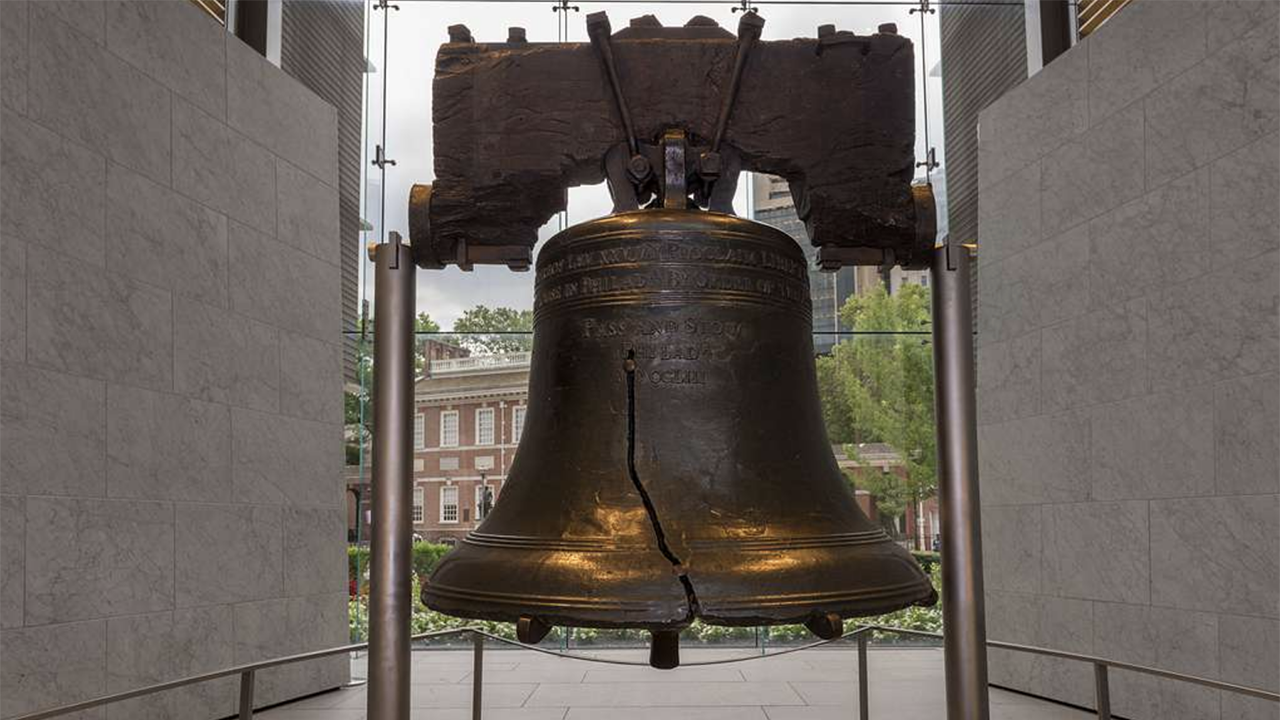
When the Founding Fathers promised “liberty throughout the land” and inscribed that pledge on the Liberty Bell, they were inspired directly by Parashat Behar, one of this week’s double Torah portions.
The Israelites are commanded to declare every seventh year a Shmitah, a sabbatical year of complete rest for the land. More dramatically, every 50th year was to be a Yovel, a Jubilee year, when the land not only rested but was returned to its ancestral holders, along with indentured servants, who were likewise restored to their families in a great display of “liberty and justice for all.” Why?
Because “the land is Mine,” said God. “You are but sojourners and residents with Me,” (Leviticus 25:27).
This profound reminder, that we are but visitors on God’s created Earth, is an absolute truth that is easily forgotten. We yearn for permanence in a world of fleeting shadows. The illusion of owning anything — objects, houses, land, people we love whom we claim as “ours” — is just that: an illusion. We hold so tightly, not wanting to lose our grip on those things we hold most dear, even potentially, though inadvertently, hurting them along the way.
King Solomon knew a thing or two about that. The traditional author of Kohelet, the Biblical book also known as Ecclesiastes, and a person of uncountable possessions, Solomon gobbled up every possible pleasure and luxury item in his search for the elusive meaning of life. But “I looked at all the things that I had done and … it was clear that it was all fleeting and chasing after wind — and there is no real profit under the sun.” (Kohelet 2:11)
Despite his frustration, Solomon arrived ultimately at a place of acceptance. The best way to live, he contends, is to “eat your bread with joy, and drink your wine with a glad heart, (trusting that) God has favored your actions.” (Kohelet 9:7) The days, and we, will all pass away, but true peace is found with a beloved companion and in the immeasurable blessings of home and hearth, if we are fortunate. Solomon learned that to surrender to the ephemerality of existence can be overwhelming, but it can be calming and inspiring, too.
In this age of unimaginable wealth disparity, a jubilee of some sort would be refreshing, wouldn’t it? What might the world look like if there were even a modicum of sharing and balancing out of the world’s abundance?
Rabbi David Lieber, senior editor of the Etz Hayim Torah commentary, taught that the Jubilee “prevented the polarization of society into two classes; wealthy, powerful landowners on the one hand and permanently impoverished people on the other. Because the Earth and its inhabitants all belong to God, human beings cannot possess either the land or the people in perpetuity. Some critics have seen this as a utopian plan that never was put into practice, but archaeologists have found records of deeds from the late Biblical period containing references to the number of years remaining until the Jubilee.”
Whether any Jubilees actually took place is uncertain, but there was at minimum a sense of optimism that it would one day arrive.
In the last two and a half years, I’ve thought a great deal about what it means to be a temporary sojourner on this glorious and singular planet. Bechukotai, the final portion of Leviticus and partner to Behar, describes a terrifying scenario of punishments that the Israelites would endure for acting with arrogance and cruelty and treating the world as if we, not God, are its owners.
In the awful weeks after Oct. 7, I was compelled to challenge a friend and colleague who wrote on social media that “the Land of Israel is OURS. We own it!” I reminded him that Moses warned us against that kind of thinking, but my friend interpreted my message as saying that the Jewish people should give up and surrender everything.
Emotions, then as now, were running so high, and of course I meant nothing of the sort. But I don’t have to look or even think very deeply to know that if we do not respect the principles of the covenant and do not act with compassion toward each other, our neighbors and the land, then devastation will follow. The land will have its rest one way or the other, says God in Bechukotai. It is our fundamental duty to be humble and grateful, pursuers of peace so that the land and its people can thrive.
In the United States, our great American experiment places freedom and liberty at its core. But even the Liberty Bell has a crack. That accidental but symbolic break reminds us that our freedoms, as Americans and as Jews, are hardly invulnerable. They are fragile, and each of us must be vigilant in protecting them. True freedom lies not in how much we buy or “own,” but in what we surrender to a greater good as we make our way across God’s earth. That is the lesson of the Shmitah and the Jubilee, especially as we approach the 250th birthday of our country.
As we conclude the Book of Leviticus, I’m reminded of a powerful little story about Rabbi Yisraeil Meir Kagan, the brilliant 19th-century rabbi known as the Chofetz Chayim. The tale is told of an American visitor who was passing through the Polish town of Radin. He stopped to visit the esteemed rabbi. Entering the great sage’s modest dwelling, he was struck by how sparsely it was furnished. “Where is your furniture?” the man asked incredulously. “Where is yours?” said the Chofetz Chayim. “Oh, but I am only passing through,” answered the man. “As am I,” replied the Chofetz Chayim. “As am I.”
May we all know the joy of true and lasting freedom, and may we tread gently on God’s beautiful Earth.