

In June of 1963, while serving as a chaplain in the U.S. Army at Fort Riley, Kansas, I received orders to embark for Germany, to serve as post chaplain in Wurzburg, a city in Bavaria.
 When I told my parents about my new assignment, they were shocked and dismayed. A tremor in his voice, my father told me about crusaders who murdered Jews in Wurzburg, about Jews accused of poisoning the city’s wells and causing the bubonic plague. “There was even a great yeshiva there,” he recalled. “Now it is all gone. That’s not a place for a Jew. Not now.”
“Dad, I understand. I’ll manage. Don’t worry. Besides, I have no choice. These are my orders.”
I grew up with Mom and Dad’s fear of “the other,” amid the aftershocks of the Shoah, the Holocaust, to which I was oblivious as a child. For my grandparents and parents, however, there were the “goyim”— gentiles — and there was us, the Jews.
My earliest memory was my first day at a Hassidic day camp. I was 8 years old. Mom drove me to the bus station where bearded rabbis dressed in black were yelling at kids in Yiddish to board buses. Mom tucked a siddur under my arm, adjusted my yarmulke and tzitzit, and lovingly holding my face in her hands, looked intently into my eyes, and whispered, “Shelley, remember, you are a Jew!” What else was there, I wondered.
For my parents, “goyim” spelled danger. Mom barely made it to America with her parents and one sister after World War I. Her other three sisters and two brothers stayed behind in Poland, and were murdered in Auschwitz.
Dad grew up in Jerusalem, in an Orthodox family in the Old City. In 1910, his father, who had migrated from Russia, was falsely accused by the Turks, who then ruled Palestine, of being a British spy. The Turks arrested my grandparents, my father, his three brothers and sister, put them on donkeys and sent them to Aleppo in Syria, where they were imprisoned and tortured. The Jewish community in Aleppo finally bailed them out and they returned home to Jerusalem.
I didn’t hear a word about all this until after my parents had passed away, and long after I left the military as a chaplain.
“It will be OK, Dad. I’ll manage.”

I arrived at my post in Wurzburg several weeks later, and was immediately enchanted with this magnificent medieval city. There were moments of discomfort and dread, but only moments. “It will be OK,” I reassured myself as I walked through the streets of Bamberg and Schweinfurt, a Star of David on my uniform. I reassured myself even when I was riding in an open jeep with a Torah scroll in my arms for all to see, in the streets of Fulda where, 25 years earlier, the good citizens rounded up and beat their Jewish neighbors and turned them over to the SS.
“That was a long time ago, ages ago,” I told myself. But I began to feel uneasy, especially at night, lying in bed, a block from the railroad station, hearing the sounds of the locomotives, where only a few years before, men, women and children were packed like cattle into those railroad cars, and shipped to the crematoria. Because they were Jews.
“I can manage, Dad, don’t worry. It’ll be OK!”
Several months into my tour of duty, I received orders to visit U.S. Army personnel incarcerated in a military stockade outside a little town called Dachau. I arrived early, and decided to visit the concentration camp. I assumed it would be like Auschwitz or Treblinka — huge and forbidding.
But it was nothing like that. There were a few buildings in a stand of trees that looked like Swiss chalets. As I reached the entrance of one of the buildings, I was greeted by another rabbi, a career officer twice my age, a chaplain named Levazer. He embraced me and we walked into the crematorium together.
At first we just stood there and stared at the ovens. I thumbed through the pamphlet I had received at the entrance as Chaplain Levazer began praying from his tiny Jewish Welfare Board prayerbook. I turned to a report in the pamphlet written by a Lt. Col. Walter Fellenz of the 42nd Rainbow Division, in which he described Dachau to his commanding general on May 6, 1945:
“A large, double furnace … capable of being stuffed with five or six corpses at once … The dead bodies were dragged from the warehouse … where we found the naked dead bodies of over 4,000 men, women and children, thrown one on top of the other like sacks of potatoes.”
I stood on that concrete floor, thinking about my mother’s brothers and sisters who were murdered in Auschwitz. Suddenly, I was stricken with rage.
Where was that God I had been praying to all my life? The one our people have been praying to for nearly 4,000 years. The God of freedom and compassion and loving kindness. The Ribbono Shel Olam, the Master of the Universe.
I vowed at that moment never to serve as a rabbi again. Never would I lead my people mouthing meaningless words.
My eyes turned to Chaplain Levazer who was reciting the Kaddish. The Kaddish! A prayer we Jews say every day, a prayer that affirms God’s presence and love, even in the face of death. I stared at him in wonder and exasperation. How can he pray those words here? Now? It is all a sham! I took a deep breath.
Then I saw it. We were wearing Army summer-issue shirts with short sleeves. I could see there on Levazer’s bare arm, cut into his flesh — the numbers! I cried as I tried to comprehend: “My God, Levazer was there, in the camps. And somehow he survived. He saw it all! He saw it all, and yet he stands here this day and proclaims, ‘Yisgadal v’yiskadash shmai rabba . . . , Magnified and sanctified is his great name.’”
And I thought, “If he can pray to God so lovingly and devotedly after what he has seen and undergone, then I have a lot to learn.”
And I am still learning.
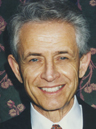
Rabbi Shelley Waldenberg teaches in the Bridges Program of the American Jewish Committee, San Francisco, and is Rabbi Emeritus of Temple Isaiah in Lafayette.