
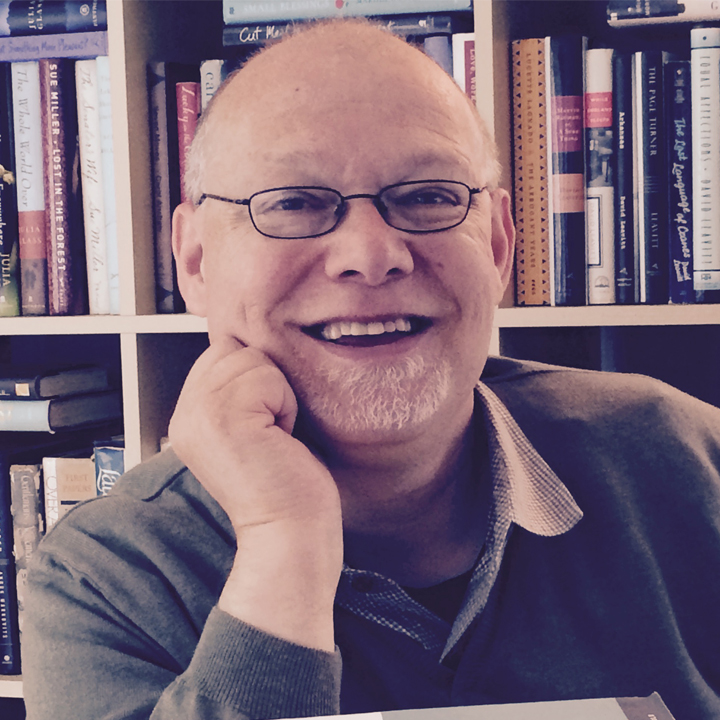

Name: Asaf Orr
Age: 36
City: San Mateo
Position: Transgender Youth Project staff attorney, NCLR
J.: You describe yourself as a cisgender male — meaning that your gender identity corresponds to your birth sex — and as heterosexual in orientation. How did you come to work for a major organization that advocates and legislates on behalf of the LGBT community, with a special affinity for transgender kids?
Asaf Orr: I went to law school [at Rutgers] knowing that I wanted to focus on LGBT issues, but there were several incidents while I was a high school student in Highland Park, New Jersey, that had a significant impact. I remember when two kids came out in my fairly small high school and the rumor mill was quite vicious. I also worked in a music store owned by an openly gay man. The landlord evicted him because he was gay. He didn’t have the wherewithal to fight and the store closed.
Those experiences clearly made an impression and set you on a path. You joined the National Center for Lesbian Rights in 2012 and became its Transgender Youth Project staff attorney in 2015. But you having been working consistently on behalf of LGBT rights since before your law school graduation. Will you describe some of these experiences?
I interned at Lambda Legal Defense Fund after my first year of law school. Following a clerkship with Judge Virginia Long of the New Jersey Supreme Court, I received the Rainbow Rights Fellowship to the Learning Rights Law Center in Los Angeles, where I used special education laws to advocate on behalf of LGBT students, many of whom were victims of bullying and harassment and had developed phobias and depression as a result. I want to be clear that in applying the special education laws to these students, I am not suggesting that they had particular disabilities in the sense that we often think of when we use the term “special education.” Rather, if you’re going to school every day, there should be a reasonable expectation that there must be services and accommodations in place to ensure an educational environment free of bullying, harassing behaviors.
That’s a pretty interesting application of the law. What sorts of cases do you work on at NCLR?
A lot of our work focuses on schools. A school may have a policy in place to support transgender students, but perhaps the substitute teacher did not get the memo on the use of appropriate pronouns. We also do a lot of work in the area of team sports. Right now, 17 states and the District of Columbia allow kids to participate in sports based on their gender identity. In states without these laws, we have had a lot of success working with state athletic associations to expand access to transgender youth.
These kids are my heroes, and I can’t think of doing anything else.
We have also been involved in custody disputes involving parents where one is affirming of their child’s gender identity and the other is nonaffirming. Access to health care is also an important issue. I had one client who was denied access to puberty-delaying medications. We also provide technical assistance to other groups and organizations without NCLR’s resources, and we file friend-of-the-court briefs in other cases brought on behalf of transgender kids.
What have you learned about transgender youth through your work — and what have they taught you?
Transgender young people face high levels of family rejection, and there is a higher incidence of substance abuse, homelessness and underemployment among them. Yet working with these young people and their families is amazing. They have taught me what courage and perseverance look like. These kids are my heroes, and I can’t think of doing anything else.
Describe your Jewish background, and how it informs your work and family life.
My parents were born in Israel, where much of my family remains and where I spent many summers. My dad came to the States to go to graduate school at Rutgers. We belonged to a Reform temple there — in New Brunswick— and my family and I were active in many social justice and civic activities. I was involved in Mitzvah Corps groups as a part of NFTY (North American Federation of Temple Youth), and we did work to benefit a local soup kitchen, camp for kids with disabilities and assisted-living community for Jews.
I am a mixture of Ashkenazi and Mizrahi heritages, and my wife, who is an educator at Eastside College Prep [in East Palo Alto], is an Iranian American Jew. Our 9-year-old twins went to Jewish preschool. They now go to a school with a transgender student, and they see every day that she is just like them and entitled to respect.
Why should we all care about transgender rights for children?
We should all care because we want our kids to grow up to be who they are. When they are affirmed for who they are, they thrive. What parent doesn’t want that for his child?
Asaf Orr is such an amazing person. His work has positively impacted countless lives, including our son. We will never be able to truly thank him for all he has done…
Awesome! ☺
My daughter has downs syndrome. There’s nothing “wrong” with her but she looks a little different from most kids and she learns and develops coordination at her own pace, political correctness aside that means more slowly.
About one in seven hundred babies are born with down syndrome each or about .07% of the population. Thats twice the rate if gender dysphoria btw. That is those are the rates for down syndrome kids that allowed to live. Most of them are terminated before birth because they are undesirable. Sophisticated educated enlightened conversations about whether or not to let kids like my daughter live because they’re inconvenient are held in every major news outlet in the world. FYI most people with downs syndrome learn to read and understand what you guys say so I’m going to have to have a conversation with my daughter one day about why so many people think it’s a good idea to kill people like her. Thanks so much for that.
But start a conversation that I would never be a part of because it’s disgusting about aborting children because they might be intersex with all the problems and opportunities that presents you’re not an enlightened liberal humanitarian… You’re mengele.
Anyway because everybody else’s kids (99.3%) who learn at a different pace, we’ll not call them “normal” because that stigmatizes my daughter. We should call everyone else cis intellectual or something stupid like that to create the idea that everyone is part of my daughters 0.07% of the population is actually the other. Its a shonda that she has to go to a special school. Since she learns at a slower pace it’s stigmatizing to teach anything anywhere that’s above her abilities. Everything taught in schools should be geared so that a child with an iq of eighty can get an a. Sports above her level of coordination shouldn’t be taught. Being different hurts her feelings. Honestly it does. When she makes yet another realiztion of how she’s “different” it’s heartbreaking. But we get her through it cause there’s a whole lot of “differences” about her that are amazing and I wouldn’t trade.
See the feelings of her and the 0.07% percent of kids like her give me the right to entirely reorder society in any way necessary to accommodate her.
You guys are oppressing her by not doing these things. You’re horrible human beings. You’re making her feel different.
Or maybe my daughter just isn’t “normal” in a number of ways. Btw you aren’t either. It’s okay. Maybe she and everybody else is just going to have to deal with that. Maybe kids without cognitive disabilities have a right to feel good about the fact that they’re smart without starting every conversation calling themselves cognitively priviledged and achieve what they can in their in paradigm. Maybe a fair compromise would be that the state, supported by the tax dollars of the other 99.3% of the population, spends a pile of money on special education geared to my kids abilities and social programs to assist her throughout her life, so she can develop into the most capable person she can be while not making her challenges the focus of society. (Btw my family is intensely grateful for the help) Maybe best case is that we teach and expect kindness and compassion for her challenges and just move the f on.
That’s seems pretty reasonable right?
But of course unless you’re talking about the 0.03% of kids born with gender dysphoria. Those kids are the center of the lefty universe. We have to reorder every idea society has about gender and sexuality to accommodate them.
Cause of course it’s bad for these kids to be different.
Why is that?
Thank you. I have a similar story