
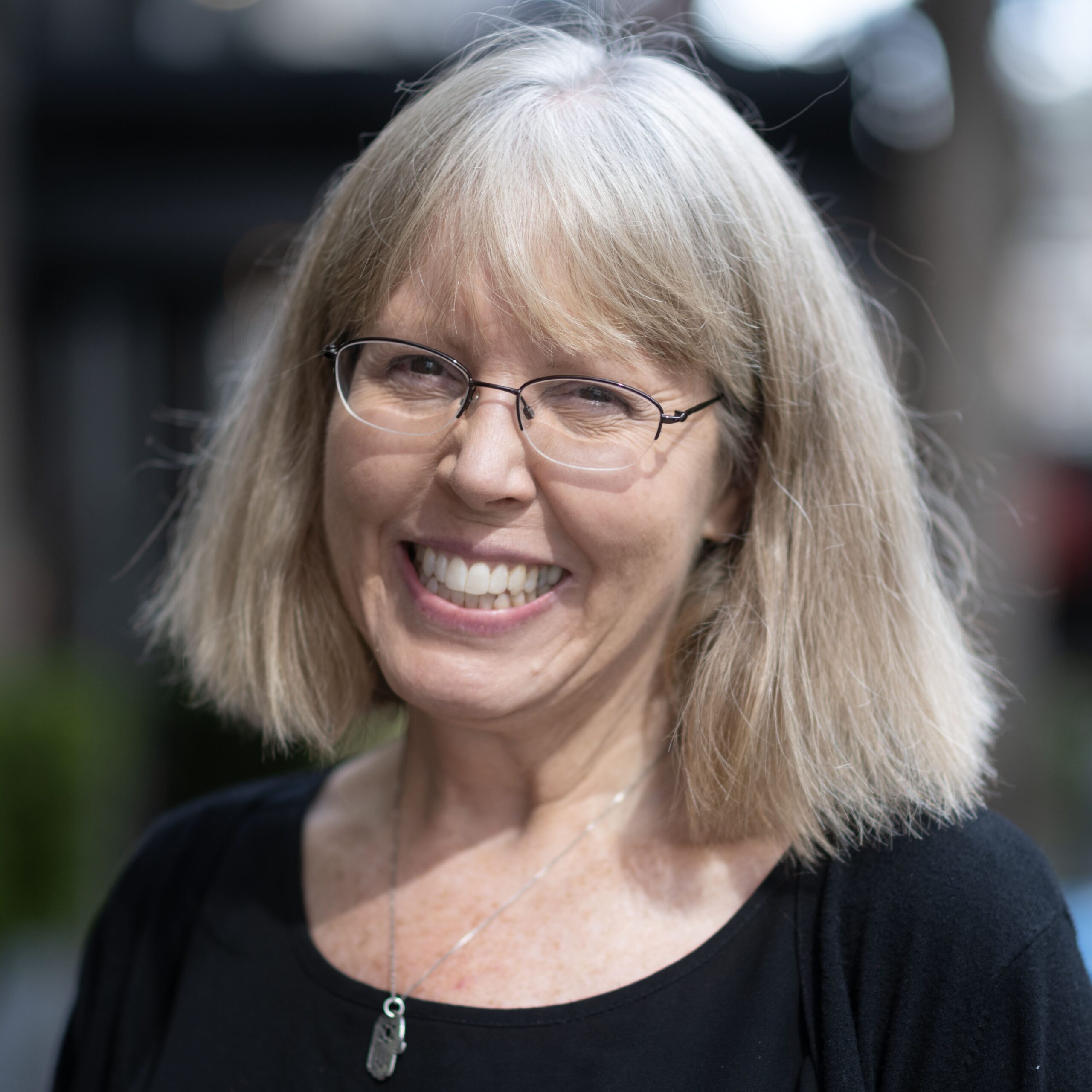

When Sheryl Sandberg resigned as Meta’s chief operating officer two years ago, she decided it was time to step away from the public eye.
But after Oct. 7, her horror over the Hamas massacre and hostage-taking was surpassed only by her bewilderment over the anti-Jewish hate that followed.
“I don’t think I understood how much antisemitism was out there at all,” she said Tuesday during a Zoom event with 3,300 attendees hosted by the National Council of Jewish Women. “So I was shocked by Oct. 7, but I was even more shocked by what happened on Oct. 8 and since.”
Sandberg, who is Jewish, spoke with NCJW CEO Sheila Katz about her new documentary, “Screams Before Silence.” Released April 25, it lays out in detail the sexual violence perpetrated by Hamas on Oct. 7 — and since then against the hostages — through interviews she conducted in Israel with eyewitnesses, including survivors, former hostages, first responders and forensics experts.
She was moved to take on the project because of the sexual violence itself, as well as the widespread denial of it.
The 57-minute documentary is free to watch on YouTube, where it has been viewed more than 970,000 times. Sandberg said it has topped 1.7 million views on all platforms.
Her message has been simple, she said: “No matter what side you are marching on … you have to stand against the sexual violence.”
Sandberg, 54, gingerly stepped into her new advocacy role. At first, she decided to speak out about the mass rapes and the denial of them by writing an op-ed for CNN and creating a short video in late November, then by co-hosting a United Nations special hearing on the topic in early December and finally by starting work on the documentary. Sandberg, a Menlo Park resident, also spoke at the Jewish community’s Unity March in San Francisco this spring.
“There are so many people who are denying this happened,” she said. “One of the stupidest things that people say, just stupid, [is] ‘Where are the victims? Why aren’t people speaking out?’ Because there were 1,200 people killed.”
The title of the film came from the testimony of a survivor, Tali Binner. In the documentary, Sandberg accompanies Binner to the small camper at the Nova music festival where she hid for seven hours on Oct. 7. Binner, who is in her late 20s, then recalls her experiences.

“She hears, you know, screams and then a shot, so someone’s killed,” Sandberg said on Tuesday. “And then — sorry this is very hard to talk about — she heard some women screaming like for 15 minutes, 20 minutes, ‘No, no, no, no, no, no! Stop, stop, stop!’ and then a shot. And then when she got out of that trailer right where she heard those screams on both sides were naked bodies. This is the reason very few people are there to speak out. Almost all of the victims of Oct. 7th were killed.”
Sandberg also walks with teenager Agam Goldstein Almog and her mother through their former home on Kibbutz Kfar Aza. Goldstein Almog, her mother and two younger brothers were taken hostage after her father and older sister were shot to death in their home.
Goldstein Almog was released with her family during a cease-fire agreement in late November. She told Sandberg that half of the hostages she met while in captivity had been sexually assaulted. “Your body’s just open to everyone,” Goldstein Almog said.
If you are progressive, if you care about women’s issues, if you are a human, you have to stand against sexual violence every single time it happens.
Sandberg also interviews Amit Soussana, a hostage in her early 40s who was also taken from her Kfar Aza home and released in late November. Soussana is the first former hostage to publicly discuss her sexual assault during captivity, speaking to the New York Times a month before the documentary’s release. She was forced at gunpoint to perform a sexual act on her captor and recalled in the documentary what she told herself afterward: “OK, you can handle this. You just want to survive. You need to survive. Your mom, your family is waiting.”
Upon her release, Sousanna kept the assault quiet. “I felt disgusted with myself,” she tells Sandberg. “Now I want to shout and talk to the world and let them know what is going on there.”
Sandberg, who gained fame for her 2013 “Lean In” book and nonprofit that advocate for women’s equality in the workforce, hopes that her efforts as a feminist will lend credibility to her message now.

“If you are progressive, if you care about women’s issues, if you are a human, you have to stand against sexual violence every single time it happens,” she said. “That means you can have any view you want to have on the war in Gaza — any view you want to have on statehood — and still be able to hold the thought that the sexual violence happened and needs not to be tolerated.”
Sandberg reflected on an event in early May at the McCain Institute’s Sedona Forum, where she spoke with Dr. Denis Mukwege, a Nobel Peace Prize winner and expert on wartime rape.
He told her that sexual violence is “incredibly effective” in war.
“There’s something about sexual violence that is harder for people to process, harder for people to get over. It goes so deep against humanity,” she recalled him telling her. “Then he said: ‘And the other thing is it’s free. You don’t have to buy a bomb. You don’t have to buy a rocket.’ That is so chilling.”
During the NCJW event, Sandberg also shared details about her Jewish background and identity.
She grew up in Florida, where her family kept a kosher home and belonged to both Reform and Orthodox synagogues. Her parents were both active in the Soviet Jewry movement. As an adult, Sandberg described herself as a “very affiliated” Jew but said she had been primarily supporting “progressive causes.” Today, she has a different focus in mind.
“I feel that it is my responsibility, because I am someone who has a loud voice, to be a loud voice supporting Israel, speaking out against antisemitism and, importantly, because of the voice I’ve had on women, speaking out against the sexual violence,” she said. “Sexual violence is never acceptable. Antisemitism is not acceptable, and people are hiding behind anti-Zionism.”
Her two children are teens now, and Sandberg noted her concerns about the pro-Palestinian protests that have spread across university campuses since Oct. 7. Even at Harvard, Sandberg’s alma mater, more than 30 student clubs almost immediately held Israel responsible for Hamas’ actions, she said.
“Our kids need to be able to go to college and be safe and not get locked into their dorms at night like my niece has been at NYU,” she said. “We have a lot of work to do. I didn’t know that on Oct. 6th. I’m sorry I didn’t know that.”