

Food coverage is supported by a generous donation from Susan and Moses Libitzky.
When I’m low on groceries, my inclination is to pour a bowl of cereal for dinner, but I’m trying to get more creative with my pantry and crisper drawer. I almost always have a head of broccoli (my dog’s favorite treat) and a tub of labneh (or full-fat Greek yogurt) in the fridge and a can of chickpeas in the pantry. So instead of cereal, I’ve been using my often-forgotten vegetables to make easy weeknight dinners. I also appreciate when dishes let the ingredients speak for themselves. Something as simple as broccoli can be delicious thanks to a few secret ingredients and tricks I have up my sleeve.
I rely heavily on herbs and spices to transform vegetables into something crave-worthy, and I like to explore the globe from the comfort of my kitchen, jetting off to far-away lands to inspire my plate and expand my little one’s palate. Za’atar is one of my favorite spices, alongside smoked paprika and Aleppo chili pepper. I get my za’atar two ways: I either bring home a baggie of za’atar from the shuk in Israel (where I’ll be spending the month of August!), or I source it from my favorite local spice purveyor, Oaktown Spice Shop in Oakland, or from New York Shuk. Za’atar has earned its place on my counter, right beside my olive oil, salt and pepper.
If you are new to the world of za’atar but have sampled Israeli cuisine, chances are that you’ve tried it without knowing it. Za’atar is a Middle Eastern spice blend that typically combines floral oregano, thyme, zesty sumac, crunchy sesame seeds and salt. While za’atar refers to a spice blend, it also can also refer to hyssop, a type of wild thyme or oregano. Different families, spice shops and regional areas have their own special variations on za’atar; some add dried dill, savory, coriander, fennel, marjoram, orange zest and more. No two brands are the same. If you’ve tried one brand and didn’t fall in love, don’t give up — try another, because each is truly unique.
While this recipe was inspired by my nearly empty fridge, utilizing my pantry is equally as important. For example, don’t throw out that liquid from your jarred artichokes! This recipe utilizes the marinating liquid from jarred artichokes, a zippy blend of vinegar, herbs and spices. It’s often discarded when the artichokes run out, but the marinade packs a punch of flavor all on its own. Use it in fried eggs, pasta or potato salads, or as a simple way to infuse flavor into a dish of humble ingredients. I love using it as the liquid for a vegan cheese sauce, the base of a salad dressing, in a white bean dip and as a marinade for tofu or vegetables.
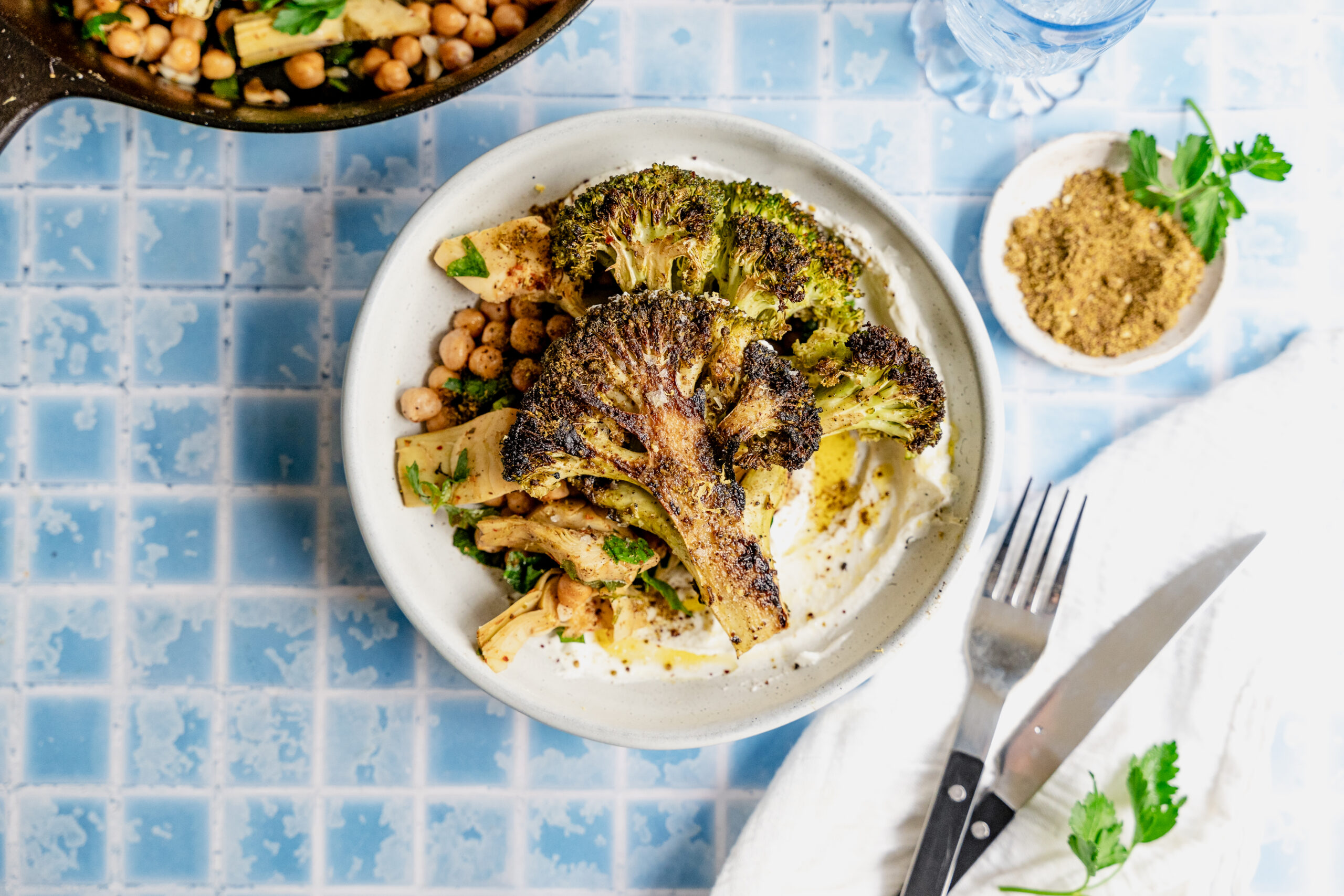
Za’atar Broccoli Steaks with Garlicky Chickpeas and Artichokes
Serves 4
- 2 small broccoli crowns
- 14 oz. jar marinated artichoke quarters, liquid reserved
- 1 Tbs. za’atar
- 1 tsp. lemon zest
- 3 Tbs. extra-virgin olive oil
- 3 cloves garlic, finely chopped
- 14 oz. can chickpeas, drained
- ½ tsp. Aleppo chili pepper
- ½ cup parsley, chopped
- ½ cup labneh or plain Greek yogurt
Preheat the oven to 425 F. Trim the ends off the heads of broccoli, and slice into ¾-inch “steaks.” You should get four steaks from each head. Keep any extra florets that come off in the process. Transfer the steaks and florets to a bowl and add the artichoke heart marinade, za’atar, lemon zest and extra-virgin olive oil.
Heat a cast-iron pan over medium-high heat. Add the broccoli steaks, taking care not to crowd the pan, working in batches if necessary. Cook for 4 to 5 minutes per side, or until they begin to char. Place the charred broccoli and florets on an unlined baking sheet, and repeat with remaining steaks, reserving the remaining marinade mixture.
Cook the broccoli in the oven for 10 minutes while you prepare the chickpeas.
In the same pan, add the garlic, cooking for 2 to 3 minutes, until softened. Add the artichokes, chickpeas, leftover marinade and Aleppo pepper, cooking for 6 to 8 minutes, until the liquid has evaporated and the chickpeas and artichokes are warmed through. Remove from heat, and add the parsley.
Spread the labneh on a serving plate or bowl, top with the chickpeas and the broccoli steak.