
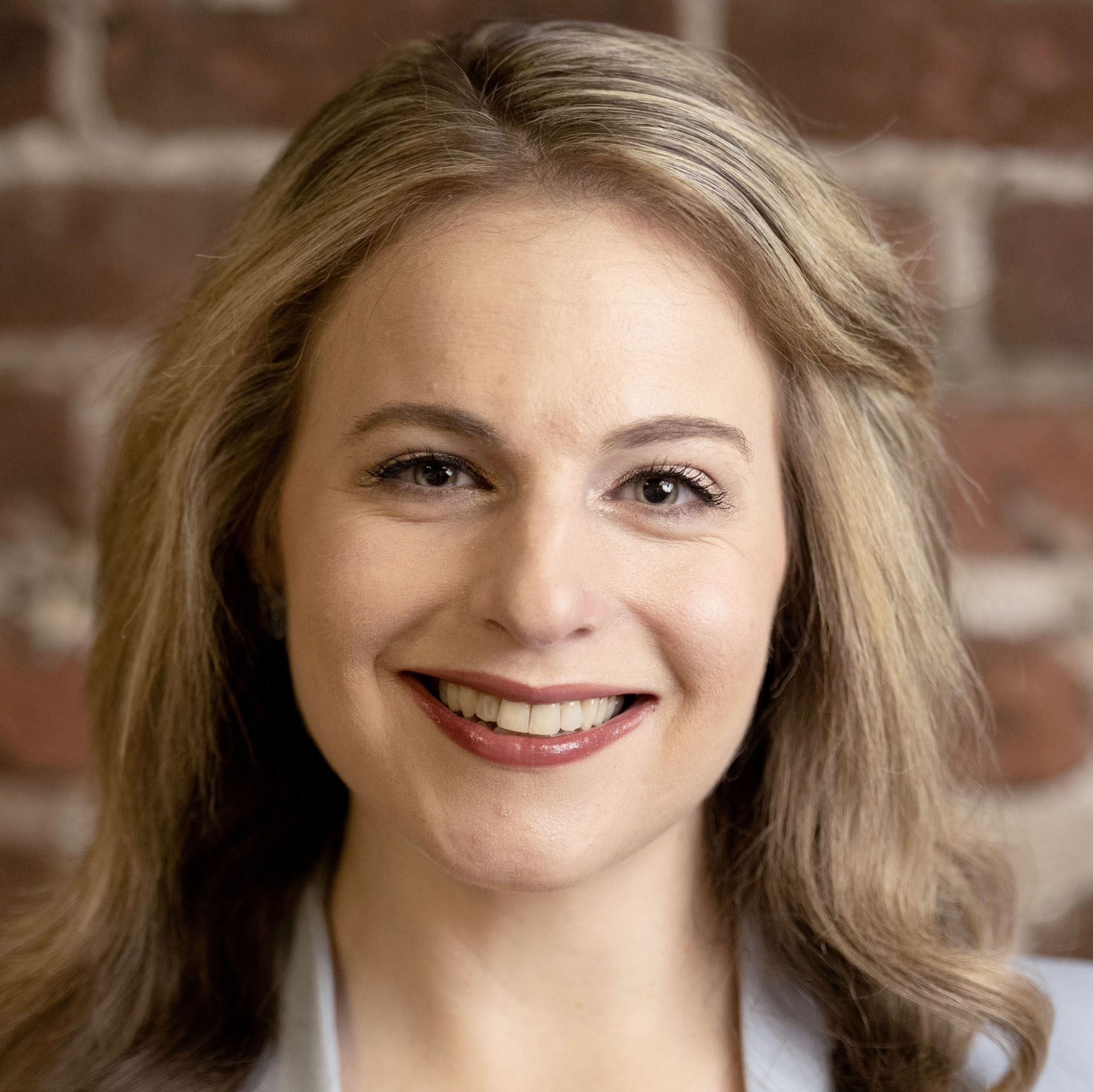
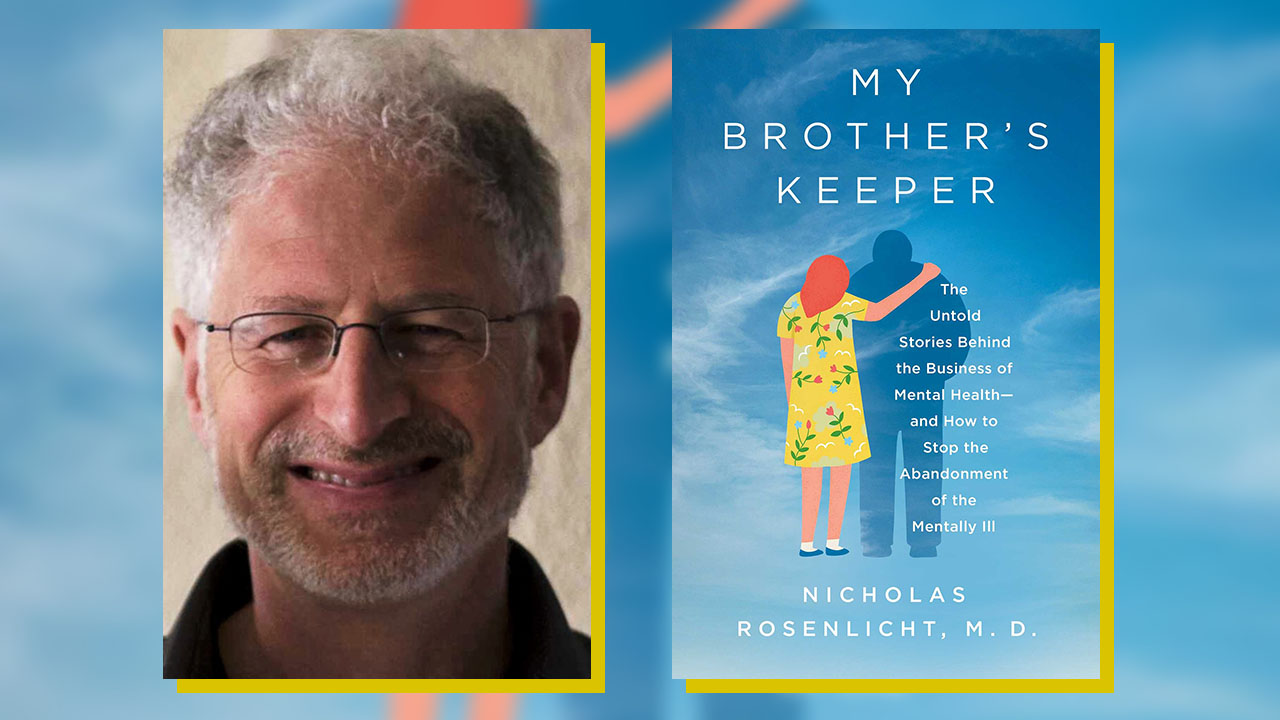
When Nicholas Rosenlicht was studying medicine at Case Western Reserve University in the early 1980s, the field of psychiatry definitely wasn’t on his radar.
“I was against it. I didn’t like it,” Rosenlicht said. But during his psychiatry rotation, he had a change of heart.
“I just found that people’s inner lives were so fascinating and so important for how we lead our lives. We make our choices on emotions, not on cognitions,” he said.
Now 70, he went on to complete his residency in psychiatry at UCLA in 1988 and has practiced and taught ever since.
Rosenlicht, who describes himself as a secular Jew, was raised in Berkeley by his father, Maxwell Rosenlicht, a distinguished mathematics professor at Cal, and his mother, Carla Zingarelli Rosenlicht, a social worker who later became a therapist.
He described his mother as someone who devoted her life “to really caring for others. That was her mission.”
Rosenlicht, today a clinical professor of psychiatry at UC San Francisco School of Medicine with a private psychiatric practice in Berkeley, has tried to follow a similar mission over his 40-year career.
However, his frustration with the industry he has worked inside became the impetus for his new book, “My Brother’s Keeper: The Untold Stories Behind the Business of Mental Health — and How to Stop the Abandonment of the Mentally Ill.”
In his book, published Oct. 1, Rosenlicht paints a bleak picture of the current U.S. health care landscape. He asserts that profits take priority over the patient — and that this is actually how the health care system was designed to function.
This “mess,” however, is fixable, according to his book.
“If we want to undo our mess, the first commitment we must make is that everyone in our society deserves healthcare as is done in all other developed countries. This includes the elderly, the very young, the unemployed, the poor, all races and ethnicities, and the mentally ill. Denying someone needed healthcare for economic reasons is no more morally acceptable than for any other reason,” Rosenlicht writes in the book, adding that for-profit corporations and investors must be purged from guiding medical decisions.
Rosenlicht spoke recently with J. about the treatment plan he’d prescribe to the mental health industry right now, as well as his views on the fatal shooting of UnitedHealthcare CEO Brian Thompson on Dec. 4.
The following has been edited for length and clarity.
J.: There’s a bit of frustration and even exasperation in the tone of your book. But you also make the point that there’s hope for the mentally ill and that things can get better when it comes to the health care industry. What was your emotional tone when writing the book?
Nicholas Rosenlicht: I think some of the emotional tone was frustration, having worked for 40 years in [the mental health] field, feeling like I could have or should have done a lot more.
Rather than advancing, our care of the mentally ill has actually gotten worse.
With the health care executive Brian Thompson’s murder, the frustration [that suspect Luigi Mangione was expressing] has become so prominent in our society in the last five years and has been present in mental health for 30 years.
We threw the mentally ill under the bus, and guess who the bus is bearing down on now?
Why is the book called “My Brother’s Keeper,” which is a reference to the Biblical story of Cain and Abel?
I’d always heard “I’m not my brother’s keeper” as an excuse. People actually say, ‘Hey, I’m not responsible [for another person].’ But that’s not how it’s intended in the Bible. We do have responsibility. And when Cain said that, he was lying to the Lord.
The lack of community has made us fall apart.
You write that people mistakenly claim that the health care industry is broken, but you say it’s functioning exactly as it was designed: operating as a for-profit business. But that’s not working for the average person. Can you explain that more?
The system that we’ve built is not designed to care for people because caring for people costs money. For corporate executives like Brian Thompson, [the late CEO of UnitedHealthcare], his job was to give as little care as he could get away with and enhance profits. That’s just not a model that is good for people.
UnitedHealthcare has $280 billion in [annual] revenue. It’s working as a business, and that’s what we have. But who decided that health care should be a business? Every other developed nation has decided that caring for each other should be a right and a function of our government, our community.
Ours is the only country that excludes people from care. One person’s cancer diminishes our community. One person lying in feces in front of our supermarket makes the community less. Yet our system is not about the community. It’s about enriching those who are charged with managing our health care. How did this happen?
What actions do you recommend to remedy this?
Companies aren’t supposed to make medical decisions. We have laws that could turn this around, but the largest lobbying industry in our society is health care. Why are our elected officials not doing something about this? It’s because it’s one dollar, one vote. We need to really lay into our public officials.
For example, if our elected officials actually enforced the Park Doctrine [which imposes criminal liability on corporate officers], rather than roll in health care lobbying dollars and look the other way, I don’t think Luigi Mangione would have been so motivated to perform his horrific act, nor others to view him as a hero.