

When I joined a Unitarian Universalist church in 1975 in an effort to find a demilitarized zone for my children and non-Jewish husband, my mother proclaimed, “Hitler would have considered you Jewish.”
Her statement appalled me.
So Hitler was the reason I was Jewish? Why would I lend him that power? My roots, which I began to nourish after a midlife divorce, grew deeper for other reasons.
In the secular family of my childhood, being Jewish was not about pride. It was largely about antisemitism and the need to create a comfort zone within a hostile world. I was never taught that Judaism had a positive message. While I was given a solid moral foundation, I was not taught where that foundation came from. My mother’s version of the Ten Commandments included honoring parents, but not the Sabbath.
Like many assimilated Jews of the 20th century, my parents and grandparents sought to separate themselves from the “too-Jewish” immigrants who became targets of hate in America. But my family never conveyed why it was good to be Jewish, and I received no Jewish education.
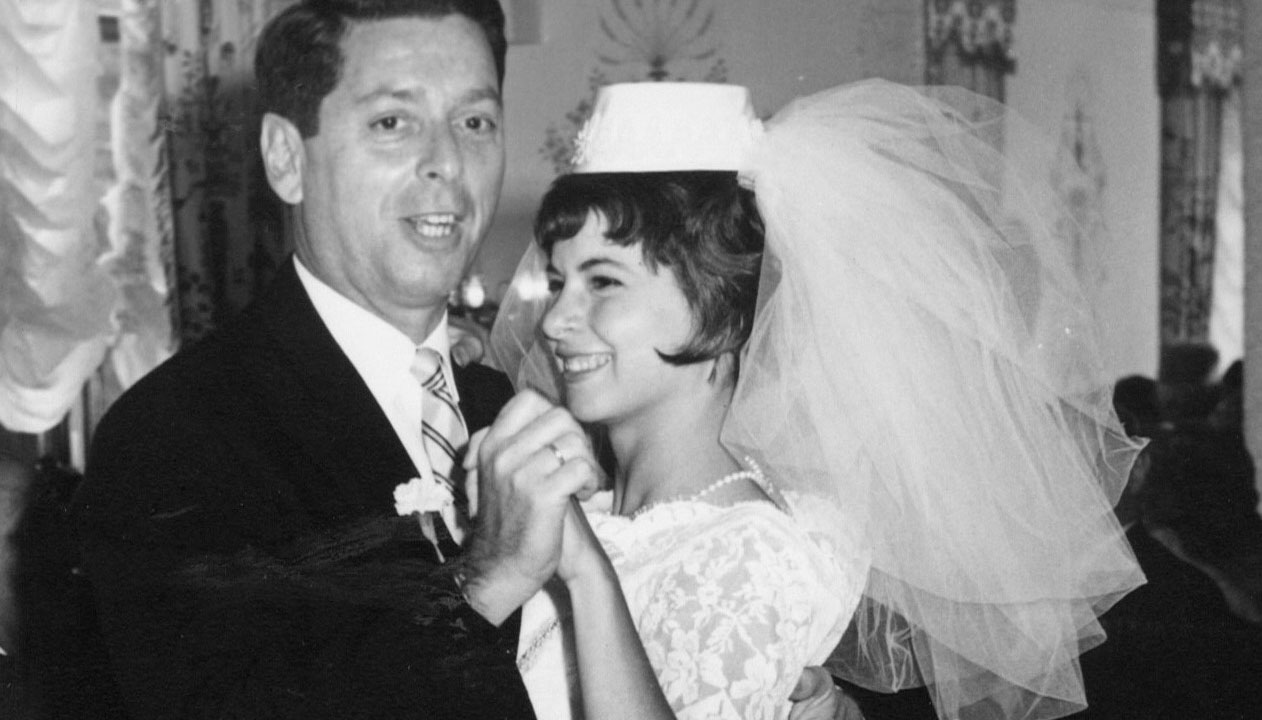
Yet my mother, who had little use for religion, wanted me to join a Jewish student group when I went away to Oberlin College, where Jews were a minority in the 1960s. Why? It would increase my likelihood of finding a Jewish husband. It didn’t work. In 1965 at age 22, I married a non-Jew who wasn’t open to Judaism.
My father never made a secret of his distaste for ritual and synagogues.
Two decades later, when he witnessed me lighting Shabbat candles, he laughed and told my daughter, “Janet didn’t learn any of this from us.” Later, when I began observing Passover, he sneaked bagels into my house. Yet he was ecstatic at my adult bat mitzvah in 1998 and when I married a Jewish man in 2000.

These days, I enjoy rituals that were spurned by my family. These are what brought me back to Judaism — not Hitler, antisemitism or even Israel.
Before my first visit to Israel in 1998, fellow staffers at the Jewish Bulletin, J.’s forerunner, told me how wonderful it would feel to visit a country where Jews are the majority. But when I stepped into the Old City of Jerusalem, I was still a minority amid cowled monks, kaffiyehed Muslims and black-hatted Jews.
As a liberal American Jew, the Jewish homeland was not where I felt at home.
While praying with Women of the Wall on Shabbat, I was told to huddle and to muffle my voice. The boisterous, dancing men on the other side of the divider had no such restrictions. I couldn’t stand the segregation. It made me feel unwanted and alienated. Weeks after my visit to Israel, I celebrated my adult bat mitzvah at my Alameda synagogue where I could sing my heart out.
Israel may be a source of reconnection to young adult Jews, who are eligible for free trips through Birthright Israel. But my path of return took place in the Bay Area. During a visit to a JCC, I discovered the Jewish Bulletin and took advantage of a free six-week subscription, which connected me to alternative worship services, Hebrew classes and singles weekends. At the Bay Area Jewish Singles Hiking Club, I experienced Havdalah for the first time during a weekend at Yosemite. I also met rabbis who welcomed me back.
There are many paths to Jewish reconnection. For some, synagogues may be a first step, which is why congregations need greeters, board members and clergy to welcome newcomers. As a single woman who attended alone, I was often ignored at post-service oneg Shabbats.
But there are other paths, including JCCs, adult education and cultural activities. Unfortunately, arts and educational organizations barely had time to start recovering from the Covid-19 pandemic before the Oct. 7, 2023, Hamas massacre refocused the Jewish community on Israel and antisemitism.
The Contemporary Jewish Museum in San Francisco has temporarily shuttered. The longrunning Jewish Coalition for Literacy has folded, and donations have dropped to other local Jewish nonprofits with missions unrelated to supporting Israel or combating Jewish hate.
Jewish survival is critical, and right now, Jews face multiple crises. But to grow our community, we must do more than advocate for the Jewish state and against antisemitism. We must bring Jews and others into the Jewish fold by showcasing what’s great about Judaism. That’s what worked for me.