

Fifteen days in, a group of Stanford students continues to participate in a hunger strike for “justice in Palestine,” despite the university’s rejection of the protesters’ demands.
Thirteen Stanford students began the hunger strike on May 12, joining dozens of other college students across California. Since then, more Stanford students have joined the cause. It’s unclear how many students have been participating the entire time.
The Stanford hunger strike started a week after students at California State Universities in Northern California, including San Francisco State, San Jose State, and Sacramento State, began similar protests. However, students on those campuses have since ended their strikes.
Stanford administrators have urged participants to protest in ways that do not endanger their health. But some adults have lent vocal support. Stanford comparative literature professor David Palumbo-Liu called for activists to put their “bodies on the line” during a speech at a “solidarity rally” with hunger strikers on May 12, according to the Stanford Daily. On May 20, a UC Berkeley lecturer visited the hunger strikers and delivered a similar message.
Khalid Kadir, a UC Berkeley lecturer and adviser to Cal’s Muslim Students Association, spoke into a microphone for one hour, encouraging several dozen students in attendance to risk bodily harm for a just cause.
“We’re afraid … maybe this person will lash out at me, or punch me, right? Something like that. Or maybe I’ll lose my job. Or maybe I’ll get into legal trouble. Or maybe I’ll get punched in the nose,” Kadir told the students. “But we shouldn’t be afraid. Get punched in the nose. What possible harm can come to you if you get punched in the nose for doing something good? Think about the blood that comes out of your nose. What is that going to be for you when you’re in your grave? It’s going to be a mercy for you, every drop, for sure.”
Every evening since they began the strike, organizers have encouraged supporters to gather on White Plaza, a main gathering place where pro-Palestinian tent encampments went up last year.
J. visited the plaza on May 20 and interviewed two of six hunger strikers who were present.
“There’s so many people starving and I think it’s easy to forget about that,” a Stanford graduate student majoring in earth systems told J., having joined the hunger strike the previous day. She declined to give her name. “I think being in solidarity with them and also creating some reminders in the community … is important to not forget what’s happening,” she said.

One student who had been participating in the hunger strike for two days told J. they’d been relying on Gatorade, zero-calorie electrolytes and vitamins. The student wore a black mask to conceal their identity, as did several others involved in supporting the hunger strike. Some students also wore kaffiyehs.
The hunger strikers have a list of demands, which include calling for the university to immediately divest from companies “that profit from Israel’s siege of Gaza,” demanding that Stanford President Jonathan Levin denounce the Trump administration’s crackdown on pro-Palestinian student protesters, and petitioning for the Santa Clara County District Attorney’s Office to drop felony charges against the 12 student protesters arrested last June when they stormed Stanford’s administrative offices and caused extensive damage in protest of the university’s investments tied to Israel.
The strikers are also demanding a meeting with Levin, Provost Jennifer Martinez and Vice President of Student Affairs Michele Rasmussen. The last day of the academic year is June 11.
Rasmussen sent a letter on May 20 to the protesters declining a meeting.
“There is no new ground to cover in a meeting with university leadership, so your request for further engagement on these topics as a condition of ending your hunger strike will not be granted,” Rasmussen wrote to strike participants, which was later posted on Instagram by strike organizers, including Stanford’s chapter of Students for Justice in Palestine.
“We respect your right to peaceably express your views on Gaza, but again urge you to consider forms of protest that do not endanger your health,” she wrote.
Rabbi Jessica Kirschner, executive director of Hillel at Stanford, said in an email to J. on Tuesday that protesters’ continued demands to divest from Israel, despite the university’s clear rejection of those calls, are “the definition of insanity.”
Regarding their petition for the D.A.’s office to drop the felony charges, Kirschner said that the “activists willfully engaged in unlawful behavior when they entered Building 10, spray-painted graffiti all over Main Quad, trashed the President’s Office, and barricaded themselves inside. Those choices should have consequences. Directing anger against Stanford will do nothing to increase the prospects for peace in Israel and Gaza, but it will further normalize antisemitism, hate, and division on campus.”
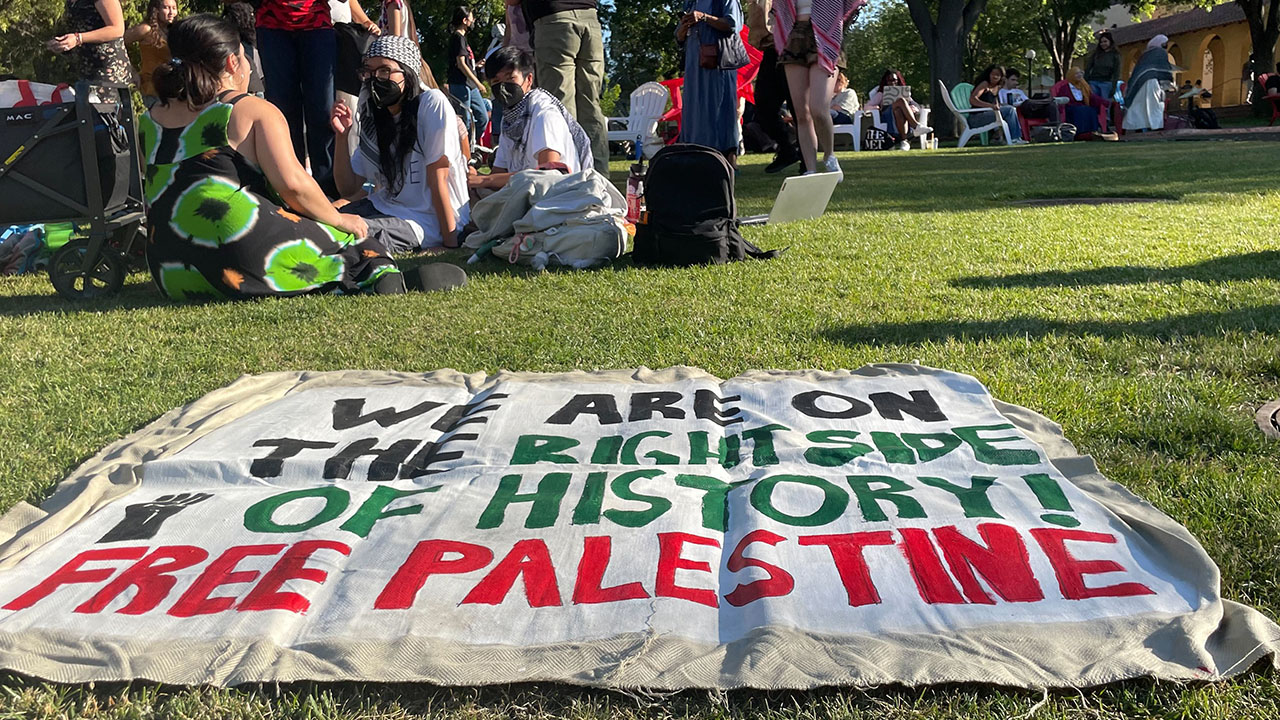
When J. visited Stanford, strike organizers had set up a table stocked with Liquid I.V., Pedialyte and water on White Plaza to keep the strikers hydrated. Volunteers distributed flyers explaining the demands of the strike. Handmade signs were also set up along the lawn. “We are on the right side of history. Free Palestine,” one read.
After a group of students gathered for the Muslim evening prayer, Kadir discussed the teachings of Allah and offered advice to protesters.
“Think about what this university is doing, and same with the one where I work. They’re cooperating in transgression, right? They’re invested in transgression. They need that transgression to make them money,” he said. “To the extent that we are going to study in these places, work in these places, it is a must that we fight against them.”