

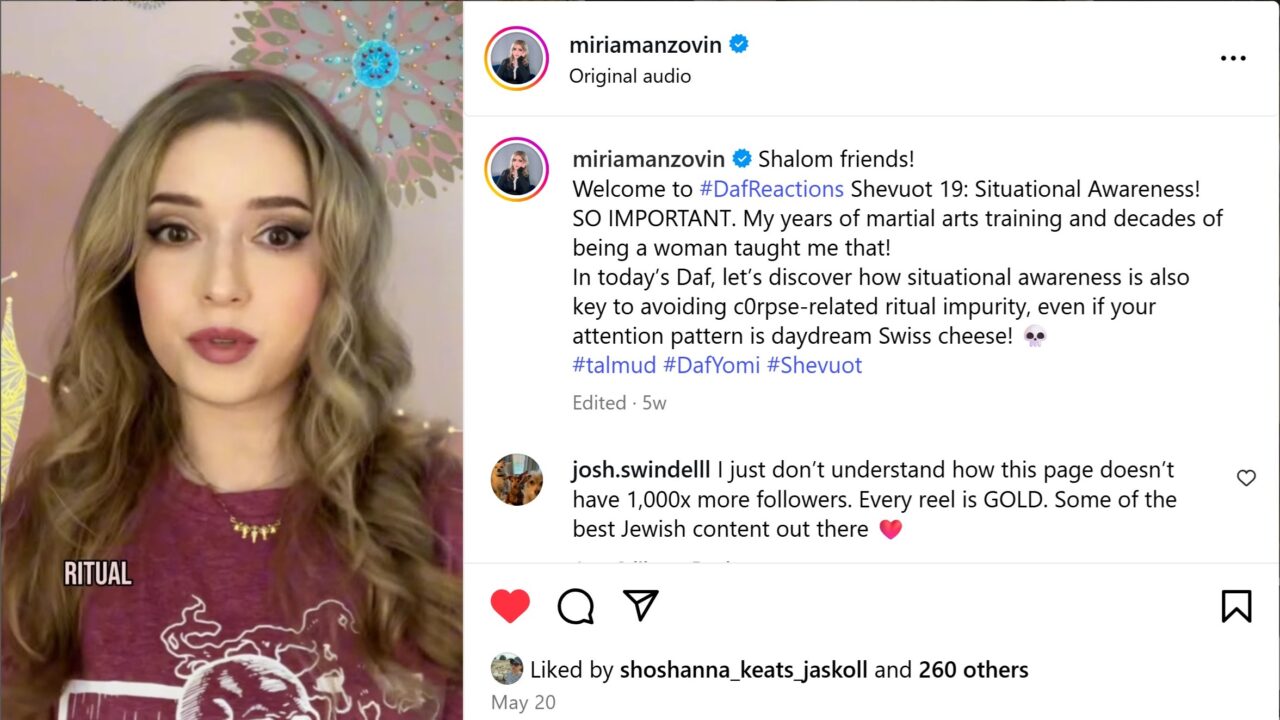
My algorithm knows I’m Jewish.
It knows that I light candles on Fridays, that I overstay my welcome on videos with Hebrew text, and that I once clicked “like” on a clip of an IDF soldier singing “Shalom Aleichem.” Now, my “For You Page” — a personalized content feed on my social media — is a buffet of Torah, trauma and trendified Talmud.
There’s the self-styled rebbetzin explaining kashrut with a ring light. A college student dramatizing the weekly parashah like it’s an episode of “Euphoria.” A bearded man in Brooklyn singing Kabbalistic concepts over lo-fi beats. Two swipes later, of course, come the “Did you know Jews control the banks?” conspiracies.
This isn’t a coincidence. It’s a data pattern.
Social media platforms collect dozens of data points per person — Facebook alone gathers information across nearly 100 categories, including personal details like location, hobbies and spending habits. Your watch time, your scroll speed, even your pauses mid-video become breadcrumbs. When you linger on Jewish content — spiritual, cultural or political — the algorithm registers your hunger. And like a pushy deli waiter, it keeps serving more, whether you’re hungry or not.
But the algorithm doesn’t just reflect who we are. It shapes who we become. It serves us an identity we didn’t fully construct but can’t entirely escape.
For Gen Z Jews like me, the internet is often the first rabbi and often the only rabbi. We’re not reaching for Maimonides or consulting a scholar. We’re scrolling through Instagram and TikTok. Judaism has been compressed into snackable, shareable content: hashtags instead of halachah, aesthetics instead of argument. In a world where over 80% of Jews under 30 say they feel emotionally connected to Judaism but don’t belong to a synagogue or formal community, the algorithm is stepping in as a new shul.
The danger is not just that we’re losing depth; it’s that we’re losing control over our own narrative. The algorithm rewards extremes — the flashy, the provocative, the viral — not the nuanced or the complex. Spirituality becomes performative. Identity becomes a brand. And when we should be building community grounded in shared values, we fragment into echo chambers and trends.
Looking ahead, we can expect these patterns to deepen. The more we rely on social media to teach us, the more we’ll see oversimplified theology packaged with entertainment. The line between sincere faith and influencer culture will blur. Rituals will become Instagrammable moments rather than acts of devotion. Worse, without context or guidance, the misinformation and the extremist ideologies will sneak into our feeds disguised as authentic Jewish thought.
If we don’t course-correct, we’re hurtling toward a generation that’s tethered to the idea of Judaism but severed from its living roots. A Judaism not learned but algorithmically assembled. A people united not by covenant or community, but by curated content and fleeting trends.
This is more than a loss of tradition. It’s a crisis of identity and continuity. And we’re already seeing the early signs: the rise of Jewish influencers who prioritize exterior over interior; the flood of oversimplified “Torah tips” that replace serious study; and even the proliferation of antisemitic conspiracy theories gaining traction under the guise of alternative “Jewish truth.”
In just a few years, the algorithms won’t just shape what we see. They will shape who we become. So how do I escape an algorithm that already knows I’m Jewish — and keeps shaping what that means?
The answer isn’t to disconnect or reject the internet outright. That’s not realistic. The digital world is where connection, culture and curiosity now live. But we can reclaim control by becoming intentional consumers and proactive creators of Jewish content.
First: Stop dressing Judaism up as content.
If your “outreach” is just vibes and visuals, you’re not preserving a tradition. You’re packaging a product. Community leaders chasing engagement over education aren’t reaching the next generation. They’re selling it short.
Second: We don’t need more posts. We need purpose.
That starts with education. Not checkbox bar mitzvah curriculums. Not aleph-bet and apples with honey. Teach real Torah. Teach values like tzedek (justice), zekher (memory), achrayut (moral responsibility) and emet (truth).
Teach how to think Jewishly — not just how to look Jewish online. Jewish education today is broken: inaccessible, oversimplified and wildly disconnected from the questions young Jews are actually asking. But that’s a bigger fight. Right now, we need to prepare youth to navigate Jewish identity in a digital world because social media isn’t going anywhere and algorithmic antisemitism is only getting louder.
Third: Rabbis, scholars, creators — stop diluting the message. We don’t need feel-good Torah. We need Torah that disrupts, that challenges, that refuses to be flattened for the feed.
Finally: We are not data. We are not branding. Judaism is not content, and it’s not for sale. If we don’t carry it with conviction, Silicon Valley will script it for us: hollow, aesthetic and monetized.
The algorithm may know I’m Jewish. But I decide what being Jewish means.