

Israel is widely considered one of the safest countries for the LGBTQ community in the Middle East, a region where same-sex relations are widely criminalized.
But Israeli LGBTQ activists say that recent events in Israel, including the consolidation of right-wing political power under Prime Minister Benjamin Netanyahu and the two-year Israel-Hamas war, have weakened protections and presented new challenges.
They are sounding the alarm, and some will be visiting the Bay Area this month to do so in person.
“State of LGBTQphobia,” a 2024 report from the Israeli human rights NGO The Aguda – The Association for LGBT Equality in Israel, detailed a rise in hate speech, threats and violence directed at Israel’s LGBTQ community.
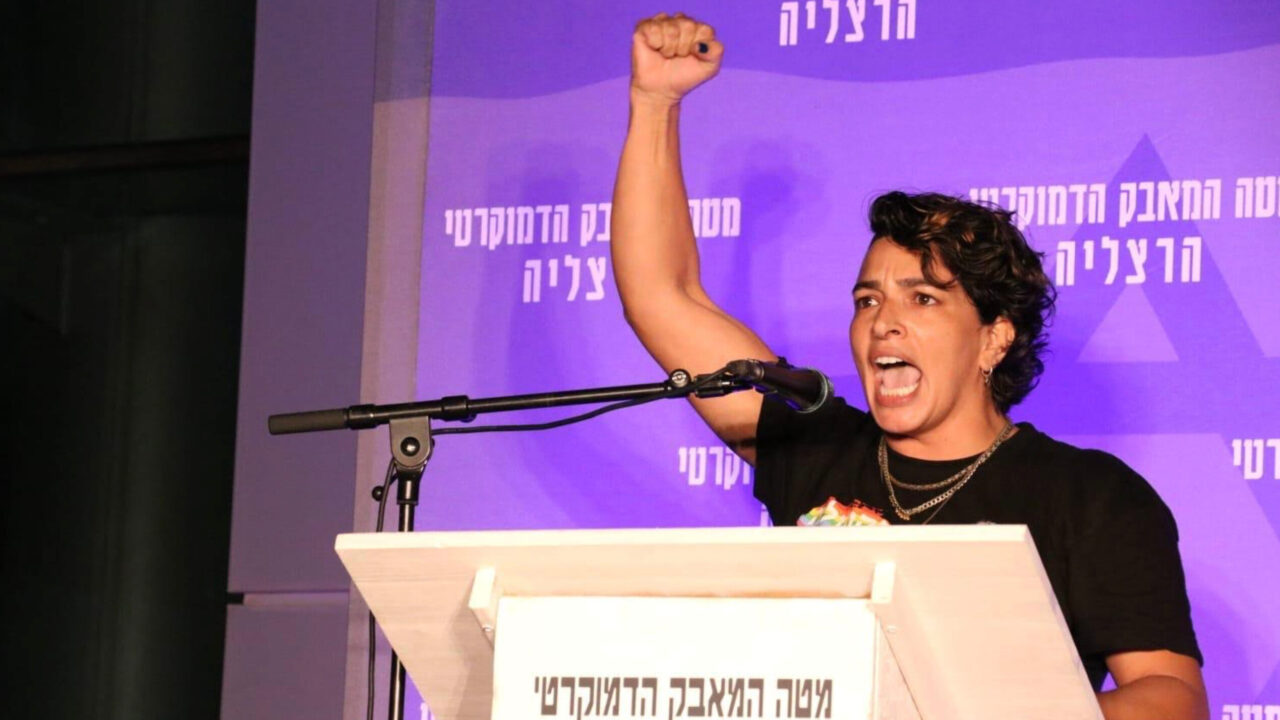
Aguda board chair Hila Peer and CEO Yael Sinai Biblash told J. of a surge in “explicit violence” against LGBTQ Israelis in 2025, with at least two dozen incidents of physical beatings. “In the last few years, since Covid, the [Netanyahu] government, the judicial overhaul and this horrible war, a lot of things have changed for the worse,” Biblash said.
That’s partly why two members of the Aguda’s leadership team are traveling to the West Coast to meet with the Jewish and LGBTQ communities and seek a way forward in these times of “darkness,” as Biblash described them.
Biblash and Aguda deputy CEO Imry Zagury will visit the Bay Area from Nov. 11 to 15. Their trip, and the meetings they will attend, are being hosted by S.F. Congregation Sha’ar Zahav, S.F. Congregation Emanu-El, the Jewish Pride Fund (a giving circle of the Jewish Federation Bay Area) and A Wider Bridge, a nonprofit that promotes ties between the LGBTQ communities of the United States and Israel.
They will speak at one public event on Nov. 13 at Emanu-El.
“It’s an emotional moment,” said Ron Lezell, a board member of A Wider Bridge. “Perhaps a hopeful moment, with signs of healing after a brutal two years of war. The diaspora really needs and wants to deepen our connection [to Israel]. The more we engage with them, the more we learn from them, it creates more empathy among those of us here.”
This will be the first trip to California for Biblash, 40, as an officer with the Aguda. She can’t wait to get here. “The relationship between Jews in Israel and the diaspora became deeper and stronger,” she said, “not just for values we share as gay and Jewish communities, but even more as a liberal community wanting to protect our democracy. Everything since Oct. 7 made it obvious that we need to be a lot closer to each other.”
As Biblash and Peer explained, the Aguda faces intense pressure on multiple fronts. The 2024 report notes “there has been regression and even deterioration — in public discourse, in official policy and in the lives of LGBTQ people in Israel.”
Not only is Israel’s LGBTQ community under increased homophobic assault, the organization itself has become a target of Knesset members and the Netanyahu government, they said.
“Our budgets are getting cut,” Biblash said. “At the beginning of the government, we had [a grant of] 25 million shekels, about $8 million. That was a lot of money for our community. This government then gave us a 40 percent cut, and now they are trying to vanish all the money. They cut more than 90 percent.”
Added Peer, “One of the statements the minister in charge [May Golan] said is that she will not work with gay organizations that are promoting the gay agenda. That was her exact quote.” Peer also noted a drumbeat of homophobic diatribes from Israeli right-wing media, such as Channel 14, which she described as “Fox on steroids.”
The budget cuts come at a bad time. Founded 50 years ago, the Aguda is Israel’s oldest and most established LGBTQ organization. Over the years it established an array of programs and services, including therapy and consultation, legal aid, support for asylum seekers (including LGBTQ Arab Israelis and Palestinians) and a hotline.
Now some of those services, and the staff that maintains them, may be cut back or eliminated. Peer also noted that normally reliable philanthropic donations to the Aguda have slowed, largely due to Israel’s urgent needs during wartime.
There is some good news. The Pride Parades in both Jerusalem and Tel Aviv are back on for next year after being canceled during the war. Biblash and Peer touted an upgrade in cooperation with Israeli police departments across the country, with newly assigned officers dedicated to responding to attacks on LGBTQ community members. In addition, soon after the Oct. 7 terror attack, the Knesset revised the nation’s bereavement law to include LGBTQ fiances after at least one gay man who was engaged to be married was slain. Gay marriage is not legal in Israel, though gay and lesbian couples married abroad are recognized.
Biblash and Peer also look forward to the Aguda’s 50th anniversary gala, set to take place in December.
Despite setbacks, both women are optimistic about the future for their organization, and longer term for their children (both are moms to young kids). They know their struggle for a more just society will go on.
Peer is philosophical about that struggle, paraphrasing the late Israeli Prime Minister Golda Meir: “As Golda said, we’re going to win, because we don’t have a choice.”
For security reasons, the precise dates, times and locations of Aguda’s Bay Area events (other than the Nov. 13 event at Emanu-El) are not being publicized. Those who wish to attend an event should send an email to [email protected].