

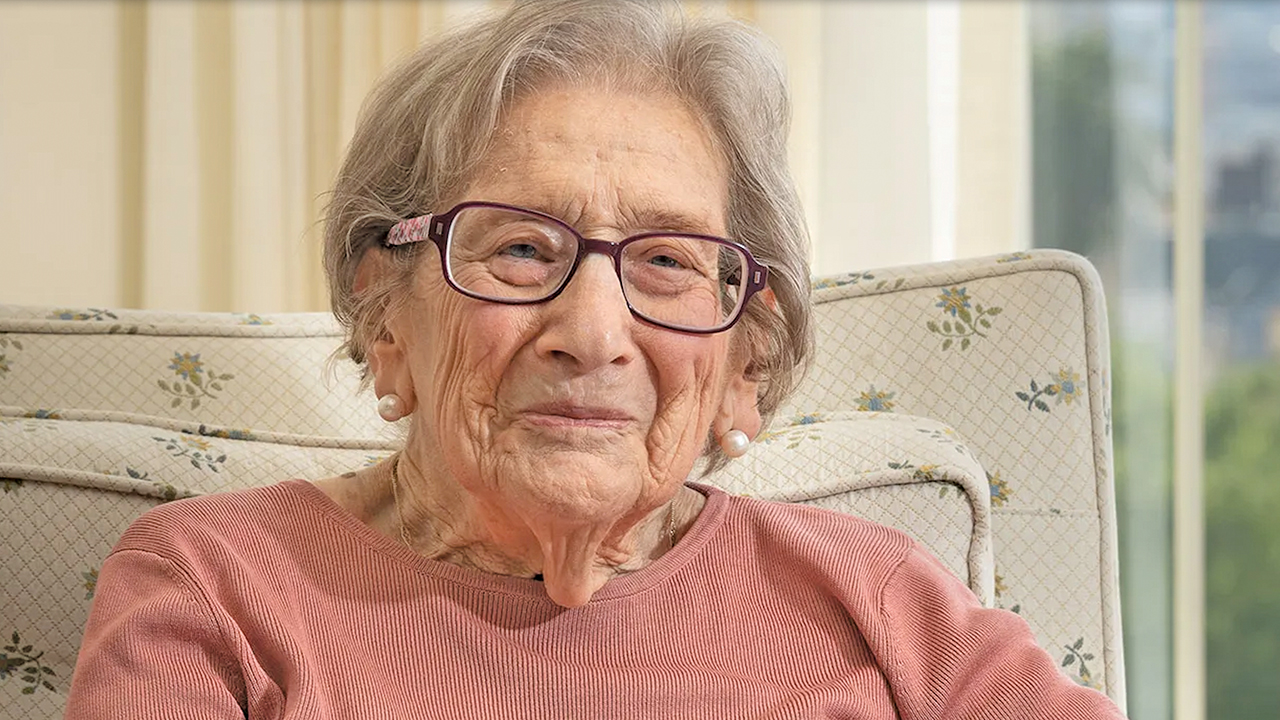
Note: This tribute is adapted from the writer’s introduction to the oral history of Rita Semel as part of the Oral History Project at UC Berkeley’s Bancroft Library and was originally written when she was a mere 99 years old. She died May 13 at the age of 104.
I learned a great deal from my mentor, friend and predecessor as Jewish Community Relations Council executive director Rita Semel. Even after Rita retired from JCRC I called upon her frequently to help resolve community issues.
In one case, a downtown San Francisco restaurant had decorated a wall with quotes from famous people, including one from Adolf Hitler that upset some patrons. They had complained to another Jewish agency about it to no avail and then reached out to JCRC. I knew Rita was friendly with the restaurant owner, so I asked her if she could help.
Others had tried for weeks to persuade the owner to remove the quote, but he argued for free speech and the value of provocative quotes as conversation starters. Rita changed his mind in an hour. She explained to the owner that patrons would feel physically ill seeing a quote from Hitler at the restaurant, and it was removed from the wall within a day or two. Case closed.
In another instance, when Rita was still executive director of JCRC, she learned from the San Francisco Food Bank that they could not provide fresh produce to hungry families because of the high cost and refrigeration challenges. She called her good friend Ken Colvin who had a business at the San Francisco Produce Market and who, like Rita, was a can-do kind of person. Within days, a lunch meeting was arranged at the Lake Merced Golf Club, which included Ken, the president of the Produce Market, a representative from the U.S. Department of Agriculture and San Francisco Food Bank executives.
We learned what the needs were, and the produce market agreed that produce that was physically damaged — and thus couldn’t go to stores but was still absolutely healthy — would not be thrown away. The representative of the U.S. Department of Agriculture agreed to approve its distribution to the Food Bank, and Rita committed to work with Phyllis Cook at the Jewish Community Federation Endowment Fund to obtain a grant for two-year use of a refrigeration truck.
Within roughly 90 minutes, the issue was presented and solved, and thousands would benefit from one meeting choreographed by Rita. Case closed.
These are just two snapshots — one during her tenure and one after. One could draw on hundreds of similar examples of Rita in action — with the media, with public officials, with ethnic leaders, and with interfaith leaders. Although small in physical stature, she was a giant in the arenas of interfaith relationships and bridge-building. Rita defined tirelessness and exceptional competence — two of her many leadership traits. She could put on a steely gaze and exhibit annoyance and impatience at any grandstanding. But at the end of the day, Rita was motivated by her passion for a better world, her ultimate sense of optimism and a huge heart, which included great love for her family, friends and the value of celebrating diverse religious and ethnic traditions.
Rita was a quintessential organizer. Nearly 40 years ago, she started a signature JCRC program of taking non-Jewish community leaders (public officials, ethnic and religious leaders, university officials, etc.) on a 10-day educational seminar to Israel. The impact of the program has been demonstrated time and time again.
The establishment of the San Francisco Interfaith Council, which coincided with her retirement from the JCRC, was another example. She recognized a need, figured out how to address it, reached out to the key people to get it done and stuck with it until it was a reality and beyond.
Sometimes, she was simply the best choice to lead. When a global grassroots interfaith organization was established by Bishop William Swing, Rita was the logical unanimous choice to become the first Chair of United Religions Initiatives Global Council. I was grateful that she actively encouraged my participation in such interfaith journeys as I continued to learn at her feet.
Rita walked into the office every day committed to living Jewish values, especially Rabbi Tarfon’s dictum: “It is not incumbent upon you to complete the task, but neither are you free to desist from your share.”
It is hard to find anyone who did more of their share than Rita Semel, and we are all the beneficiaries of her mentorship, example and passion for a better world. When people say “Rita was a community treasure,” they are telling the truth.
I am filled with gratitude as are so many in our community from all walks of life, for the remarkable life of Rita Semel and the decades of inspirational leadership by example. May her memory be a blessing.