
The Torah column is supported by a generous donation from Eve Gordon-Ramek in memory of Kenneth Gordon.
Chukat–Balak
Numbers 19:1-25:9
“The Israelites arrived, the whole assembly, at the wilderness of Zin on the first new moon (of the 40th year since leaving Egypt), and the people stayed at Kadesh. Miriam died there and was buried there. The community was without water…” (Numbers 20:1-2)
With Miriam’s death, at age 127, the era of Egyptian bondage begins to truly recede. The great leaders who brought the people out of slavery will soon be no more. But Miriam’s passing is given such an abrupt, almost brusque mention. Is this an appropriate tribute for the only woman in the Torah to be called n’viyah, a prophet?
In many ways, the report of Miriam’s death aligns with the portrayal of her life. Despite her towering presence in Jewish lore, Miriam appears in the Torah in only a handful of places, and each time very briefly. Yet we feel that we know her and that we have, to an extent, watched her grow up. Of Moses’ infancy and young adulthood we know a little, and of Aaron’s youth we know nothing at all. It is Miriam whom we meet in childhood, as baby Moses’ devoted protector along the banks of the Nile, though she is not named when she is introduced: “And his sister stationed herself at a distance, to learn what would befall him.” (Exodus 2:4)
This initiative-taking girl — no one seems to have instructed her to act — speaks boldly to Pharaoh’s daughter. She offers to fetch a Hebrew nurse for the rescued infant, ensuring that Moses is nourished by his own mother. From the beginning, we are struck by her courage and talent for moving the action forward.
Traditional commentators give Moses’ big sister additional credit for setting the Exodus in motion. Miriam has long been imagined to have convinced her parents to bring another child into the family despite Pharaoh’s murderous edicts, intuiting that the unborn baby would be a redeemer for the enslaved people. Miriam is even thought by some to have been the midwife Puah, whose defiance of Pharaoh and compassion for the newborns saved countless innocent lives.
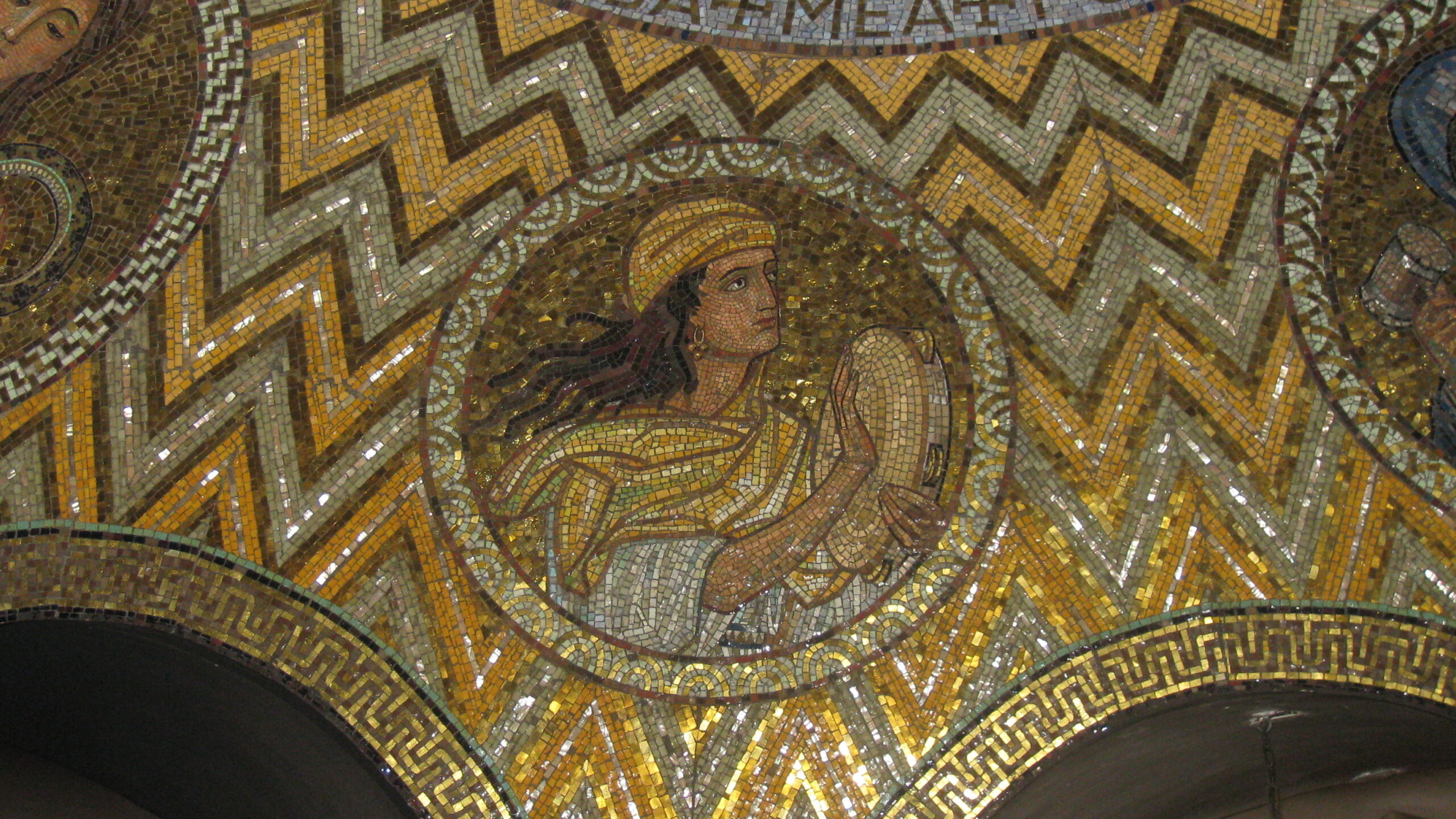
The ensuing years of Miriam’s life are a mystery. What were her days like in slavery? Did she marry or have children? What was her relationship with Aaron and their parents? On these subjects the Torah is silent. After the Parting of the Sea, we are finally told her name, and confirm that she is a Divinely inspired leader. In arguably her most iconic moment, “Then Miriam the prophetess … took a timbrel in her hand, and all the women went out after her to dance…. And Miriam chanted, ‘Sing to the Lord for He has triumphed gloriously; Horse and rider He has hurled into the sea!’” (Exodus 15:20-21)
Some modern commentators contend that Miriam’s concise song gets short shrift compared with Moses’ very grand Song of the Sea, but in its brevity, choreography and placement, Miriam and the women have the celebratory last word at the water’s edge.
When Miriam appears again after a long hiatus, it is a troubling scene. With patience waning and rumbling continuing in the desert ranks, Miriam and Aaron succumb to very human tendencies and speak ill, though vaguely, of Moses and his Cushite wife. Their more transgressive complaint, as far as God is concerned, is about Moses’ special status as a prophet. They say defiantly: “Has the Lord spoken only through Moses? Has He not spoken through us as well?” (Numbers 12:2)
God scolds Aaron and Miriam mightily, calling them to account like misbehaving schoolchildren. Aaron is spared, puzzlingly, but Miriam is punished with a skin malady of “snow-like scales” that shuts her out of camp for seven days in a state of impurity. Aaron pleads for her with Moses, Moses cries to God the seminal prayer “El nah r’fah nah lah — God, please! Heal her please!” (Numbers 12:13) And in an indication of her special status, the people “did not march on until Miriam was readmitted.” (Numbers 12:15)
We feel for Miriam, who bears the brunt of the blame for careless, petty speech. But exhaustion and poor decision-making affect even the most exemplary human beings. Although she and Aaron may have thought they could speak freely, the Torah tells us “God heard.” The siblings are held to almost impossibly high standards, but even in her affliction, Miriam serves as a reminder to the Israelites to guard their tongues: “Remember what the Eternal, your God, did to Miriam,” Moses says. (Deuteronomy 24:9)
We do not hear from Miriam directly again. Her death in this week’s parashah occasions no formal mourning, no reckoning or announcement. The absence of water is curiously mentioned immediately after Miriam’s death, inspiring our tradition that because of her righteousness the Israelites had had water in the wilderness.
Miriam’s Well is so widely known that it’s easy to forget it’s not actually in the Torah. Its existence was codified by Rashi in the 11th century when he wrote: “all forty years they had the well in Miriam’s merit.” (BT Ta’anit 9a)
Miriam’s connection with water is profound. Her name means “bitter waters” and symbolizes the tragic centuries of slavery and the deep pain of Jewish families for whom birth waters could mean instant death. Her rejoicing at the Sea of Reeds was for the birth of the nation for whom she was in many ways the midwife.
With her passing, the people are terribly thirsty. For water, yes, but also perhaps for the sustaining, sisterly presence of Miriam and her “well” of compassion, valor and humanity.
A Cup of Miriam has been added to many Passover seder tables. Into it, we pour life-giving water, the most precious of resources. We immortalize the sister of Moses and Aaron who gathered up her nerve and dared to speak to a princess, to sing to the heavens, to dance with abandon and to criticize the status quo, even when it carried great risk. And when things didn’t work out perfectly, she taught us enduring lessons about the cost of uncaring speech and the high expectations we should have of our leaders. Though her death was recorded in only a few words, her legacy echoes through time.
May the memory of Miriam bat Amram v’Yocheved continue to be a blessing.