
For three decades, Debbie Findling led with it.
The Wexner Heritage Program appeared on her CV, LinkedIn page and professional biography. Her participation in it was part of her Jewish identity, a marker of belonging to an elite network of leaders chosen to carry forward the values of the American Jewish community and a useful credential in her work as an adviser to Bay Area Jewish philanthropies.
But over the last several years, the ties between the program’s sponsor, billionaire businessman Leslie Wexner, and convicted sex offender Jeffrey Epstein came into focus for Findling. The two men had a close relationship for years. Wexner was instrumental in Epstein’s rise to wealth and prominence, while Epstein managed Wexner’s finances and later served as a trustee of the Wexner Foundation.
Wexner has denied having any knowledge of Epstein’s crimes, including those against minors, and has testified that he severed financial and legal ties with Epstein in 2007.
Still, Findling’s pride has soured into something closer to shame.
“I’ve lost something that I was really proud of — it was taken away from me,” Findling said, describing a sense that something “sinister” has corrupted such a positive experience. “I feel like the rug got pulled out from under me.”
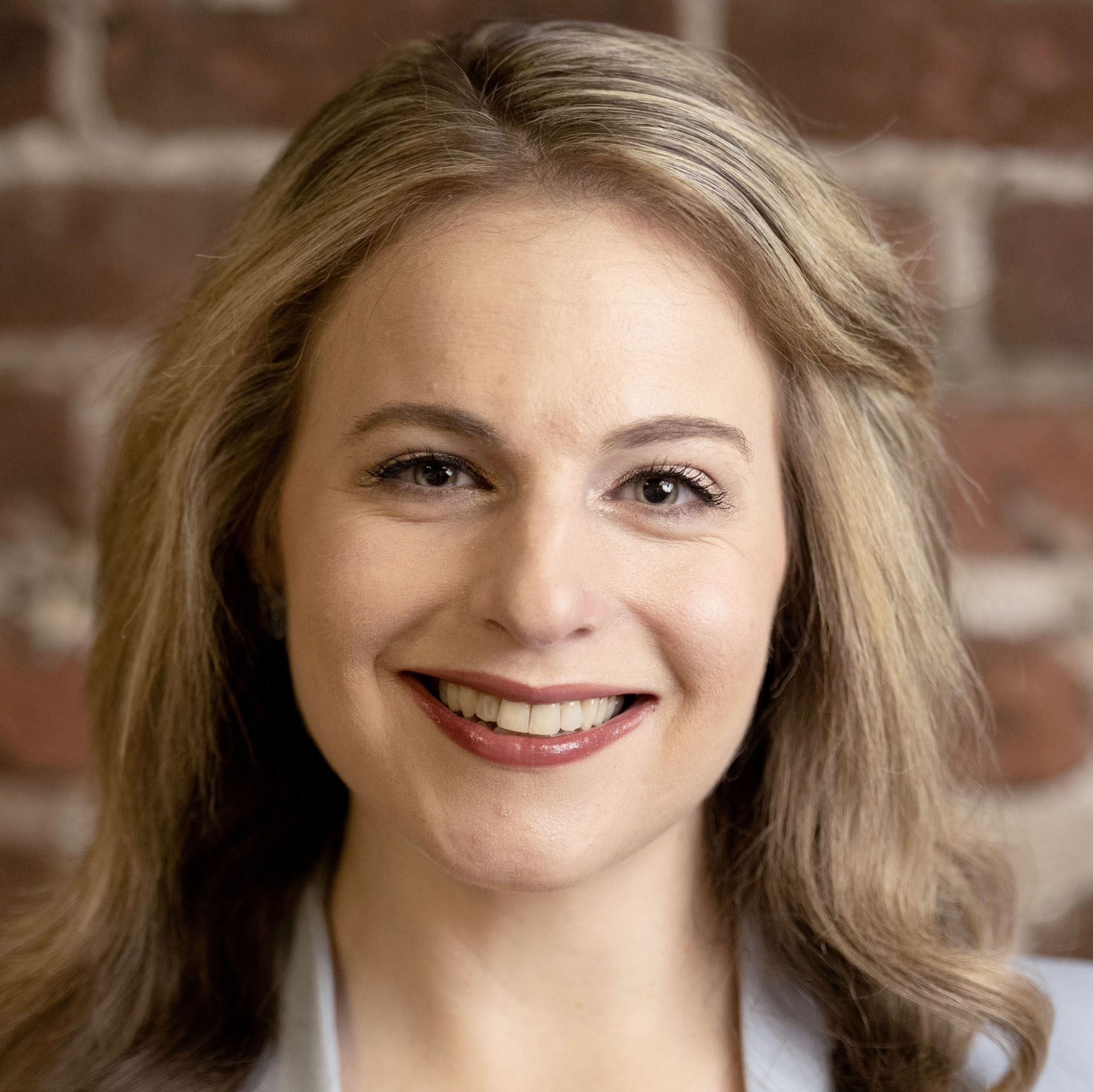
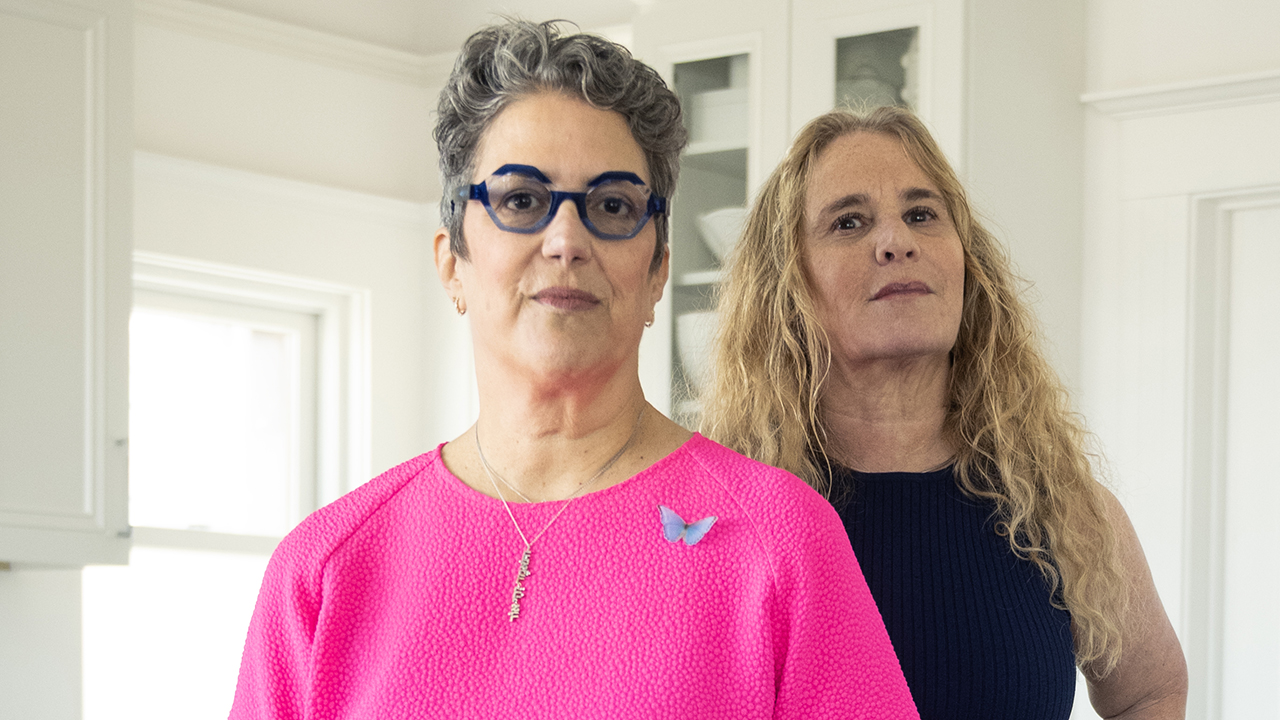
Now Findling, 62, is leading what may be the largest organized accountability effort to emerge so far in the Jewish community’s reckoning with Wexner’s ties to Epstein. She’s doing so in partnership with Jan Reicher, 61, also a Bay Area Wexner Heritage alum, as well as a longtime community leader and the immediate past president of Jewish Community Relations Council Bay Area.
The two women have circulated a public letter to the foundation signed by 80 Wexner alumni so far, including 50 from the Bay Area, urging the organization to take meaningful action to support survivors of sexual violence and trafficking.
They also launched in May what they call Tikkun Funds — directing donations to three nonprofits that support survivors of sexual violence or trafficking — and asked fellow alumni to contribute $36,000 each. More than $356,000 has been pledged so far. A parallel effort, the ASHRU Fund, is being run by alumni of a separate Wexner fellowship for professionals at Jewish communal organizations.
The Wexner Foundation has not responded substantively to the letter’s demands and declined to comment for this story.
Part of what makes the campaign remarkable is that open conversations about Wexner’s legacy amid the Epstein scandal have been rare.
Evan Segal, a Wexner Heritage participant in the Bay Area who left the program after its first year for a job in the Obama administration, said the discomfort stems from how many people in Jewish communal life are close to the issue.
“If you want to know why the Jewish philanthropic world has been crickets, it’s because many of the big names that people have respected for years are tied — some more directly, some indirectly — to this scandal,” said Segal, who didn’t qualify to sign the open letter because he isn’t an alum.
The silence, he suggested, is also about what the Wexner name has come to mean.
“For years, the Wexner name has been put in a pantheon of mensch-y philanthropists. People carry it on their resumes as a badge of honor,” he said. “Now it is 180 degrees of that.”
Wexner program’s values
Findling and Reicher’s campaign is not aimed at dismantling the Wexner Foundation, the two women said, nor at repudiating the education they received and the community they formed.
Instead, they describe it as an attempt to apply the very values the program instilled in them.
“I feel like I am acting in the leadership capacity that Wexner taught me, which is to stand up for those who are less fortunate, to stand up for survivors, to stand up for truth,” Findling said.
For decades, the Wexner name occupied a singular place in organized Jewish life. The retail magnate behind the rise of Victoria’s Secret and other major brands, such as The Limited, Abercrombie & Fitch and Bath & Body Works, became one of the most influential funders of Jewish leadership development in North America and Israel.
Beginning in the 1980s, the Wexner Foundation built a constellation of fellowships and leadership programs for Jewish clergy, professionals, philanthropists and lay leaders. Thousands of participants moved through those programs and into prominent positions across Jewish institutions and wider society.
Among the most visible of them was the Wexner Heritage Program, which combined Jewish learning, leadership development and community building. The program, which is offered for free, has attracted almost 2,500 participants across 35 North American cities.
The San Francisco hub, which launched in the late 1990s, became one of its strongest. When the Wexner Foundation began seeking local matching grants, the San Francisco Jewish community set a “stellar example of commitment by creating an endowment,” according to the foundation. The Jewish Federation Bay Area’s efforts ensured there would be a new cohort every few years. Today, the Bay Area is among the regions with the most alumni.
A ‘life-changing’ experience
Among the 10 Wexner Heritage participants interviewed for this story, all described the experience as monumental. Or as Ellen Kahn, a member of Findling’s 1997-1999 cohort, put it, “absolutely life changing.”
“Leslie Wexner, in my view, was this bigger-than-life man who created something that was so extraordinary,” Kahn said.
Alumni describe the far-reaching impact of their two-year Wexner program: It inspired them to serve on nonprofit boards, engage in philanthropy and build both friendships and community networks.
Reicher, who joined the program in 2003 after helping found San Francisco’s Jewish Community High School of the Bay, described the Wexner Heritage Program as formative.
“For me, the biggest thing really was the cohort that we created,” she said. Her group still studies together, supports one another’s institutions and gathers socially.
It took until this January for Reicher to “wake up” about the implications of Wexner’s relationship with Epstein. She was reading court testimony from Virginia Roberts Giuffre, one of the most outspoken and prominent survivors of abuse by Epstein and his enablers. Giuffre, who died by suicide in April 2025, had testified that she was trafficked to Wexner multiple times, a charge he has denied.
Wexner has not been charged with any crime in connection with the allegations.
“Oh my God,” Reicher kept repeating aloud to herself, growing more disgusted and horrified with what she was reading in the testimony. She phoned Findling and said, “We’ve got to do something.”
For Reicher, the decision to act has been bound up with her own experience as a rape survivor. She said she came “within inches of losing my life” at 18 but ultimately did not press charges after her father urged her against it.
“That person that I was at 18 didn’t stand up for herself,” she said. “So now I have this other layer as a survivor that I need to stick up for other survivors, even if it causes me harm, even if it causes me trauma.”
Intensifying scrutiny
The accountability campaign was launched amid intensifying scrutiny of Wexner, whose name appears 1,746 times in the publicly released Epstein files on the U.S. Justice Department website.
In February, Wexner sat for a five-hour filmed deposition before the U.S. House Oversight Committee, where he denied any knowledge that Epstein was a sexual predator or committed sexual crimes.
The accusations that Epstein raped, abused and trafficked girls and young women across many years are extensive. He was convicted of sex crimes with minors in 2008. Eleven years later, he was charged with sex trafficking of minors but died by suicide before trial.
“I was conned by the world Olympic, all-time con artist,” Wexner testified during the Feb. 18 deposition, which was made public.
Around the same time, the Wexner Foundation announced it would hold a series of private listening sessions over Zoom for alumni who had concerns about Wexner’s ties to Epstein. Neither Reicher nor Findling attended a listening session, believing the events would be counterproductive and that no change would result.
“Listening is an essential component of responsible leadership,” they wrote in the open letter. “But listening is not enough. When sworn testimony and public records raise serious moral and ethical questions, silence risks complicity. Our community needs more than private reflection — it needs visible ethical conviction and action from the Wexner Foundation.”
‘Misogynistic business model’
Findling said she now faults herself for not listening more closely to instincts she had going back to her earliest encounters with Wexner, including at the program’s kickoff trip to Aspen in 1997.
She arrived with about 80 Bay Area Jewish professionals at a 25,000-square-foot mansion, where she was greeted on the terrace by Wexner and his wife, Abigail Wexner.
Even then, she said, she understood his fortune came from Victoria’s Secret, which she considered a form of cultural harm.
“Well before 2020, all of us, including me, knew and understood that Wexner’s wealth derived from Victoria’s Secret. It was a misogynistic business model, period,” she said. “Independent of Epstein — an industry that made 11- and 12-year-old girls believe they needed to wear hot pink push-up bras and teeny panties.”
Still, Findling said, she did not fully reckon with what that contradiction meant inside the program itself.
“I didn’t connect those dots or chose not to or was oblivious or blind or asleep,” Findling said. “I should have woken up a long time ago.”
A community divided
When Findling and Reicher brought their appeal to fellow alumni in late February, they found a community divided. While dozens signed quickly, the response did not grow beyond an initial burst of support, and the vast majority of alumni have not joined the effort.
For Marci Dollinger, 61, an elementary school teacher at Brandeis Marin Jewish Day School in San Rafael and a board member of several local Jewish organizations, the decision to sign the letter was obvious. It’s a matter of “not being silent when serious concerns arise,” she said. But she added that many alumni she knows were reluctant to sign.
“Even some in my cohort [declined to sign], and it was upsetting because to me it just seemed like why would you be on the wrong side of this? But they have their reasons,” Dollinger said.
Few of those reluctant to sign were willing to go on the record.
Howard Steiermann, 67, of San Francisco said he didn’t want to sign it initially because he doesn’t feel that the program’s name is tainted.

“I’m not sure that my feeling toward the program or the man has changed,” said Steiermann, who added that he has read through the allegations. “For me, I can’t tell you why, it doesn’t tarnish my memory or appreciation for the program that I went through.”
But he ultimately added his name out of a sense of allyship.
“I do believe in innocence until proven guilty,” said Steiermann, who was ordained as a rabbi in 2015, more than a decade after his Wexner graduation. “That said, I think our culture has had such a horrible track record of not listening to women around abuse.”
He added that he wanted to be an ally to what “too many people see as a woman’s issue.”
While Steiermann ultimately signed, his reluctance reflects a wider pattern among some male alumni.
Wayne Feinstein, who said he signed it with no hesitation, noticed that pattern.
Feinstein, 74, served as executive vice president of the Jewish Federation Bay Area from 1991 to 2000 and grew up attending the same Columbus, Ohio, synagogue as Wexner.
“To me, it was an ethical question, plain and simple,” he said.
Feinstein, one of only about two dozen men out of 80 signatories, was disappointed to learn that many male Wexner alumni had refused. They were “reluctant or fearful,” he said, to condemn a businessman in the Jewish community where they themselves worked.
He spent an hour on the phone trying to convince a male friend who kept pushing back. The friend said, “There’s no proof that Leslie Wexner did any of this.” Feinstein replied to him: “That’s not a reason not to do this.”
‘Meaningful repair’
Findling and Reicher said they’re not working toward persuading the many holdouts.
“I want to activate the people who signed, who are with me, into meaningful repair,” Findling said.
Their call to action encouraged gifts of $36,000, the amount the program spent on each Wexner Heritage participant, offering alumni their choice of three vetted nonprofits: World Without Exploitation, a national organization supporting Epstein survivors through advocacy, legislative action and public awareness; the Association of Rape Crisis Centers in Israel, the national umbrella organization that has been a leader in supporting sexual violence survivors of Oct. 7, 2023; and Shalom Bayit, a prominent Jewish voice on gender-based violence prevention and response based in the Bay Area.
Tricia Gibbs, 67, a Wexner Heritage alum and co-founder of the San Francisco Free Clinic, donated to all three nonprofits and signed the letter — her first time signing anything like it.
“In a way we’d be doing more harm to the program by not standing up, because we wouldn’t show that we learned anything,” she said. “There’s a deeply rooted ethic in Torah that tells us to protect the vulnerable.”
When they began writing the letter, Reicher worried about the impact on the Jewish community. Calling upon fellow alumni meant acknowledging painful truths. “Does this hurt the Jews more?” she asked herself.
A major source of consternation for the Jewish community has been that Epstein, Wexner and a number of other men connected to the scandal — though far from a majority — have been Jews and have had meaningful ties to Jewish institutions.
“It’s incongruous with how we were all raised,” Kahn said.
Naomi Tucker, co-founder and executive director of Shalom Bayit, hears it often.
“We have the exact same rates of violence against women in the Jewish community as everywhere else,” she said. “We would like to think we are better or different. But unfortunately these things happen everywhere.”
One in four Jewish women will experience domestic violence in her lifetime, Tucker noted, and one in three will face sexual assault or harassment — all consistent with national figures for all women.
Many alumni continue to reckon with what the program means to them.
“Do I wish the Wexner name no longer was attached to the foundation? Yes,” Kahn said.
That may come to pass.
On May 21, the foundation announced that all Wexner leadership programs will spin off into an independent nonprofit on Jan. 1, 2027, under a new name yet to be released. Wexner and his wife are contributing $40 million to launch the new organization.