

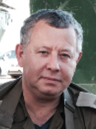
I am an orthopedic trauma surgeon, living happily and comfortably with my family in San Francisco. But last summer I found myself on the Gaza border, treating Israeli soldiers wounded in Operation Protective Edge.
 I left Israel in 1986, but Israel never left me. After three young Israeli men were kidnapped and murdered in June 2014, Israel responded — first with bombing and then by entering Gaza. I found it impossible to remain in San Francisco. I had to be in Israel, with my comrades, so I volunteered for duty as a medical officer in the IDF medical corps.
In the 1970s, when I emigrated on my own from Belarus as a teenager, Israel gave me a profession, a feeling of honor and incredible confidence in myself and in my future. After graduating from the school of medicine at Tel Aviv University, I served in the Israel Defense Forces for four years.
A few years later, my parents joined me. They took pride in having a son who was an IDF officer, a pride that outweighed the danger I experienced serving in hostile territory during the first Lebanon War. My mother, too, had a military background. Conscripted into the Soviet army in 1941 at age 18, Kreina Gurevich graduated from the renowned infantry school for female officers in Ryazan and became a shooting instructor during the Second World War. She often took me to the shooting gallery. I admired her accuracy.
Once again, it was my turn to serve. My El Al flight from Los Angeles to Tel Aviv was only half full; all Western airlines had canceled their flights that day after a rocket from Gaza landed barely a mile from Ben Gurion Airport.
A young woman in military uniform was waiting for me at the airport with a sign saying “Dr. Wolfson.” Smiling but unable to keep the tears away, I introduced myself in Hebrew. But Anya, who was born in Moscow, switched to a Hebraish Russian. IDF staff sergeant Boris, waiting for us by the airport exit, was also from Russia. There we were, Anya, Boris and Nikolaj, linked by our Russian origins but, more to the point, by our much longer shared history as Jews.
We drove to the central military medical troops base where I shared a warm reunion with my friend, Col. Salman Zarka. He is a physician and a Druze, but to me he is ahi, my brother. Zarka, as his friends call him, is an Israeli patriot, and a living legend of what makes Israel such a unique place.
Rejoining IDF service as a captain, I put on a military uniform for the first time in 28 years. Only three hours after landing, I was at a military base near Gaza — Gaza, where I first practiced field navigation at nights in 1982 during officers’ training; Gaza, where in the 1970s you could haggle at the market, drink Turkish coffee and eat falafel on “Palestine square.” It’s a very different Gaza today.
I was assigned to a mobile group of medical experts, who accepted me into their military family as if I had just returned from a vacation. Our job was to give medical aid to our soldiers before and after their raids into enemy territory.
Ronaldo, 22, was a “lone soldier” from São Paolo, Brazil. Like me, he had immigrated to Israel without his family. Now serving in a reconnaissance unit of the Golani Brigade, Ronaldo was complaining of knee pain, yet he always had a smile on his achingly young face.
Military operations are difficult and dangerous when they take place in densely populated areas. But I didn’t see any fear in the eyes of the soldiers that we treated. Most of the time they had a no-nonsense demeanor, relieved by a friendly smile when they said, “So you came from San Francisco to be with us?” Their gratitude put me at a loss: They fight to protect those living in Israel, but they also fight for all of us outside Israel, to ensure that Israel is safe and will be there for us.
I came across something unexpected. During my military service in the 1970s, women didn’t serve in battlefield positions and did not participate in military operations on the front line. So when our group of medical experts met up with the Special Forces battalion in August, I looked for the battalion doctor. I didn’t expect Regina, a short blond woman wearing eyeglasses and shouldering a heavy M16. Born in the Baltics, Regina graduated from the medical school at Tel Aviv University and chose to serve in a Special Forces medical unit. She had just come back from a raid inside Gaza.
“My parents don’t know where I serve. I don’t want to scare them,” she told me.
Regina was recently awarded a citation for her bravery during the war.
Our unit’s next stop was the tank battalion, where the medical officer, a native-born Israeli woman named Karnit, came out to meet us. Friendly and open, this 26-year-old military doctor helped me examine injured soldiers. She reminded me of my mom in her military uniform marked with a lieutenant’s shoulder loops. Then she introduced me to Sasha, a Moscow-born woman serving as a captain and tank regiment doctor.
Those young women, covered in dust, were doing their jobs amid the Merkava tanks.
On the plane back to San Francisco, I couldn’t sleep. I thought about my mom, about Israel and its soldiers — especially the women who defend their families and the children of Israel so heroically.
I left Gaza behind, its desert bordering the greenhouses and gardens of the Negev, a place where fanaticism abuts one of the most developed countries in the world. Which path will Gaza take? The road that leads to the future, I hope, and not to the troubled past.
Dr. Nikolaj Wolfson is a San Francisco orthopedic surgeon. He dedicates this piece to his mother, Kreina Gurevich, an officer in the Soviet army.