

Illusions, delusions, dreams and myths. People who embrace these phenomena inevitably find themselves disappointed when they wake from their slumbers and face the stark light of reality.
 Such is the case with professor Hasia Diner of NYU’s Goldstein-Goren Center for American Jewish History, who recently declared that she was no longer a Zionist due to her disappointment with what she has discovered Israel is, as opposed to what she dreamed it might be.
I sympathize with professor Diner’s disappointment. Her beliefs about what Israel should be grew out of the mythology shared by American Jews born in the 1940s and ’50s. This post-Holocaust generation drank the powdered formula of modernity served by its parents, a formula that included the views of the early Reform Jews who expressed, in their 1885 Pittsburgh Platform, the notion that Jewish statelessness makes us a purer and better people.
A stateless holy group does not have to sully itself with the consequences of being in history, the inevitable struggling with others, the fighting and competition for land and power, and national pride. But this vision forgets that the Torah call was not for us to take on a seraphic-like form, but to be a flesh-and-blood people, building a humane society that inspires others.
The problem with Zionism, for people like Hasia and the late Rabbi Irving Reichart, a staunch anti-Zionist who led Congregation Emanu-El from 1930 to 1948, is that it took Jews out of this unnatural angelic state and placed us back into history, into reality.
The new Jew that Zionism would nourish, the one envisioned by Max Nordau in his 1903 essay “Jewry of Muscle,” would be a human being in the tough, real world, where people struggle, fight and have to push their way into life.
Many American Jews born in the ’60s and ’70s did not understand this inevitable consequence of the rebirth of our people as they mythologized the creation of Israel. They imagined the Israeli soldiers praying at the Wall in 1967 as the embodiment of the comic book superhero who fights only for good, who never pushes anyone around, who invites the
Arabs to stay and live with them in peace, who drains swamps and builds a country on empty land, and is always just.
But we, however, live in the real world, and Israel is a nation-state of a living people, not a home for cartoon characters.
It is ironic that those who declare that Palestinian peoplehood was formed through their particular experience of displacement want to then deny the same designation to the Jewish people. Professor Diner describes the Law of Return, which grants Jews citizenship in the Jewish state, as racist. I find that the dreamers who take this extreme position do so only to Jews, while not denying the right of Iranians or Saudis, or even the Palestinians themselves, to create states that only welcome as citizens those who share the same cultural, ethnic or religious identity.
Today more than 6 million Jews live in the State of Israel. There are more Jews there than there are Scots in Scotland, Danes in Denmark or Norwegians in Norway. And these Israelis are a real people who have real struggles.
It is painful, as you awaken from the dream and realize that the object of your fascination turns out to have conflicts, both internally and externally, just like China in Tibet, India and Pakistan in Kashmir, or our own country in too many parts of the world.
Rub the sleep from your eyes, professor. Reality is messy.
The new anti-Zionism holds up powerlessness as an iconic Jewish value. But the Bible upholds another model. King David is a poet and fighter, a dancer and a military strategist, a true iconic Jew. He is spiritual but also unafraid to live in the complex neighborhood where his national home is located. Like David, modern Israel works to represent the values of a living Jewish people and not a mythical one.
So let us look at the world with clear eyes. We have re-entered history. Some, even some of our co-religionists, may not like it, but here we are. And Israel’s existence does not depend upon American Jewish polls or anyone else’s approval, but upon the Israeli government and the Israeli people making the hard choices that they believe are efficacious within the context of their reality.
As a committed Zionist, I proudly celebrate Israel’s growth, her creativity and her diversity, while vociferously arguing with her about how she treats Reform and other non-Orthodox Jews, and praying that her neighbors will make peace with her and she with them.
I hope Israel can come to terms with the Palestinians, but I am not so self-righteous that I believe I know the path that she must take. What is important to me is that she live up to the Jewish value of seeking peace and pursuing it, treating those under her control with respect and regard for human rights, while working to extricate herself from control over a people with whom she is in conflict — but the other side must want true peace, as well. Until then, I know that there will always be Jews in the diaspora who are better off because of Israel’s existence.
Professor Diner should count herself among these, but until she does, she is always welcome at Congregation Emanu-El, where we encourage debate and dialogue and different views about Israel. Those of us who embrace reality understand that Israel’s future as a free state in this world must be determined by her, knowing full well that her choices will not be romantic or naive, but the choices of a wonderful living Judaism and an embodied and so very real Jewish people.
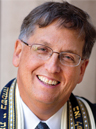
Rabbi Jonathan Singer is co-senior rabbi at Congregation Emanu-El in San Francisco.