

The Torah column is supported by a generous donation from Eve Gordon-Ramek in memory of Kenneth Gordon.
Ki Tisa
Exodus 30:11-34:35
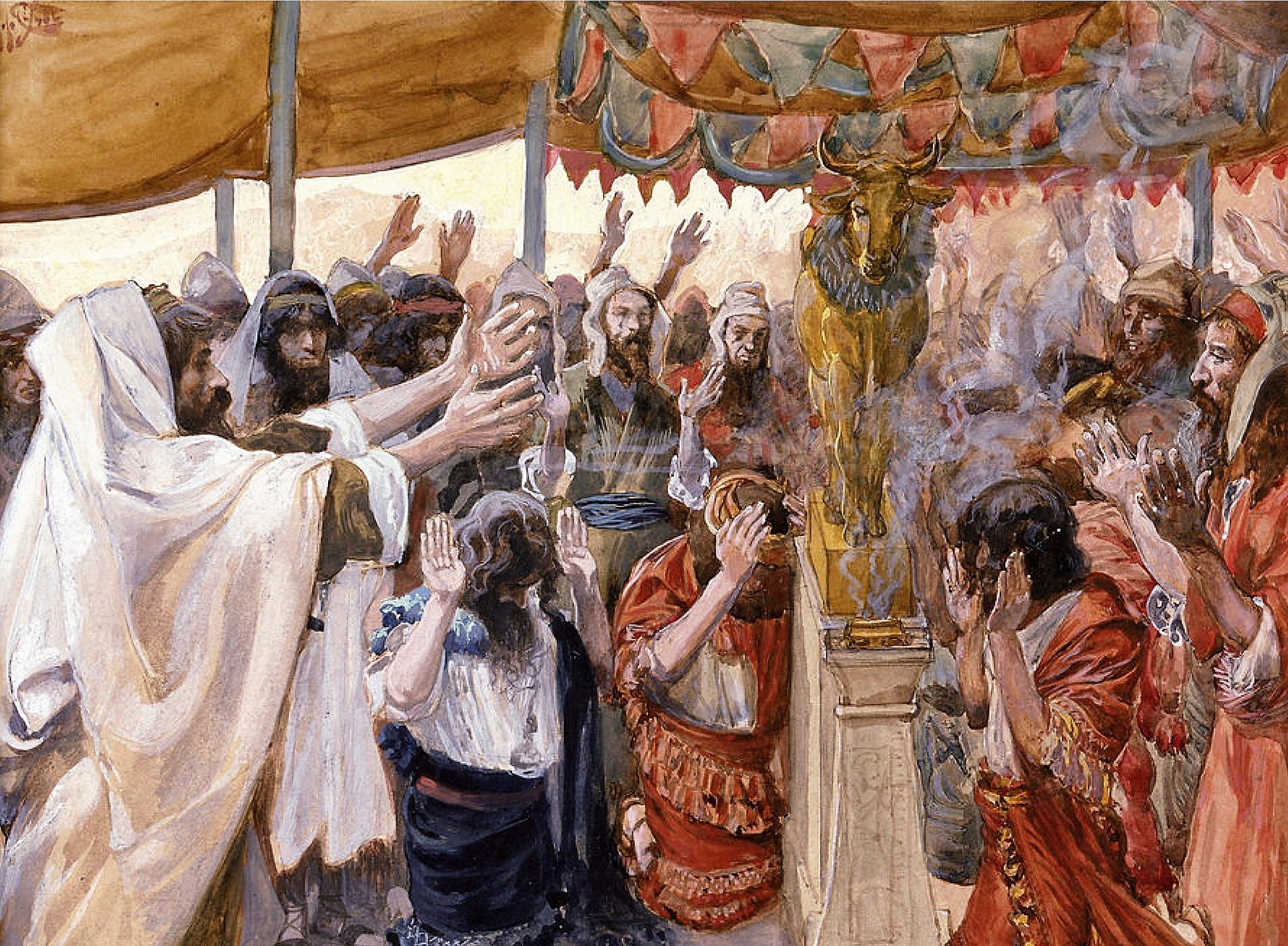
Ki Tisa is one of the most notorious and controversial Torah portions, and for good reason. Most notably, it contains the infamous episode of the Golden Calf, the idolatrous rebellion of the newly freed Israelites against the authority of Moses and his invisible God.
But there is more to this parashah than just that. We learn more about the complex personality of Moses as we see yet another display of his anger (when he punishes the Israelites for their sinful behavior in a very dramatic way), but also an illustration of his compassion (when he pleads on his people’s behalf).
We also learn just how important the Sabbath — Shabbat — is to the spiritual life of Israel, when God refers to it as a “sign” of the intimate yet dynamic relationship between the Jewish people and the Divine.
This is a wonderful Torah portion to use to explore just how difficult it is for human beings to tolerate an invisible God, as well as how tough it can be for people — especially modern people — to handle the perceived constraints of personal and institutional authority.
Why else create false gods, whether they are golden calves, money or power? Why else treat moral rules and values with so much laxity, or even indifference, in our contemporary day and age? Why do we so frequently fight being good, just because we are told we have to be?
In short, Ki Tisa challenges us in fundamental ways.
Let’s look at the golden calf episode. Even though God remains as elusive and invisible in modernity as God was in the Biblical period, most of us today wouldn’t create a statue to which we would bow down and worship. So what does it mean to practice idolatry in our own time?
It stems, now as then, from humanity’s inability to tolerate mystery, to wrap our limited minds around the infinity of transcendence. We want material, tangible realities, objects we can see, touch, possess, control. An ineffable God — the God of Judaism — defies that.
Just as the ancient Israelites created a golden calf to worship, people today interface with and worship tactile things. Our relationships with each other are often transactional rather than transformative. In the words of the philosopher Martin Buber, we treat other people — and the objects of our veneration — in an “I-It” way, rather than in an “I-Thou” one.
What can this person do for me? How can this job advance my career? What is the “benefit” of organized religion if it doesn’t lead to concrete and palpable outcomes, like prosperity, fame or ego-gratification? What is the point of believing in, let alone worshipping, a largely silent and transcendent God?
Most people never get past this stage. It is their loss, and their error in judgment.
That is why idolatry is such a grievous sin. Notably, the transgression is rooted less in a lack of religious belief than it is in a lack of imagination and in a lack of courage. This is what leads to the worship of false idols. It is a reflection of both intellectual and moral shortcomings.
It takes creativity to embrace an invisible God. It takes strength to worship a God who exists, who lives, but who does not “do.”
The Kotsker Rebbe, an important and provocative Hasidic master, offers insights on this topic. He teaches that if we don’t see God in our lives, it is not because God is not there, but rather because we are not looking hard enough.
The Kotsker also asks, rhetorically, “Where is God to be found?” His answer: “In all those places where we make room for God to enter.”
What do these teachings mean? In my view, they mean that we must have faith and fortitude, and that we must put aside our egos to create space for a higher power to enter our souls.
While challenging, it is the tolerance and acceptance of ambiguity, of mystery, that serves as the linchpin of Jewish thought.
With maturity and wisdom, we can learn to be more receptive and accepting of God’s reality, even when that God seems hidden from our everyday sight and beyond our comprehension. We don’t always have to “see” or “understand” things in order for them to be real.
When we reach that point of evolution in our spiritual lives, the transcendent God of Mount Sinai will be as alive and well in our own time as God was in the time of the Torah.