

Our readers love food.
That’s clear today, and it was clear back in the early days of this paper. From fulsome recipe columns to rows of restaurant advertisements, our readers gobbled up news of social teas, benefit dim-sum lunches and home-style cooking.
And they loved to eat out.
Many of the establishments that advertised in our paper were longstanding city favorites and part of the urban landscape. In the early decades of the 20th century, a wide variety of Jewish restaurants studded the city, providing a taste of home for immigrants and the children of immigrants.
For example, here is a 1929 advertisement: “Zukerman’s Hungarian Restaurant, 177 Eddy Street, near Taylor, serves dainty luncheons and dinners prepared especially for those observing Passover. The dainty dishes at Zukerman’s during Passover Week always attract people from all over the city.”
Or this ad from 1956: “Hy’s Restaurant at the Broadmoor Hotel, specializing in kosher-style and American foods, is operated by Hy Weinberg, widely known in San Francisco. The restaurant has ample parking for customers. The address is Sutter and Gough Sts., telephone ORdway 3-1932.”
(Hy’s is gone. The Broadmoor still stands but is now a senior living center. Where Zukerman’s stood is a fried-chicken takeout joint.)
Besides “kosher-style,” there were numerous legitimate kosher restaurants, from Schindler’s to Diller’s to Oberlander’s, though all have since closed.

But Jews didn’t only eat Jewish food, as the ads in our paper attest.
“A long-felt want, a new feature for the exposition city, San Francisco, with its many kinds of restaurants, is to have something unique. This is the first Spanish cafe in the city where a genuine Spanish cuisine may be had. The management has been fortunate in getting a man who has been the chef of ex-President Diaz of Mexico for four years. The Castilian, at 311 Sutter Street, is now open and will be run in conjunction with the Hotel Berkeley, a high class and elegantly furnished hotel,” the newspaper noted in 1912.
Campi’s restaurant was one of the city’s oldest Italian dining establishments, having opened in 1859. This ran in our pages in 1910: “While patrons of Campi’s Restaurant on Montgomery Street regretted to see the place closed up, it is a source of satisfaction to them to know that this well-known eating house is located at 707 Market Street, with an additional entrance on Third Street. Campi’s is one of the oldest restaurants in this city and known all over the country for their fine dishes. Under its present management Campi’s will no doubt retain its high standard of excellence in its cuisine and general treatment of its patrons.”
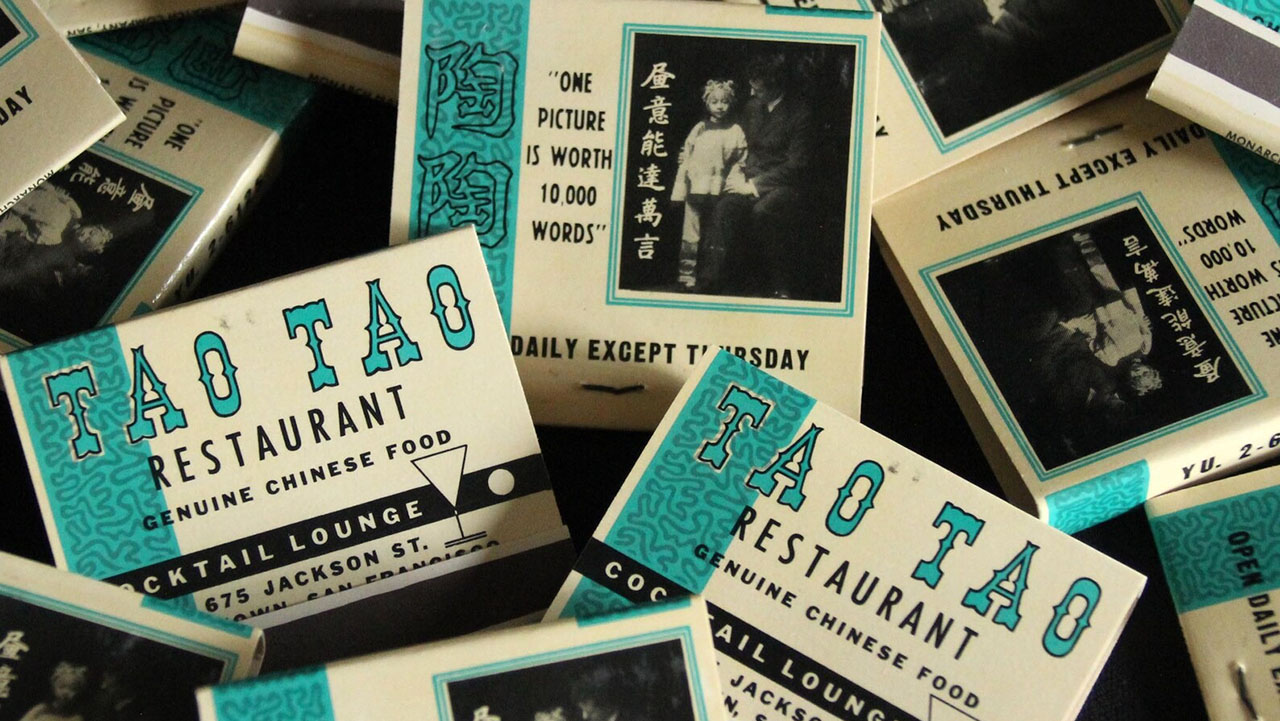
It’s no secret that American Jews love Chinese food, and that seems to have been true 100 years ago as well, judging by this publication’s output.
One restaurant, located in what is today still Oakland’s Chinatown, was described in this paper in 1925: “Situated in the heart of the business section of Oakland is the newly erected Pekin Low Restaurant, which has added a charm and attraction and has brought tourists and sightseers to view the unique building located at Seventh and Webster streets. The architect. W. K. Owen, who designed the structure, is being congratulated for the skill shown in the workmanship and artistic plans. Pekin Low represents the progress made by the Chinese merchants of Oakland. The Chinese dishes served at Pekin Low are the talk of the town.”
Back in the city, we had the Cathay House, described in Frank Kay’s 1939 column on the city’s night life: “At the Cathay House, San Francisco’s newest and most interesting Chinese restaurant, the kitchen is entirely open to view and the curious can watch their food being prepared in traditional Chinese manner. You’ll see an authentic ‘Wok Lo’ in use, in a spotless Canton kitchen. The ‘Wok Lo’ is a Chinese range with a past of 5000 years, and was made especially for the Cathay House.

“For those unfamiliar with real Chinese food, luncheons and dinners at the Cathay House are delightful surprises. Barbecued duck and apricot sauce, whole fried squab Cantonese, boneless potted duck and toasted almonds, egg flower soup, Chinese sweet peas, Chow mein…and many other delectable suggestions.”
Hold on, I’m too hungry to continue writing! See you at dinner — I’ll keep a place for you. In the meantime, I’ll end this column with a humorous story we ran from 1926 called “Of Two Evils He Chose the Least.”
“A pious Jew once went to his rabbi for a ‘penance.’
“‘What have you done?’ inquired the rabbi. ‘Oh, I ate a meal without washing my hands,’ said the penitent one. Although the rabbi did not consider such a breach of custom very serious, he decided to give him the penance in order to stimulate his ardor. Curious, however, he asked how the sinner had come to forget.
“‘Oh,’ he said, ‘I was in a goyishe restaurant, where they didn’t have any washing basins.’
“The rabbi stared at him in amazement. ‘Well, how did you come to be in a trefah place and not in a Jewish restaurant?’ he asked.
“‘Well, rabbi, it was Yom Kippur and all the Jewish restaurants were closed.’”