

The Torah column is supported by a generous donation from Eve Gordon-Ramek in memory of Kenneth Gordon.
Vayigash
Genesis 44:18-47:27
Few questions have shaped Jewish history more profoundly than one that emerged two centuries ago and has never lost its urgency: What does it mean to be Jewish in the modern world?
When the walls of the European ghettos were dismantled in the 19th century and Jews began to enter wider society, they encountered not only new freedoms but a deep moral and spiritual dilemma: Were Jews called primarily to preserve their distinctive way of life, or to bring their values into the broader human conversation? Were we meant to turn inward or outward?
From this tension arose two opposing schools of thought.
One insisted that the Jewish mission is universal. Jews, it argued, are called to be a light to the nations, bearers of an ethical vision meant for all humanity. Our task is tikkun olam, the repair of the world. To succeed in this mission, Judaism must emphasize its universal moral teachings and downplay the practices and boundaries that set Jews apart. The more we resemble the surrounding culture, the more effective our influence will be.
The other school argued precisely the opposite. Judaism, it maintained, is first and foremost a covenantal relationship with God, expressed through law, ritual and tradition. Jewish survival depends on strengthening families, communities, schools and synagogues. Engagement with the wider world, they feared, would dilute Jewish life. Better to withdraw, to create protective boundaries, even if that meant living apart from society.
Universalism and particularism. Engagement and withdrawal. For two centuries, Jewish thought has oscillated between these poles.
Yet this framing itself is mistaken. God did not ask the Jewish people to choose between faithfulness and responsibility, between distinctiveness and universality. That is a false choice. Our particular identity is not an obstacle to our universal calling; it is the source of it.
If Jewish life has nothing distinctive about it, then it has nothing distinctive to offer. If we are merely a reflection of the culture around us, we contribute nothing new to the moral conversation of humanity. Universality is not achieved by erasing difference, but by bringing the fullness of one’s own tradition into dialogue with others.
This truth is visible throughout human creativity. The greatest works of art, literature, and music are not universal because they are abstract or generic. They are universal because they are deeply rooted in a particular place, people and story. The novels of Dostoevsky speak powerfully across cultures precisely because they arise from an intimate knowledge of the Russian soul. The paintings of Monet and Renoir are loved worldwide because they are unmistakably French. Jazz became a global language because it was born from the specific historical experience of African Americans.
The world is enriched not when cultures abandon their uniqueness, but when they share it.
The same is true of the Jewish people. Only by being deeply rooted in our faith can we be a blessing to others. Only by preserving the sanctity of Jewish family life can we speak convincingly about the dignity of family. Only by investing passionately in Jewish education can we advocate credibly for the value of education. Only by living lives shaped by mitzvot — by Shabbat, charity, prayer and moral discipline — can we offer a compelling vision of spirituality in a secular age.
This synthesis of inward faith and outward responsibility is embodied with remarkable clarity in the biblical story of Joseph.
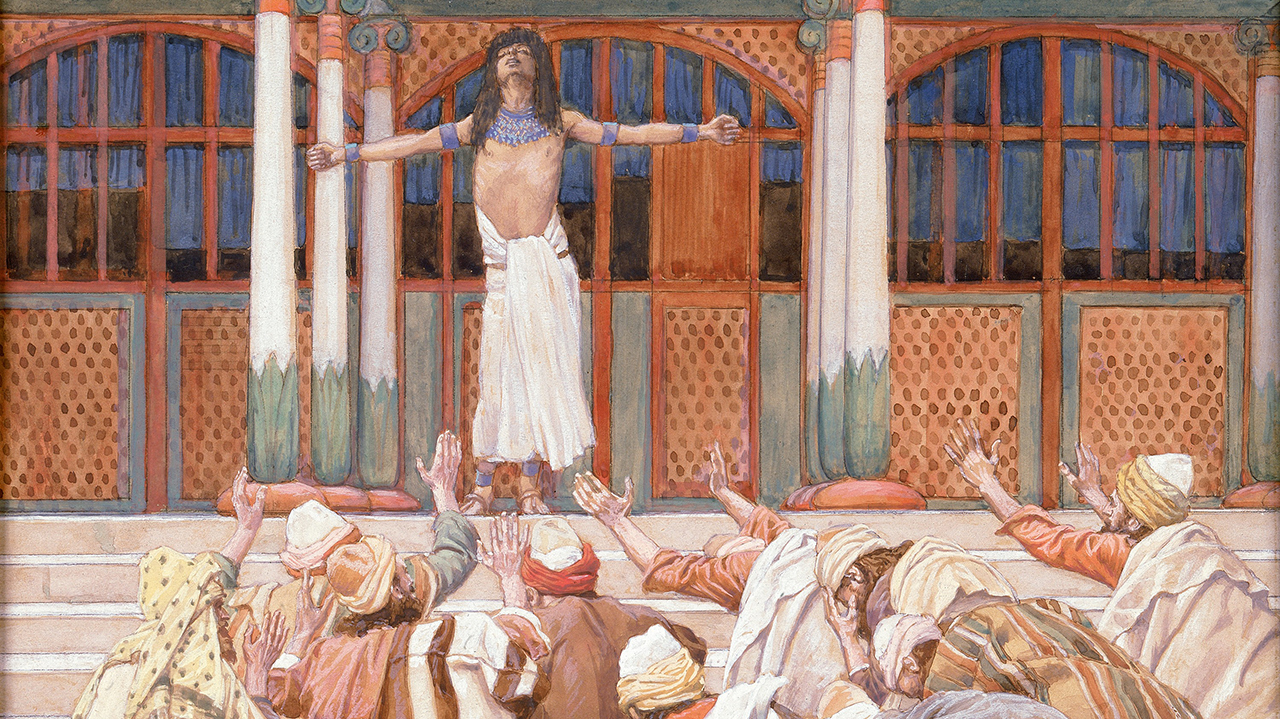
Joseph is the only one of the patriarchal family to live fully within a global civilization. He rises to power in Egypt, the superpower of the ancient world, yet never relinquishes his identity. His story begins with dreams — two of them — and they reveal everything.
In one dream, Joseph sees a sheaf of wheat (himself) standing upright while the sheaves around it (his brothers) bow before it. It is a vision of material success, leadership and economic authority. In the second, the sun, moon and stars bow to him, a dream of moral and spiritual influence. These are not competing visions. Together, they express Joseph’s intuition that it is possible to exercise worldly power while remaining faithful to God.
His brothers could not accept this idea. Shepherds living apart from society, they believed holiness required withdrawal. To them, Joseph’s dreams sounded like arrogance, even betrayal. They could not imagine a Judaism that flourished at the center of civilization without being corrupted by it.
Jacob, however, understood. The Torah tells us that he “kept the matter in mind.” He sensed that Joseph was destined for a role unlike any that had come before. That is why he gave him the multicolored coat.
Colors differ. They can clash. Yet when woven together into a single garment, they create beauty. The coat symbolized Joseph’s calling: to bring together difference and harmony, heaven and earth, the particular and the universal, within a single life.
Joseph’s later story vindicates that vision. He becomes the architect of Egypt’s economic survival, devising a long-term plan that saves an entire civilization from famine. Yet when Pharaoh praises his brilliance, Joseph deflects the credit. “It is not I,” he says. “God will answer.”
That moment is decisive. Joseph could have claimed the glory. Instead, he spoke openly of God in the halls of power. It was a risky choice. It could have ended his career, even his life. But Joseph understood something essential: a holy people does not fear bringing its faith into the shared spaces of humanity.
Joseph teaches us that Jewish history does not ask us to choose between the ghetto and the world. It asks us to live fully in both. To be rooted without being isolated, engaged without being absorbed. To carry our particular story with confidence, and in doing so, to speak to the universal human condition.
That task remains ours today.