

A new phrase has arisen in Gaza: “Wounded child, no surviving family.”
“WCNSF” is written on files by Doctors without Borders volunteers in Gaza. It gives a heads up to subsequent medical professionals: There is no one to take responsibility for this injured child.
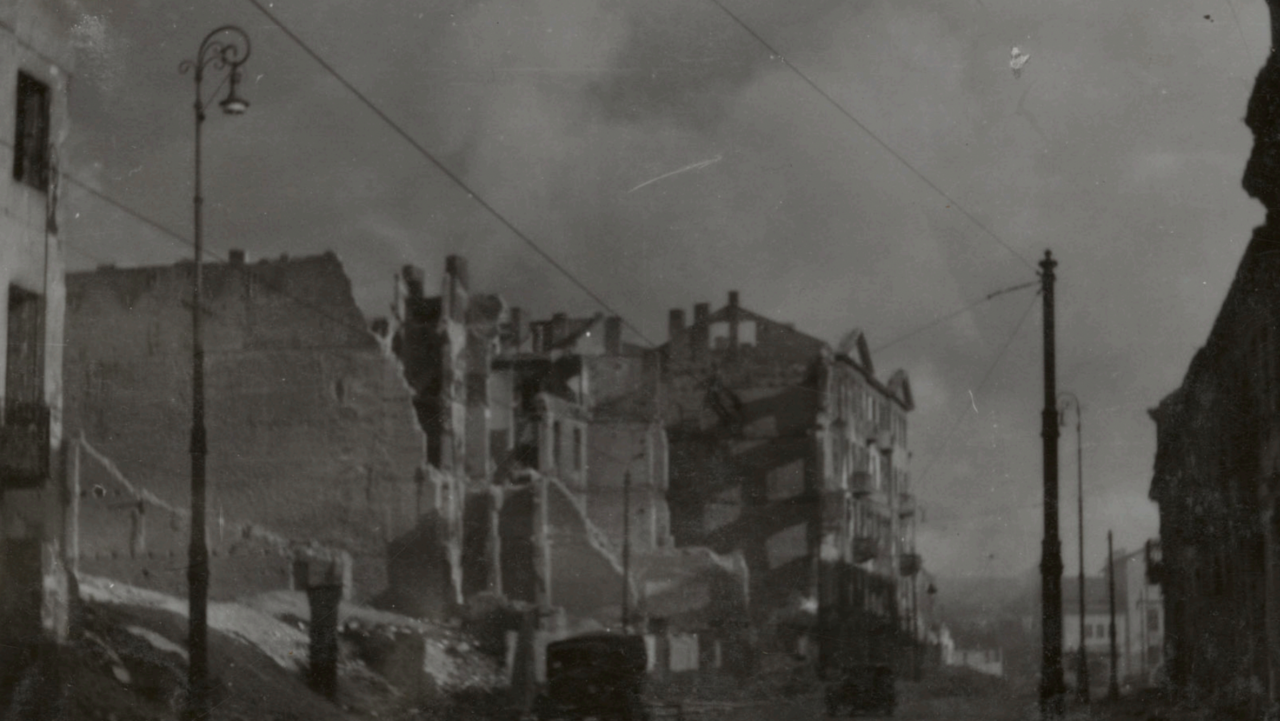
As a Holocaust educator at Notre Dame de Namur University in Belmont for 25 years, images of Gaza appear to me through a Holocaust lens. The rubble of Gaza looks like the rubble of the Warsaw Ghetto after the uprising. Hollow-eyed, starving children in Gaza look no different to me than pictures of children in the ghettos during the Holocaust, suffering from starvation rations or no rations at all.
Many children orphaned in the Holocaust could have had “WCNSF” written on their files, if such files had existed.
There is a dire lack of medicine and adequate equipment in the hospitals of Gaza. Surgeries must be performed without anesthesia. And for many, there is no water, food or electricity.
Recently, at the Kiddush luncheon after Shabbat services at Congregation Beth Jacob in Redwood City, I told a friend I had reconnected with the Jewish-Palestinian Living Room Dialogue Group in San Mateo.
His instant reply silenced me, “Doesn’t Israel have the right to defend itself?”
I saw confusion, fear and incipient anger suffuse his face. His closed expression did not give me the opportunity to describe the history of our group, begun in 1992, its many accomplishments or its worldwide reach, including a dialogue in Nigeria between Christians and Muslims.
My synagogue friend could have asked, “What’s a dialogue group?” or “How did you become involved?” or “What do you hope to accomplish?”
Instead, he was like the Fourth Child at the Passover seder, unable to ask a meaningful question. By shutting the doors of communication between us, he closed the possibility of learning, understanding or empathy.
Dialogue, as practiced by our group, is the opposite of this unfortunate exchange. It is about “deep listening,” rather than discussion, debate or denial. Listeners ask questions until they can repeat the story to the teller’s satisfaction. Roles are exchanged so that both have a chance to share their stories.
“An enemy is someone whose story you have not heard” was a slogan often proclaimed by dialogue group co-founder Len Traubman, now of blessed memory. In this way, “the other” becomes your friend.
Libby Traubman, co-founder with her late husband, has kept the group going since Len’s 2019 passing. Participants in the dialogue group refuse to be enemies, despite coming from communities led by people who dictate otherwise. In addition to our monthly meetings, members present panels in educational settings and at religious institutions throughout the Bay Area and beyond, demonstrating the power of dialogue.
In the 2009 book “The Art of Happiness in a Troubled World,” the Dalai Lama shows how “empathy and compassion cause specific changes in brain function that alter the way we perceive and interact with others.” Such compassion causes us “to perceive others as being more similar to ourselves.” He cites a story he “once heard during one of my visits to Israel.”
An Israeli grassroots peace movement brought together Jewish and Palestinian children. The children were taught to see the image of God in one another. “They practiced reminding themselves that God was in the children of the other side, in the same way that He was in theirs,” he wrote.
The Dalai Lama continued, “I was told that whenever there was a renewed conflict, these children who had trained to see God in the face of their fellow children from the other side found it almost impossible to develop hatred towards the other children. They were unable to reduce these children under the generalized category of the ‘enemy.’” In this way, the “other” became a friend.
No one has responsibility for a WCNSF child, except the whole world — if we’re brave enough to accept it.