

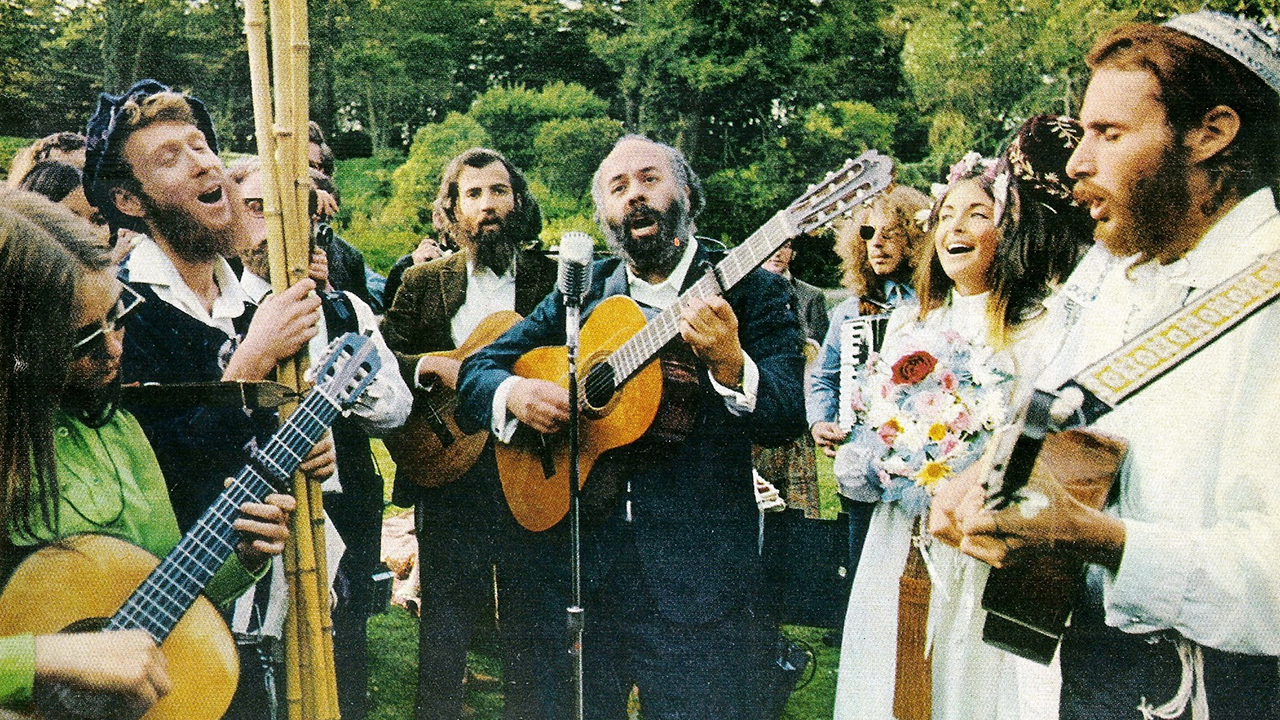
Walk into services at almost any synagogue in America today, and you’ll hear music composed by Rabbi Shlomo Carlebach.
His melodies have buoyed Jewish life for decades. Much of his music fools listeners. It sounds old-world but was written in the second half of the 20th century, much of it in America — some during his long stop in San Francisco during the height of Haight.
Carlebach was a joyful man, overflowing with Torah. He was also an exemplar of Orthodox feminism, rejecting injunctions against men and women singing together or touching in public.
At least, that’s what he appeared to be.
In 1998, four years after his death at the age of 69, the other shoe dropped when Lilith, the American Jewish feminist magazine, published “Rabbi Shlomo Carlebach’s Shadow Side.” The article detailed numerous allegations that Carlebach sexually abused and harassed girls and women. The article also called out the Jewish community that had warped itself into defending him and hiding his misdeeds.
“The Darkest Light,” a new documentary about Carlebach, will have its world premiere on July 19 at the JCCSF as part of the San Francisco Jewish Film Festival. The film follows Carlebach’s daughter, the singer Neshama Carlebach, as she attempts to reconcile her adoring image of her father with the allegations that have arisen since his death.

(Full disclosure: I’ve written about Carlebach and co-founded the “Beyond Carlebach” Facebook group, so I was interviewed for this film but didn’t make it into the final cut.)
At the beginning of the film, his daughter lays out the stakes, asking: “What do you do when there’s someone that you really love and then you find out they did something, or some things, that were really terrible?”
That question is at the heart of both the film and Carlebach’s legacy. And it’s not just a dilemma for his daughter. It’s a dilemma for Jews around the world who love, or loved, his music and his teachings. Some dodge the question, refusing to believe the allegations or taking refuge in the idea of separating art from artist. But the film itself is a persuasive argument that it’s their dilemma too and that they should face it, whether they want to or not.
Before diving into the allegations, the film effectively situates Carlebach in history. He escaped Europe ahead of the Holocaust and was a disciple of the last two Lubavitcher rebbes. He later immersed himself in the 1960s and 1970s folk music milieu, landing for a time in San Francisco, where he experienced the Summer of Love and encouraged disaffected, disengaged young Jews to return to their faith.
In fact, you could almost forget the real topic of the film as it takes the audience through his life story. Once the allegations surface in the film, they almost come as a shock, even if you already knew about them.
The film is replete with archival footage of Carlebach that gives a strong impression of how he presented himself to the world. In one clip, he tells a story from his youth in Germany: “Once we went out on the street and children chased us.… They really wanted to kill us. But I want to tell you something: I’m still in love with every person in the world.”
This approach to life is at the core of his teachings and his persona: a desire, he says more than once in the film, to hug every person in the whole world.
Knowing what we know of him now, it almost sounds sinister. Adding to the impression are many clips in which he discusses the nature of sin, darkness and light. He seems dogged by those topics, as if he can’t stop mulling them and their place in his life.
“My father was an incredible hugger,” Neshama Carlebach says at one point, with both pain and affection. After his concerts, he would sometimes go out in the crowd, embracing, kissing and hugging total strangers. What appeared to be a boundless love and affection for his fellow humans was central to his Torah — and yet it’s clearly related to the great harm he did as well.
Director Simon Mendes expertly juxtaposes archival clips with interviews of survivors of his abuse. At one point, a woman tells her story of assault and the filmmakers follow it up with a clip in which he almost seems close to confession.
“The whole world needs fixing,” he tells an audience in the clip. “What is the one part of us which needs fixing the most? The one part of us which needs fixing the most is the part we always cover up.” Then in a whisper, he repeats: “We always cover it up.”
The film draws a connection between his loving persona and his dark actions. But the details of the allegations are shocking, even if you knew about them before the film. Survivors interviewed were as young as 14 when it happened. And those bold enough to come forward at the time encountered cold denials. One was told by his handlers that she had “misinterpreted his exuberance.”
Because he spent considerable time in the Bay Area, there are many survivors of his abuse still in the area. One is Rabbi Sara Shendelman of Berkeley, who confronted Carlebach directly when he was still alive about allegations from multiple women. She was told by Carlebach, “Oy, this needs such a fixing.” But no fixing ever came.
One attempt at some posthumous fixing comes from Rabbi Angela Buchdahl of Central Synagogue in New York, who declared a year of no Carlebach music in her congregation. She used that year to teach about him, his music and the allegations against him. A major thrust of the film, borne out over multiple interviews with Buchdahl, is the question of what to do about his music. Can we separate composition from composer in this case? The film doesn’t provide an easy answer.
Personally, I am skeptical that his music will ever go away. It is too widespread and too embedded — it has become “traditional” music at this point. But if you ask me, synagogues in the Bay Area, where plenty of survivors of Carlebach’s abuse still live, should ban his uplifting, catchy music.
Because if you’re offended by Woody Allen, all you have to do is not see his movies. But if you’re offended by Carlebach or were personally victimized by him, what should you do? Simply not go to synagogue? It’s an untenable situation.