

Ah, those halcyon days of summer camp. Singing, swimming, campfires, cooking…
Wait, cooking? That wasn’t part of the camp experience of today’s parents and grandparents. But over the past 10 to 15 years, as the environmental movement and Jewish farming projects have gained wider currency, more Jewish day schools, JCCs and synagogues have planted vegetable gardens to teach children about caring for the Earth and its bounty.
That has moved into the world of Jewish summer camps as well. Particularly at overnight camps where kids spend weeks onsite, campers are growing, harvesting and cooking fruits and vegetables into tasty dishes to share with their peers.
It appears to be a growing trend.
“Camps are doing it more often,” said Brad Cohen, executive camp director at Eden Village West, an overnight Jewish camp along the Russian River in Sonoma County.
Eden Village West, founded in 2018, has had a robust farming and environmental focus since the beginning.
“We’re not a ‘farm camp,’ but we incorporate Earth-based Judaism into everything we do,” said Cohen, who estimates that “50 to 60 percent” of camp activities involve growing, harvesting and preparing food.
In addition to more typical camp activities such as swimming, archery, art and music, the 150 campers each summer can choose to take part in organic farming, culinary arts and the study of herbs.
“Some kids love farming, some prefer cooking, others like to create different salves with herbs we grow,” he said.

The cooking classes take place in a dedicated Culinary Arts Center and Bakery, with six small, fully equipped kitchen areas where campers “learn all the culinary skills,” he said. “It’s like a 1950s home economics class.”
Learning to cook and prepare meals teaches campers a lot, Cohen said. “Besides basic culinary skills — how to cook, how to chop and sauté — it gives them confidence,” he said. “It’s an opportunity to be creative. And it gives them a chance to feed other people, which is part of taking care of your community.”
This summer, two other Northern California Jewish overnight camps are ramping up their own gardening and cooking programs.
URJ Camp Newman, a Reform camp in the hills of Santa Rosa that serves more than 1,400 campers a year, relaunched its organic garden called Operation Kibbutz Yarok last summer. It had been destroyed, along with most of the old camp, by the Tubbs Fire in October 2017. The replanted garden contains a wide variety of produce and houses farm animals such as goats, pigs and chickens that the campers learn to care for.
This summer Newman will unveil an outdoor kitchen at the site, with sinks, food prep areas and picnic tables, where campers will prepare food with produce they harvest. Campers from third grade and up will have access to the outdoor kitchen, and two of the teen programs will have it as a main focus.
The program is tied in to the camp’s Jewish and social values, said Rachel Slaton, Newman’s communications director.
“Our goal is to be able to process as much of our food waste as possible through composting and community education involving campers in the full cycle of consumption, recycling, composting, planting and harvesting,” Slaton said in an email to J. “Campers will learn … why these are important and to be more mindful, weaving in values of tikkun olam and a shared responsibility to care for the Earth.”
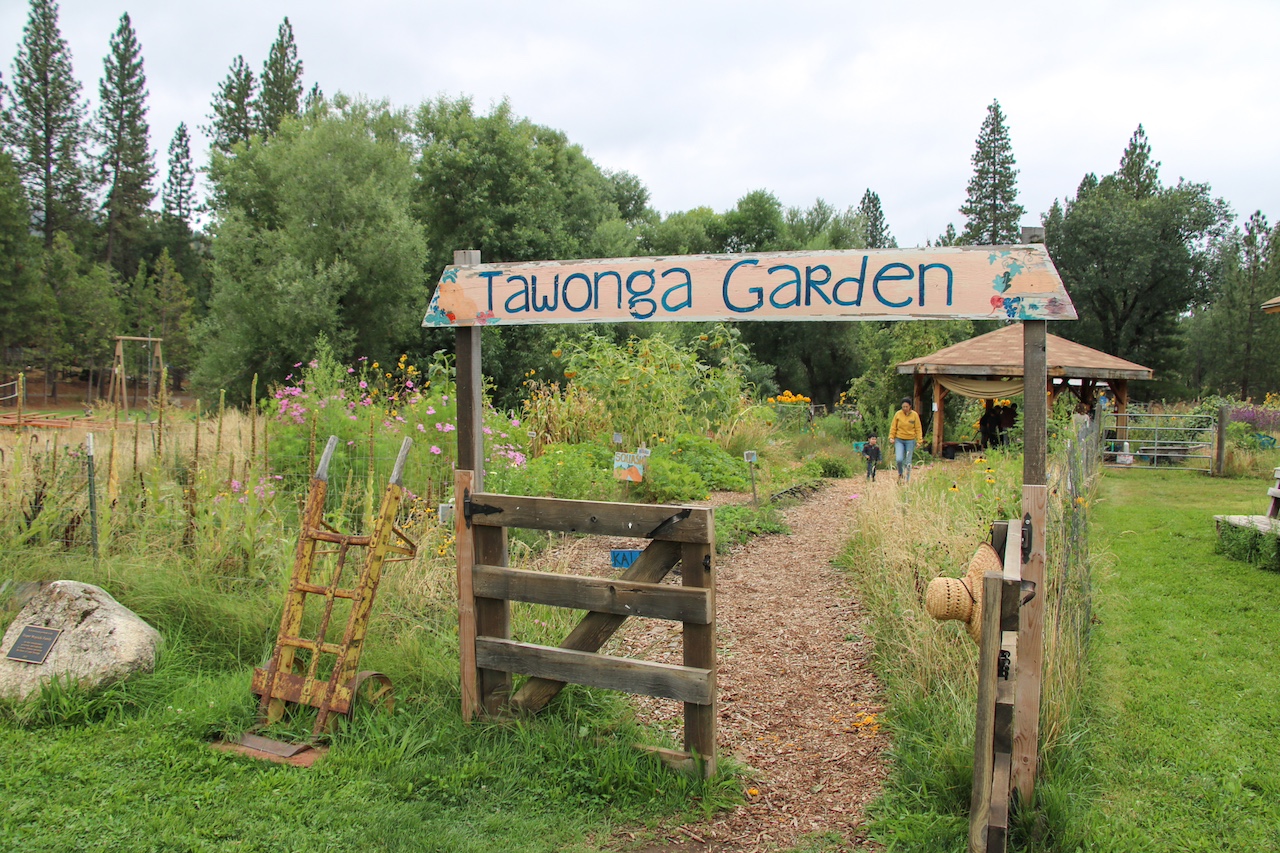
The biggest unveiling this summer, however, will take place at Camp Tawonga in the Yosemite foothills, which is just completing construction of a new Garden Kitchen that will house the camp’s expanded culinary arts program.
Assistant camp director Aviva Maslow said that Tawonga has had a “robust vegetable garden” for years and has always done some cooking programming, “but it was limited” by the lack of a dedicated facility and expert staff.

The new Garden Kitchen, built right next to the camp’s organic garden, will be supervised by a culinary expert, she said. Up to 24 apron-clad campers at a time will be able to work at the chef stations and learn to prepare a wide variety of dishes, most of them “Jewish or Israeli,” Maslow said. But even those that are not specifically Jewish will be accompanied by Jewish teachings related to holidays or different Jewish cultures around the world, she said.
“Participants will engage in every step of food preparation, from harvesting produce in our organic garden to cooking meals inspired by global Jewish communities,” Maslow said, noting that Tawonga is expecting more than 1,360 campers this summer.
“Campers will have a hands-on farm-to-table experience, creating dishes using milk from our goats, eggs from our chickens and herbs, fruit and veggies from our garden,” she added. “Through spending time in the garden and cooking together in the new kitchen, campers will connect with Jewish values and intergenerational traditions.”

And as with Eden Village West and Camp Newman, there is a strong environmental aspect to the culinary program at Tawonga.
“This will be a fully operational, fully stocked kitchen, just scaled down a little bit” from the regular camp kitchen, Maslow said. “I think it’s going to give [campers] more appreciation of what goes into making even something like a salad — or what goes into making pasta or falafel or shakshuka. I think it will give them a stronger appreciation and insight into all the work that goes into preparing the food that we eat at camp.”
When Tawonga was designing its culinary arts program and the new Kitchen Garden, camp leaders looked to other successful children’s farming and cooking programs in the area. That included, Maslow said, consulting with Eden Village West and with the Berkeley-based Edible Schoolyard Project, which was created by Alice Waters of Chez Panisse fame to bring food awareness to public schoolchildren.
Eden Village was glad to share what it knew, said Cohen.
“That’s the wonderful thing about Bay Area camps,” he said. “We all support each other. It’s not about competition.”