
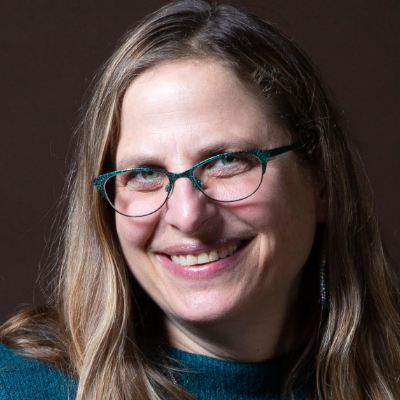

“Just don’t call it a deli,” chef David Nayfeld instructed during our recent interview about Bubbelah, his new restaurant.
I wouldn’t have called it that, even if he hadn’t asked. There is no pastrami, no rye, no dill pickles or other staples of a Jewish deli. What there is, however, is some of the best Middle Eastern food I’ve tasted in the Bay Area, coming from a chef known for his Italian food.
Nayfeld, 41, and his partner Matt Brewer are the force behind Che Fico, which opened in San Francisco in 2018. In 2023, they brought the same concept to Menlo Park, and in 2024 came a market, Il Mercato di Che Fico, next door. But the market concept didn’t take (one exception was the housemade gelato, which was a hit). Nayfeld was left with an open space to fill, and he chose to look at it as one of those lemonade situations. Given that his menu at Che Fico has a small section devoted to interpretations of traditional Roman Jewish dishes, it wasn’t a stretch for him to open a Jewish concept restaurant like Bubbelah.
“It’s always been important for me to represent our culture in surprising ways, not in stereotypical ways,” he said. “Our culture is so vast and diverse.”

Nayfeld, who is also a new author with his book “Dad, What’s for Dinner?” was raised in Alameda in a Russian immigrant family. He came up through the fine dining world (working at the temple of fine dining, New York City’s Eleven Madison Park) before returning to his native Bay Area. Now the father of a 6-year-old daughter, he said that Jewish foods have been a pathway to teaching her about Judaism.
Bubbelah’s menu is “inspired by Jewish culinary traditions from across the Mediterranean and beyond,” according to its website. By offering dishes from around the Jewish diaspora, Nayfeld said he’s been able to learn more about Jewish communities in such diverse locations as Iraq and Georgia. He plans to offer Jewish holiday menus as takeout, something Che Fico started doing during Covid, and to have holiday meals in the restaurant, too.
He said he is fiercely proud of being Jewish and feels a responsibility to his Jewish customers to be open about it, especially in the post-Oct. 7 world. He wears a large Magen David around his neck. “We’re all put on this Earth, in some shape or form, for something,” he said, “and I was gifted with confidence.”

His Jewish customers regularly let him know how much they appreciate him, Nayfeld said, even if they do so while telling him he’s making his chicken soup wrong.
He actually doesn’t mind, he said, because they are much more likely to communicate their complaints to him directly, rather than write a negative review on Yelp or another review website.
“An 80-year-old bubbe wrote to me that my chicken soup is not at all like the one she grew up with,” he recalled, “but wanted to tell me how proud she is of me and how much she’s cheering for me anyway.”
Bubbelah is fast-casual, where customers order at the counter. Basic Yiddish words like “nosh” and “kvetch” are written on one wall with their definitions, and “You should eat something” is on another wall, attributed to his mother, “Baba Galina.”
Nayfeld said he is most proud of his matzah ball and falafel. His chef and general manager, Chris Timms, told me that they were already using a matzah ball recipe they liked, until one day when Nayfeld came in with a new idea: adding ground chicken thigh. He had tried making a lower-carb version at home and found that the meat gave the ball a texture that was “luxurious and bouncy,” Nayfeld said.
This not-at-all-traditional matzah ball, when eaten together with a soup loaded with dill and lemon, contributed to one of the most memorable bowls of matzah ball soup I can remember — at least, since the Thai version at the deli Loveski in Napa and Larkspur, made with fish sauce, lemongrass and Thai chiles. The Bubbelah falafel is bright green inside, with an extra herbaceous flavor to match, with copious amounts of parsley, cilantro and mint. It has a soft and moist consistency I haven’t had anywhere else.

I also had to try the khachapuri, a Georgian savory pastry that’s shaped like an eye, and often has an egg with a runny yolk nestled on a bed of salty cheese inside the pastry. At Bubbelah, they swap out the egg for a filling of mozzarella, feta and Gruyère cheeses, with sliced spring onions and poppy seeds. When it comes out of the oven, it’s brushed with garlic butter and sprinkled with flaky salt; the aroma hits you when it comes to the table. The crackle of the crust and the gooey, salty cheese made me not miss the egg one bit.
The mezze plate, too, did not disappoint. Muhammara (a Syrian spread made from roasted red peppers, walnuts and pomegranate molasses) and matbucha (the Moroccan cooked tomato dip) made excellent accompaniments to the more traditional baba ghanoush. The hummus, which had to be ordered separately, was exceptionally creamy.
The menu has wraps, plates and pita sandwiches. The pita comes from the East Coast, with just the right consistency to hold a proper sandwich without falling apart.
Nayfeld wanted us to try the beef shish kebab, so we did. We ordered it in a pita, which despite being overstuffed amazingly stayed intact. Timm later volunteered that beef tallow and sparkling water are added to the beef mixture; the tallow adds a fatty taste without clumping and also acts as a binder.
Nayfeld ended our conversation by talking about what a difference one generation had made in his family. His parents had to hide the fact they were Jewish growing up in the former Soviet Union, he said, so he feels grateful that he can proudly share Jewish food with others.
“I’ve always wanted to bring people together over food,” he said. “And it’s not just about having Jewish people enjoy it. It’s equally as important for me to have people who are not Jewish come and enjoy this, and love it, and feel welcome here.”